
5 Axis Machining Services Explained: Process, Benefits, and Applications
Home
/
Blog
/
5 Axis Machining Services Explained: Process, Benefits, and Applications
5 Axis Machining Services Explained: Process, Benefits, and Applications
April 25, 2026
If you are working on complex mechanical parts or precision-engineered components, you have likely come across the term 5 axis machining services. This manufacturing approach is widely used when standard machining methods are no longer efficient or accurate enough to meet design requirements.
Unlike traditional 3-axis machining, which is limited in movement, 5 axis machining allows simultaneous motion across multiple directions. This capability changes not only how parts are manufactured but also how engineers design products in industries where precision and efficiency are critical.
In this guide, you will gain a complete understanding of how 5 axis machining services work, why they are used, where they apply, and how to evaluate their cost and performance in real production environments.
Table of Contents
Introduction

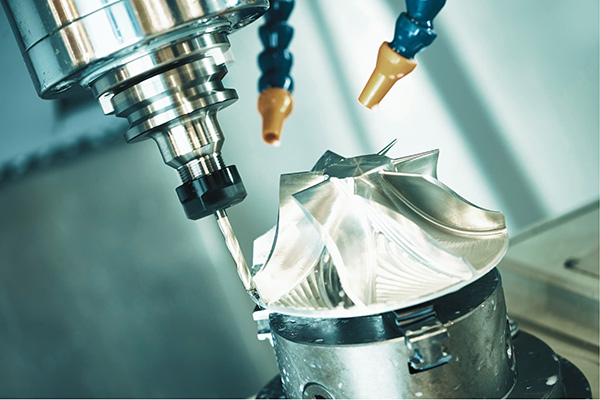
5 axis machining services refer to CNC processes where a cutting tool moves across five different axes simultaneously. These include three linear axes (X, Y, Z) and two rotational axes that allow the tool or workpiece to be tilted and rotated during machining.
This additional freedom of movement allows you to produce highly complex geometries in a single setup, which reduces handling errors and improves overall accuracy.
Industry manufacturing reports, including data referenced in SME (Society of Manufacturing Engineers) publications, show that multi-axis machining can reduce production time by up to 30–40% compared to conventional 3-axis operations when dealing with complex parts.
How 5 Axis Machining Services Work
The five axes in practical use
Each axis contributes to precise movement:
- X axis: left to right movement
- Y axis: front to back movement
- Z axis: up and down movement
- A and B axes: rotational movements around X and Y
This combination allows the cutting tool to approach the workpiece from virtually any angle.
Simultaneous vs indexed machining
Simultaneous 5 axis machining means all axes move at the same time. This is ideal for freeform surfaces and highly complex geometries.
Indexed machining rotates the part between operations but does not move all axes simultaneously. It is more economical but less flexible.
Role of CNC programming
Advanced CAM software is essential in 5 axis machining services. It generates toolpaths that prevent collisions, optimize cutting angles, and reduce tool wear.
Step-by-Step 5 Axis Machining Process
Step 1: Digital design preparation
The process begins with a CAD model designed with manufacturability in mind. Engineers often adjust geometry to improve machining efficiency.
Step 2: Toolpath simulation
CAM software simulates cutting paths to identify collisions and optimize tool movement.
Step 3: Machine setup
The workpiece is secured, and machine coordinates are calibrated to ensure precision alignment.
Step 4: Multi-axis machining
The CNC machine executes the program, moving across all five axes simultaneously to produce the part.
Step 5: Inspection and finishing
After machining, parts undergo inspection and may be finished through polishing, coating, or secondary CNC processes.
Key Benefits of 5 Axis Machining Services
Reduced setup time
Since multiple surfaces can be machined in one setup, repositioning is minimized. This reduces human error and improves efficiency.
Higher precision
Fewer setups mean fewer alignment errors. This directly improves dimensional accuracy.
Ability to produce complex geometries
5 axis machining enables deep cavities, angled features, and organic shapes that are impossible with simpler machines.
Improved surface finish
Optimal tool orientation reduces vibration and improves surface quality.
Materials Used in 5 Axis Machining Services
5 axis machining is compatible with a wide range of engineering materials:
- Aluminum alloys for lightweight structural parts
- Stainless steel for corrosion-resistant applications
- Titanium for high-strength, low-weight components
- Engineering plastics for lightweight and non-metal applications
Each material requires specific machining parameters such as spindle speed, feed rate, and cooling strategy.
Applications of 5 Axis Machining Services
Aerospace applications
Used for turbine blades, structural supports, and engine components where precision and strength are critical.
Automotive industry
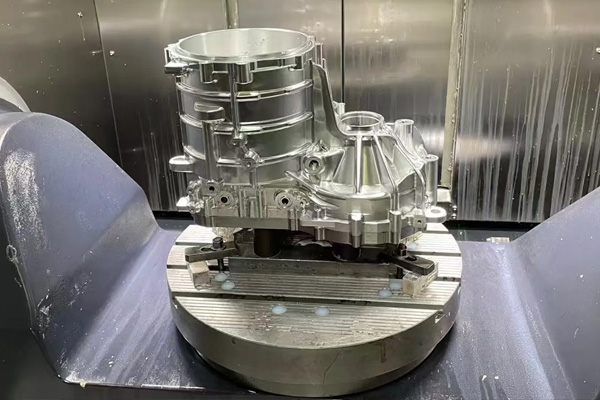
Common in engine housings, performance components, and transmission parts.
Medical industry
Used for surgical instruments, implants, and precision diagnostic equipment.
Industrial machinery
Applied in pumps, housings, and mechanical assemblies requiring tight tolerances.
Accuracy and Tolerance Capabilities
5 axis machining services are known for high precision.
Typical tolerances range from ±0.005 mm to ±0.02 mm depending on machine capability, material, and part geometry.
Key factors affecting accuracy include:
- Machine rigidity and calibration
- Tool condition and wear
- Thermal stability during machining
- Programming accuracy and simulation quality
According to manufacturing quality studies published by SME, multi-axis systems reduce dimensional deviation by up to 25% compared to traditional machining setups when properly optimized.
5 Axis Machining vs Other Machining Methods
| Feature | 3 Axis Machining | 4 Axis Machining | 5 Axis Machining |
|---|---|---|---|
| Movement | Linear only | Linear + 1 rotation | Full 5-axis motion |
| Setup time | High | Medium | Low |
| Geometry capability | Simple parts | Moderate complexity | Highly complex parts |
| Precision level | Moderate | High | Very high |
| Cost efficiency | High for simple parts | Balanced | High for complex parts |
This comparison shows that while 5 axis machining services may have higher machine costs, they significantly reduce overall production time and errors for complex parts.
Design Guidelines for 5 Axis Machining
To get the most value from 5 axis machining services, you should consider:
- Avoid unnecessary undercuts unless required
- Maintain consistent wall thickness
- Design for minimal tool repositioning
- Use standard radii to improve tool accessibility
Good design directly reduces machining time and cost.
Common Challenges in 5 Axis Machining Services
Programming complexity
5 axis machining requires advanced CAM programming skills and simulation tools.
Tool collision risk
Because of multi-directional movement, collision risk is higher if not properly simulated.
Machine cost and maintenance
These machines require higher investment and regular calibration.
Quality Control and Inspection Methods
High-quality 5 axis machining services rely on strict inspection processes:
- Coordinate Measuring Machines (CMM) for dimensional accuracy
- Surface roughness testing for finish quality
- Non-destructive testing for internal defects
These methods ensure parts meet engineering specifications before delivery.
Cost Factors in 5 Axis Machining Services
Several factors influence overall cost:
- Material type (titanium is more expensive than aluminum)
- Part complexity and geometry
- Required tolerance levels
- Production volume
Higher volume production typically reduces per-unit cost significantly due to setup amortization.
Future Trends in 5 Axis Machining Services
AI-assisted machining optimization
Artificial intelligence is increasingly used to optimize toolpaths and reduce wear.
Smart manufacturing integration
Real-time monitoring improves production efficiency and predictive maintenance.
Hybrid manufacturing systems
Combining additive manufacturing with 5 axis machining is becoming more common for complex parts.
Conclusion
5 axis machining services represent a major step forward in modern manufacturing capability. By allowing simultaneous multi-directional movement, they reduce production time, improve precision, and enable the creation of highly complex parts that traditional machining methods cannot efficiently produce.
For engineers and product developers, understanding how to properly design and apply 5 axis machining processes can significantly improve both product performance and manufacturing efficiency while reducing long-term production risks.
FAQ
What are 5 axis machining services used for?
They are used to produce complex and high-precision components in industries such as aerospace, automotive, and medical manufacturing.
Are 5 axis machining services better than 3 axis machining?
Yes, for complex geometries and higher precision requirements, 5 axis machining is significantly more efficient.
What materials can be machined using 5 axis services?
Aluminum, stainless steel, titanium, brass, copper, and engineering plastics are commonly used.
How accurate are 5 axis machining services?
They can achieve tolerances as tight as ±0.005 mm depending on setup and machine capability.
Is 5 axis machining cost-effective?
Yes, especially for complex parts where reduced setup time and higher efficiency offset machine costs.
Need Help Choosing the Right 5 Axis Machining Services?
If you’re unsure which machining process, material, or tolerance level is best for your precision parts, our experts are here to help. Contact us today for a personalized consultation, and ensure your components are manufactured with accuracy, efficiency, and reliability. Don’t wait until production issues become costly—get in touch now to optimize your project and achieve the best manufacturing results!
Latest News
Contact Us
FAQ
What types of parts can be machined?
We can machine a wide range of high-precision CNC parts for automotive, aerospace, medical devices, industrial machinery, and automation equipment, including complex geometries and custom non-standard parts.
What is the machining accuracy?
We can achieve high-precision machining with ±0.005mm tolerance and ensure consistent quality through our strict quality control system.
Can you provide small-batch and prototype manufacturing services?
Yes, we support small-batch production and prototype machining, with flexible scheduling to meet urgent client requirements.
Do you offer customized processing solutions?
Yes, we provide customized solutions with one-on-one technical support, from design review and process optimization to final machining.
How long does delivery usually take?
Delivery time depends on part complexity and quantity, typically within 1-6 weeks. We provide a detailed schedule upon order confirmation.
What certifications are available for quality management systems?
We hold ISO 9001, ISO 14001, and ISO 45001 certifications, strictly following international quality, environmental, and safety standards.
How long does delivery usually take?
Delivery time depends on part complexity and quantity, typically within 1-6 weeks. We provide a detailed schedule upon order confirmation.