
What Is Alu Cast? Complete Guide to Aluminum Casting Process
Home
/
Blog
/
What Is Alu Cast? Complete Guide to Aluminum Casting Process
What Is Alu Cast? Complete Guide to Aluminum Casting Process
April 22, 2026
If you are working on a product that requires strong, lightweight, and cost-efficient metal components, you have likely come across the term alu cast. It is one of the most widely used manufacturing approaches for producing complex aluminum parts at scale, yet many engineers and procurement teams still underestimate how much the process can influence performance, cost, and production efficiency.
In modern manufacturing, aluminum casting is no longer just a traditional production method. It has evolved into a highly engineered process supported by simulation, digital design, advanced alloys, and precision post-processing. Understanding how it works—and when to use it—can significantly improve your product quality and reduce manufacturing risk.
This guide breaks down the alu cast process in detail, including how it works, where it is used, what materials are involved, and how to evaluate its advantages and limitations in real-world engineering applications.
Table of Contents
Introduction
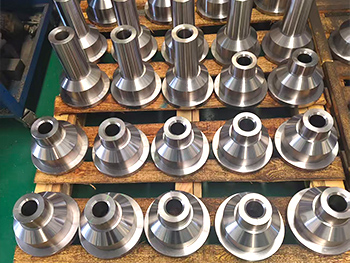
What alu cast means in practical manufacturing
Alu cast refers to aluminum casting processes where molten aluminum is poured or injected into a mold to form a near-net-shape part. Once cooled, the part is removed and often finished with machining or surface treatment depending on required tolerances.
The process is valued because it allows you to create complex geometries that would be expensive or even impossible to achieve using solid machining alone.
Why alu cast remains widely used today
Despite advancements in CNC machining and additive manufacturing, aluminum casting continues to dominate in many industrial applications. According to data referenced in the ASM Handbook of Casting (2021), more than 50% of aluminum components used in mechanical systems still originate from casting processes due to cost efficiency and scalability.
The key reasons include:
- Ability to produce complex internal structures
- Lower material waste compared to subtractive methods
- High scalability from prototypes to mass production
- Balanced mechanical properties for structural applications
How the Aluminum Casting Process Works Step by Step
Step 1: Material selection and alloy preparation
The process begins with selecting the correct aluminum alloy. Different alloys provide different performance characteristics such as strength, corrosion resistance, and thermal conductivity.
For example, aluminum-silicon alloys are commonly used for structural components due to their fluidity and wear resistance.
Step 2: Mold design and engineering
Mold design is one of the most critical steps in aluminum casting production. Engineers use CAD software to design molds that control metal flow, cooling behavior, and shrinkage compensation.
Poor mold design can lead to defects such as porosity or dimensional instability.
Step 3: Melting and pouring process
Aluminum is melted at temperatures typically between 660°C and 750°C, depending on alloy composition. It is then poured or injected into the mold cavity.
In controlled environments, pouring speed and temperature consistency are carefully monitored to reduce turbulence and gas entrapment.
Step 4: Cooling and solidification
Cooling rate directly affects grain structure and mechanical strength. Rapid cooling may increase strength but also introduce internal stress, while slower cooling improves structural stability.
Step 5: Finishing and post-processing
After casting, parts may undergo:
- CNC machining for tight tolerances
- Surface finishing (anodizing, polishing, coating)
- Heat treatment to improve strength
Types of Alu Cast Manufacturing Methods
Sand casting process
Sand casting uses sand-based molds and is suitable for large, low-to-medium volume parts. It offers flexibility but lower precision.
Die casting process
Die casting uses steel molds and high pressure to inject molten aluminum. It provides higher accuracy and surface finish and is widely used for mass production.
Investment casting process
Investment casting uses wax patterns and ceramic molds, allowing extremely detailed and complex geometries with high precision.
Comparison of alu cast methods
| Process | Precision | Cost Efficiency | Production Volume | Surface Finish |
|---|---|---|---|---|
| Sand casting | Medium | High | Low–Medium | Rough |
| Die casting | High | Medium | High | Smooth |
| Investment casting | Very high | Low–Medium | Low–Medium | Very smooth |
This comparison helps you choose the right method depending on your production goals and budget.
Materials and Aluminum Alloys Used in Alu Cast
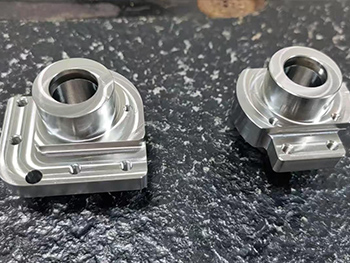
Common aluminum alloys in casting
Different alloys are selected based on performance requirements:
- A356 alloy: Good balance of strength and corrosion resistance
- ADC12 alloy: Excellent fluidity for complex shapes
- Al-Si alloys: High wear resistance and thermal stability
Why alloy selection matters
Material selection affects not only mechanical performance but also manufacturability. For example, alloys with higher silicon content improve fluidity, which reduces casting defects in thin-walled parts.
Advantages of Using Aluminum Casting in Manufacturing
Lightweight but strong structure
Aluminum provides an excellent strength-to-weight ratio, making it ideal for structural applications where weight reduction is critical.
Cost efficiency in production
Compared to machining from solid billet, casting reduces material waste significantly. Industry data from manufacturing efficiency reports (McKinsey Manufacturing Insights, 2022) indicates material savings of up to 35–45% in optimized casting workflows.
Ability to produce complex geometries
Alu cast enables hollow structures, internal channels, and complex shapes without additional assembly steps.
Corrosion resistance
Aluminum naturally forms an oxide layer that protects against environmental degradation, reducing long-term maintenance costs.
Limitations and Challenges of Alu Cast
Porosity and internal defects
Gas entrapment during casting can create internal voids, which may weaken structural integrity if not controlled.
Dimensional accuracy constraints
While casting produces near-net shapes, tight tolerances often require secondary CNC machining.
Tooling cost considerations
Mold creation can be expensive, especially for low-volume production runs, which affects initial project cost.
Alu Cast vs Other Manufacturing Methods
Alu cast vs CNC machining
Casting is more efficient for complex shapes, while CNC machining provides higher precision for simpler geometries.
Alu cast vs forging
Forging improves mechanical strength due to grain alignment, but it is limited in geometric complexity compared to casting.
Alu cast vs additive manufacturing
Additive manufacturing offers design freedom but is slower and more expensive for large-scale production compared to casting.
Applications of Alu Cast Across Industries
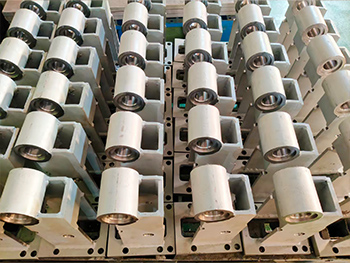
Automotive applications
Used in engine housings, transmission components, and structural brackets due to lightweight and durability requirements.
Aerospace applications
Used for structural supports, housings, and thermal management components where weight reduction is critical.
Industrial machinery applications
Common in pump housings, gearboxes, and mechanical enclosures.
Electronics applications
Used for heat sinks and protective housings due to excellent thermal conductivity.
Aluminum Casting Tolerances and Precision Control
Standard tolerance ranges
Typical aluminum casting tolerances range from ±0.2 mm to ±0.5 mm depending on process type.
Achieving higher precision
Secondary machining can reduce tolerances to ±0.01 mm in critical functional areas.
Key factors affecting accuracy
- Mold quality
- Cooling rate
- Alloy composition
- Process stability
Surface Finishing Options for Alu Cast Parts
As-cast surface
Basic finish directly from mold, often rough and used for non-critical surfaces.
Mechanical finishing
Includes polishing and blasting to improve appearance and reduce roughness.
Coating and anodizing
Improves corrosion resistance and enhances durability, especially in harsh environments.
Cost Factors in Alu Cast Production
Key cost drivers include:
- Material selection
- Mold and tooling design
- Production volume
- Post-processing requirements
In general, higher production volumes significantly reduce per-unit cost due to tooling amortization.
Quality Control and Inspection Methods
Visual inspection
Used to identify surface defects or visible inconsistencies.
Non-destructive testing
Techniques such as ultrasonic testing and X-ray inspection detect internal defects without damaging parts.
Dimensional inspection
Coordinate measuring machines (CMM) ensure accuracy against CAD models.
How to Choose the Right Alu Cast Supplier
When selecting a manufacturing partner, you should evaluate:
- Engineering capability and experience
- Quality control systems
- Material expertise
- Ability to support design optimization
- Consistency in production output
A strong supplier will not only manufacture parts but also help you improve design efficiency and reduce cost.
Future Trends in Aluminum Casting Technology
Digital simulation integration
Improves prediction accuracy and reduces trial production cycles.
Smart manufacturing systems
Automation improves consistency and reduces human error.
Sustainable casting practices
Recycling aluminum and reducing energy consumption are becoming key industry priorities.
Conclusion
Alu cast is not just a traditional manufacturing method—it is a highly optimized engineering process that combines material science, simulation technology, and precision production. When properly applied, it allows you to achieve a balance between cost, performance, and design complexity that few other manufacturing methods can match.
For engineers and product developers, understanding how to effectively apply aluminum casting processes can significantly improve product performance while reducing production inefficiencies.
FAQ
What is alu cast used for?
It is used for producing lightweight and durable aluminum components in industrial, automotive, and aerospace applications.
Is alu cast strong enough for structural parts?
Yes, when designed properly and using suitable alloys, aluminum casting parts provide excellent structural performance.
Can aluminum casting parts be machined?
Yes, machining is commonly used after casting to achieve tighter tolerances.
What is the main advantage of aluminum casting?
It allows complex shapes to be produced efficiently with reduced material waste.
Is aluminum casting cost-effective?
Yes, especially for medium to high production volumes where tooling costs are distributed across many units.
Need Help Choosing the Right Alu Cast Solution?
If you’re unsure which aluminum casting process, material, or specification is best for your project, our engineering experts are here to help. Contact us today for a personalized consultation, and ensure your alu cast components meet your performance, precision, and cost requirements. Don’t wait until production issues arise—get in touch now to optimize your design and manufacturing outcome!
Latest News
Contact Us
FAQ
What types of parts can be machined?
We can machine a wide range of high-precision CNC parts for automotive, aerospace, medical devices, industrial machinery, and automation equipment, including complex geometries and custom non-standard parts.
What is the machining accuracy?
We can achieve high-precision machining with ±0.005mm tolerance and ensure consistent quality through our strict quality control system.
Can you provide small-batch and prototype manufacturing services?
Yes, we support small-batch production and prototype machining, with flexible scheduling to meet urgent client requirements.
Do you offer customized processing solutions?
Yes, we provide customized solutions with one-on-one technical support, from design review and process optimization to final machining.
How long does delivery usually take?
Delivery time depends on part complexity and quantity, typically within 1-6 weeks. We provide a detailed schedule upon order confirmation.
What certifications are available for quality management systems?
We hold ISO 9001, ISO 14001, and ISO 45001 certifications, strictly following international quality, environmental, and safety standards.
How long does delivery usually take?
Delivery time depends on part complexity and quantity, typically within 1-6 weeks. We provide a detailed schedule upon order confirmation.