
Stainless Steel CNC Machining: Grades, Tooling, and Distortion Control
Home
/
Blog
/
Stainless Steel CNC Machining: Grades, Tooling, and Distortion Control
Stainless Steel CNC Machining: Grades, Tooling, and Distortion Control
September 4, 2026
Table of Contents
Introduction
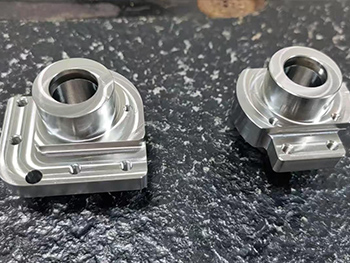
Stainless steel CNC machining is widely used for components that must combine dimensional accuracy, mechanical strength, corrosion resistance, and a consistent surface condition. These requirements appear across industrial machinery, automation equipment, medical devices, automotive systems, fluid-control components, and other applications where a machined part may be exposed to moisture, chemicals, repeated loading, or demanding operating environments.
However, stainless steel is not always straightforward to machine. Compared with many free-machining metals, several stainless steel grades tend to generate substantial cutting heat, work harden during machining, produce difficult chips, and place greater demands on cutting tools. Thin walls, deep pockets, long shafts, and tightly toleranced features add another layer of complexity because excessive cutting force or poorly planned material removal can lead to distortion.
Successful stainless steel CNC machining therefore depends on much more than selecting a machine and running a program. Material grade, cutting strategy, tool geometry, workholding, coolant application, stock-removal sequence, and inspection planning all influence the finished component. Understanding the basic metallurgy of stainless steel is also useful because different alloy families can behave very differently under the same machining conditions.
Why Stainless Steel CNC Machining Requires Careful Process Planning
The characteristics that make stainless steel attractive in demanding applications can also make machining more challenging. Many stainless grades retain strength at elevated cutting temperatures and do not conduct heat away from the cutting zone as quickly as materials such as aluminum. As a result, more heat can remain concentrated around the cutting edge.
This becomes particularly important during milling, drilling, and turning. If a cutting edge rubs instead of cutting cleanly, the material immediately ahead of the tool can become harder. The next tool engagement then encounters a more difficult surface, increasing cutting forces and accelerating tool wear. For this reason, stable feeds, appropriate cutting depth, rigid workholding, and sharp tooling are critical in stainless steel CNC machining.
Chip behavior also requires attention. Long or poorly controlled chips can interfere with the cutting zone, damage the machined surface, or reduce process stability. Toolpath planning and chip evacuation should therefore be considered from the beginning rather than treated as secondary concerns.
Choosing the Right Stainless Steel Grade
There is no single stainless steel grade that is ideal for every CNC machined component. Selection depends on corrosion resistance, mechanical strength, operating environment, weldability, heat-treatment requirements, geometry, and expected machining behavior.
Apex works with a range of metals and engineering materials, so reviewing the broader CNC machining materials available for a component can help determine whether stainless steel is the most appropriate option or whether another alloy offers a better combination of mechanical and manufacturing characteristics.
The following grades illustrate how significantly machining behavior can vary within the stainless steel family.
| Stainless Steel Grade | Typical Characteristics | CNC Machining Considerations |
|---|---|---|
| 303 | Good machinability and moderate corrosion resistance | Easier chip breaking and generally lower cutting resistance |
| 304 | General-purpose corrosion resistance and wide industrial use | Work hardening and heat generation require controlled cutting |
| 316 | Strong corrosion resistance, especially in demanding environments | Greater attention to tooling, heat control, and chip evacuation |
| 17-4 PH | High strength with heat-treatable properties | Tool selection and machining condition depend strongly on material condition |
| 410 | Martensitic stainless steel with higher hardness potential | Tool wear and cutting forces become more important as hardness increases |
Grade 304 is one of the most familiar stainless steels in industrial production, but its widespread use should not lead designers to assume that it is always the easiest option to machine. Grade 303 generally offers better machinability, while 316 may be selected when environmental resistance is more important. Precipitation-hardening grades such as 17-4 PH are often considered when greater mechanical strength is needed.
The final decision should therefore consider both component performance and manufacturing requirements.
Managing Work Hardening During CNC Machining
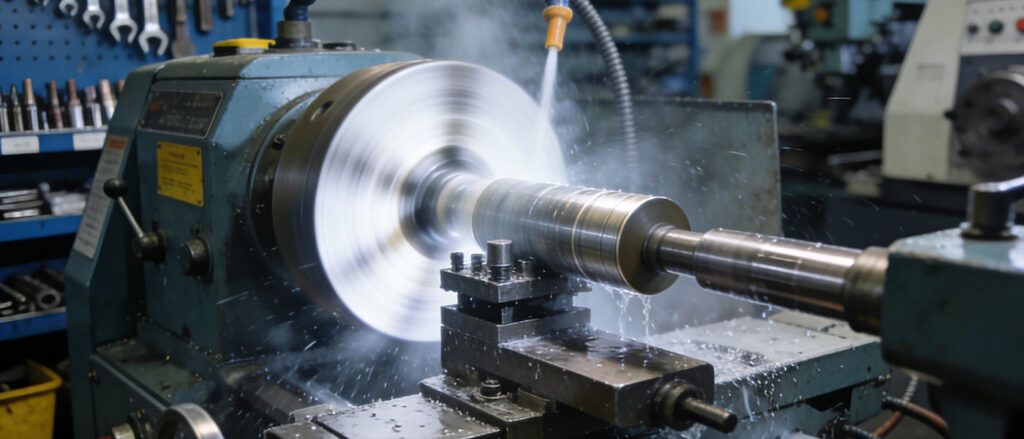
Work hardening is one of the most important issues in stainless steel CNC machining. It occurs when plastic deformation during cutting increases the hardness of the material near the machined surface. Austenitic grades such as 304 and 316 are particularly associated with this behavior.
A common mistake is allowing a tool to dwell, rub, or repeatedly skim a hardened surface with insufficient engagement. Instead of removing material effectively, the cutting edge can create additional deformation and heat. Subsequent passes then become more difficult.
A more stable process maintains positive cutting action. Sharp tools, suitable feed per tooth, consistent engagement, and enough depth of cut to remain beneath the previously affected surface can help control this problem. Machine rigidity also matters because vibration can change the effective cutting action and create intermittent rubbing.
During drilling, the same principle applies. Continuous cutting and effective chip removal are important because repeated contact at the hole entrance or within a poorly evacuated hole can increase localized hardening.
Tool Selection for Stainless Steel CNC Machining
Tooling decisions should be based on the stainless steel grade, machining operation, component geometry, machine rigidity, and required surface condition. Carbide cutting tools are commonly used because they can maintain cutting performance under demanding thermal and mechanical conditions, but tool material alone does not determine success.
Cutting-edge geometry is equally important. A sharp edge with suitable rake geometry can reduce unnecessary cutting force, while an excessively dull edge increases heat and deformation. The correct coating can also improve resistance to wear and help maintain a stable cutting edge over repeated operations.
For milling operations, cutter diameter and flute configuration should support reliable chip evacuation. Deep pockets or narrow features may require tools with sufficient reach, but increasing tool length also reduces rigidity. Where possible, using the shortest practical tool helps control deflection and vibration.
Turning operations introduce another set of considerations. Insert geometry, nose radius, chip-breaker design, cutting depth, and toolholder rigidity all affect chip formation and dimensional consistency. When machining long stainless steel shafts, workpiece support can become just as important as insert selection.
Controlling Heat and Tool Wear
Heat management is closely connected with tool life and dimensional stability. Because stainless steel can concentrate heat near the cutting zone, an unstable process may quickly damage the cutting edge.
Coolant or cutting fluid can help remove heat, improve lubrication, and support chip evacuation when applied correctly. However, simply increasing coolant flow does not compensate for inappropriate cutting parameters or worn tools. Heat control begins with efficient cutting action.
Machining strategy should also avoid unnecessary tool engagement. Modern toolpaths can maintain more consistent cutter engagement through corners and varying geometry, reducing sudden increases in cutting load. This is particularly useful when roughing pockets or removing substantial amounts of stainless steel.
Tool wear should be monitored before it begins affecting critical features. A tool that still appears capable of removing material may already be generating enough additional force to influence dimensional accuracy or surface quality. For repeat components, defining tool-life limits and inspection intervals improves consistency between parts.
Preventing Distortion in Thin-Walled Stainless Steel Parts
Thin-wall distortion is another major challenge in stainless steel CNC machining. A component may appear accurate while clamped inside the machine but change shape after the fixture is released. This can happen because of residual stress in the raw material, excessive clamping pressure, cutting heat, or an unbalanced material-removal sequence.
Effective distortion control begins before finishing operations. Rough machining can remove most of the stock while leaving sufficient material for later dimensional correction. When appropriate, the component can then be allowed to stabilize before semi-finishing and finishing.
Material should also be removed as evenly as practical around critical geometry. Aggressively machining one side of a thin structure while leaving substantial stock on the opposite side can create an uneven stress condition. Balanced toolpaths help reduce this effect.
Workholding must secure the component without forcing it into an artificial shape. Soft jaws, dedicated fixtures, support blocks, vacuum fixtures, or other methods may be appropriate depending on part geometry. The objective is to resist cutting forces while applying only the clamping force necessary for stability.
For critical thin-wall parts, intermediate inspection after rough machining can identify movement before the final machining stage begins.
CNC Milling Strategies for Stainless Steel Components
Stainless steel CNC milling often involves pockets, slots, mounting faces, complex contours, hole patterns, and multi-sided geometry. Process stability depends strongly on how the cutting tool enters and exits the material.
Toolpaths that maintain relatively consistent engagement can reduce sudden changes in cutting force. During roughing, this makes it easier to control heat and tool wear. During finishing, lighter and more consistent engagement helps maintain dimensional accuracy and surface quality.
Corners deserve particular attention because cutter engagement can increase rapidly when the tool enters an internal corner. Toolpath strategies that gradually manage engagement reduce this sudden loading.
Feature sequence also matters. Datum surfaces and critical locating features should be planned so later operations continue referencing stable geometry. When a part requires machining on several sides, reducing unnecessary repositioning can help limit accumulated error between related features.
For complex stainless steel components, advanced CNC machining services can combine vertical, horizontal, four-axis, five-axis, or gantry machining according to part size and geometry. The machine configuration should be selected around the component rather than assuming that more axes automatically produce a better process.
Dimensional Accuracy and Tolerance Control
Achieving a tight tolerance is not simply a matter of entering the required dimension into a CNC program. Machine condition, tool deflection, material movement, temperature, fixture repeatability, cutting strategy, and inspection method all contribute to the final result.
Stainless steel makes this especially important because cutting heat and work hardening can alter machining forces over the course of an operation. A tool that produces a stable dimension early in a run may gradually change behavior as its cutting edge wears.
Critical features should therefore be identified during process planning rather than inspected only after all machining is complete. In-process measurements can be used to monitor dimensions that are likely to change with tool wear or thermal conditions.
Tolerance allocation should also reflect functional requirements. Not every surface benefits from extremely restrictive dimensional limits. Applying appropriate tolerances to interfaces, bearing locations, sealing surfaces, alignment features, and assembly datums allows manufacturing effort to remain focused on the features that actually control component function.
Surface Finish in Stainless Steel CNC Machining
Surface finish affects more than appearance. On stainless steel parts, the condition of a machined surface may influence sealing, sliding contact, fatigue behavior, cleanliness, coating performance, and assembly.
Tool condition is one of the strongest contributors to machined surface quality. A worn or chipped edge can leave feed marks, tearing, or inconsistent texture. Vibration can create repeating patterns across the surface, while poor chip evacuation may allow chips to contact and scratch a finished area.
Finishing parameters should therefore be selected independently from aggressive roughing conditions. Appropriate stock allowance should remain after rough machining so the finishing tool can remove a consistent layer of material.
Toolpath direction may also matter on functional surfaces. Sealing faces, bearing seats, sliding surfaces, and visible components can require different approaches depending on how the part functions after assembly.
When further finishing such as grinding, polishing, or passivation is required, the CNC machining stage should leave the surface in a condition suitable for that next operation.
Fixturing and Datum Strategy
A well-designed fixture does more than prevent a stainless steel component from moving. It establishes a stable relationship between the part and its dimensional datums throughout the machining sequence.
Locating points should correspond with functional or drawing datums whenever practical. This reduces unnecessary transfer between unrelated reference surfaces and helps maintain positional relationships between holes, faces, bores, and other features.
Complex parts may require multiple setups, but the goal should be to minimize datum changes. Four-axis, five-axis, or horizontal machining can sometimes complete several features in one clamping operation, reducing repositioning error.
Fixture accessibility must also be considered. A clamp that provides excellent support but blocks a critical toolpath may force an unnecessary additional setup. Effective fixture design balances rigidity, accessibility, repeatability, and distortion control.
For stainless steel components with thin sections, fixture support should be positioned close enough to the cutting zone to resist vibration without over-constraining the workpiece.
Inspection for Stainless Steel CNC Machined Parts
Inspection planning should begin with the drawing and functional requirements. Different dimensions require different measurement methods, and selecting the appropriate method improves both reliability and efficiency.
Calipers and micrometers are suitable for many accessible dimensions, while bore gauges may be used for internal diameters. Height gauges and surface plates can support geometric checks, and coordinate measuring machines are useful for complex positional relationships and three-dimensional features.
Surface roughness measurement may be necessary when a specified finish influences sealing, sliding, fatigue, or assembly performance. Thread gauges, pin gauges, and dedicated inspection fixtures may also be appropriate depending on part geometry.
Temperature should not be ignored when working with close dimensional limits. A stainless steel part measured immediately after intensive machining may not have fully returned to a stable thermal condition. Allowing critical parts to stabilize before final measurement can help improve inspection reliability.
The inspection method should ultimately reflect the function of the component rather than relying on the same measurement approach for every feature.
Designing Parts for More Stable Stainless Steel Machining
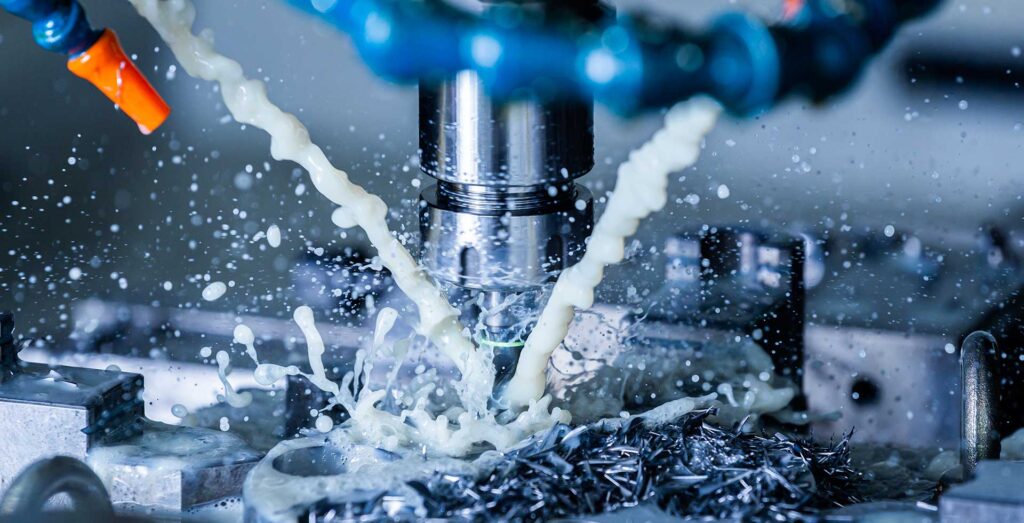
Design decisions can significantly influence manufacturing stability. Deep narrow pockets, extremely thin walls, very small internal corner radii, long unsupported features, and difficult tool-access conditions can all make stainless steel machining more demanding.
Where functional requirements allow, internal corner radii should provide sufficient clearance for practical cutting tools. Thin walls can be supported by nearby ribs or designed with transitions that reduce localized flexibility. Deep cavities should allow enough access for effective chip evacuation.
Thread selection also deserves attention. Very deep threaded holes may introduce unnecessary machining difficulty, especially when access and chip removal are restricted. Designing thread depth around actual load requirements can improve process reliability.
Designers should also distinguish between critical and non-critical tolerances. Tight control belongs on features that govern fit, movement, sealing, alignment, or safety. Applying the same dimensional restriction to every surface can make process control more complex without improving part function.
Early consideration of machinability makes it easier to achieve consistent results while preserving the intended mechanical performance of the component.
Conclusion
Stainless steel CNC machining requires a coordinated approach to material selection, tooling, cutting parameters, workholding, heat control, process sequencing, and inspection. The challenge is not simply that stainless steel is harder to cut. Its tendency toward work hardening, localized heat generation, difficult chip formation, and distortion means that small process decisions can have a significant effect on dimensional accuracy and surface quality.
Selecting an appropriate stainless steel grade is the first step. From there, sharp and rigid tooling, consistent cutting engagement, controlled material removal, effective workholding, and planned inspection help maintain a stable manufacturing process. Thin walls, deep features, tight geometric relationships, and complex multi-sided parts require additional attention to datum strategy and fixture design.
When these factors are considered together, stainless steel CNC machining can reliably produce durable, precise components for demanding industrial applications while maintaining the corrosion resistance and mechanical properties that make stainless steel valuable in the first place.
FAQ
What stainless steel grades are commonly used for CNC machining?
Common choices include 303, 304, 316, and 17-4 PH stainless steel. The appropriate grade depends on corrosion resistance, mechanical strength, environmental exposure, heat-treatment requirements, and machining characteristics. Grade 303 is generally easier to machine, while 304 and 316 are widely selected where corrosion resistance is an important requirement.
Why does stainless steel work harden during machining?
Many stainless steels become harder when the material near the cutting zone undergoes plastic deformation. Rubbing, dwelling, worn tools, or insufficient cutting engagement can make this effect more pronounced. Maintaining sharp tools and consistent cutting action helps reduce unnecessary work hardening.
How can distortion be reduced when machining thin stainless steel parts?
Distortion can be controlled through balanced stock removal, appropriate fixture pressure, staged roughing and finishing, sufficient support, heat management, and intermediate inspection. The machining sequence should avoid removing a large amount of material from only one side of a thin structure whenever possible.
Is stainless steel suitable for high-precision CNC components?
Yes. Stainless steel can be used for high-precision components when the grade, machine configuration, tooling, workholding, process sequence, and inspection strategy are properly matched to the part. Achievable dimensional control depends strongly on geometry, feature size, material condition, and machining method.
What affects surface finish during stainless steel CNC machining?
Tool wear, cutting-edge geometry, vibration, chip evacuation, cutting parameters, workholding rigidity, and finishing strategy can all influence the final surface. A stable finishing pass with a sharp tool and controlled engagement generally provides a more consistent result than attempting to create the final surface during aggressive roughing.
Latest News
Contact Us
FAQ
What types of parts can be machined?
We can machine a wide range of high-precision CNC parts for automotive, aerospace, medical devices, industrial machinery, and automation equipment, including complex geometries and custom non-standard parts.
What is the machining accuracy?
We can achieve high-precision machining with ±0.005mm tolerance and ensure consistent quality through our strict quality control system.
Can you provide small-batch and prototype manufacturing services?
Yes, we support small-batch production and prototype machining, with flexible scheduling to meet urgent client requirements.
Do you offer customized processing solutions?
Yes, we provide customized solutions with one-on-one technical support, from design review and process optimization to final machining.
How long does delivery usually take?
Delivery time depends on part complexity and quantity, typically within 1-6 weeks. We provide a detailed schedule upon order confirmation.
What certifications are available for quality management systems?
We hold ISO 9001, ISO 14001, and ISO 45001 certifications, strictly following international quality, environmental, and safety standards.
How long does delivery usually take?
Delivery time depends on part complexity and quantity, typically within 1-6 weeks. We provide a detailed schedule upon order confirmation.