
Master High Performance with TIG Welding Service Precision
Home
/
Blog
/
Master High Performance with TIG Welding Service Precision
Master High Performance with TIG Welding Service Precision
April 14, 2026
When your project demands a seal that can withstand the vacuum of space or the intense pressure of a hydraulic system, the margin for error effectively drops to zero. You aren’t just looking for a way to join two pieces of metal; you are seeking a metallurgical bond that maintains structural integrity under extreme thermal and mechanical stress. This is where a specialized TIG welding service becomes the backbone of your manufacturing supply chain.
In the high-stakes world of manufacturing, the difference between a successful deployment and a catastrophic failure often lies in the microscopic details of a weld bead. You need more than a vendor; you need a technical partner who understands the nuances of gas tungsten arc welding (GTAW) and how it integrates into complex industrial assemblies.
Table of Contents
Engineering the Perfect Root Pass for Critical Systems
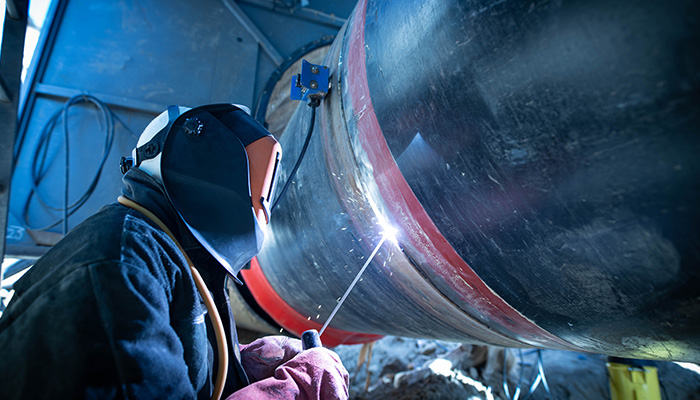
The root pass is the most critical part of any high-pressure weld. It is the first weld bead deposited in a multi-pass weld joint, and it dictates the quality of the subsequent layers. When you utilize a high-end TIG welding service, the focus is on achieving 100% penetration without “sugar” or oxidation on the backside of the weld.
To achieve this, professional operators use a process known as back-purging. By displacing the oxygen inside a pipe or vessel with an inert gas like argon, the welder ensures that the interior of the weld is as clean and smooth as the exterior. This is non-negotiable for industries such as semiconductor manufacturing or pharmaceutical processing, where any internal oxidation can lead to contamination or turbulence in fluid flow.
Consider a recent case involving a custom heat exchanger manifold. The client required 316L stainless steel tubing to handle a corrosive coolant at 450 psi. A standard MIG weld would have introduced too much heat, potentially leading to carbide precipitation and future stress corrosion cracking. By opting for a precision TIG welding service, the team was able to maintain a narrow heat-affected zone (HAZ), preserving the corrosion resistance of the parent metal while ensuring a leak-proof root pass that passed 100% X-ray inspection.
Strategic Material Selection and Thermal Management
One of the most complex challenges you face in custom fabrication is the welding of dissimilar metals or exotic alloys. Titanium, Inconel, and high-grade aluminum alloys all respond differently to thermal input. A generic welding approach often leads to warping, porosity, or brittle intermetallic compounds.
Your project deserves a deep dive into the thermal conductivity of your chosen materials. For instance, aluminum acts like a giant heat sink. When you engage a TIG welding service for aluminum components, the operator must balance the AC balance and frequency to “clean” the oxide layer while providing enough heat to melt the base metal. This level of granular control is only possible through TIG welding service, where the heat source (the arc) is independent of the filler metal addition.
Comparative Analysis of Industrial Joining Methods
To help you determine if this specific process aligns with your budgetary and technical requirements, the following table compares TIG welding service against other common industrial methods based on real-world performance metrics.
| Performance Metric | TIG Welding Service | MIG Welding | Laser Welding |
| Aesthetic Finish | Exceptional (Stack of Dimes) | Moderate (Spatter possible) | High (Narrow bead) |
| Heat Affected Zone | Narrow and Controlled | Wide (High heat input) | Extremely Narrow |
| Material Versatility | High (Exotics & Thin gauge) | Moderate (Mostly Steel/Al) | High (Limited by thickness) |
| Weld Strength | Maximum Integrity | High | High |
| Typical Application | Aerospace/Medical/Vacuum | Structural Steel/Automotive | High-volume Electronics |
Achieving Vacuum-Tight Seals in Semiconductor Assemblies
In the semiconductor industry, “leak-tight” isn’t enough. You require vacuum-tightness measured in helium leak rates. This level of precision requires a TIG welding service that operates under cleanroom-like conditions. Even a fingerprint on the filler rod can introduce enough carbon to cause a microscopic “virtual leak” that ruins a multi-million dollar batch of wafers.
The technical secret lies in the pulsed-arc setting. By pulsing the current, the welder can achieve deep penetration during the “peak” current and allow the weld pool to solidify during the “background” current. This keeps the overall heat input low, preventing the distortion of thin-walled vacuum chambers.
In a recent industrial assembly for a vacuum chamber housing, the wall thickness was only 2mm. Traditional welding would have warped the flange surfaces, making them impossible to bolt together with a metal gasket. Through a specialized pulsed TIG welding service, the flanges remained flat within a 0.05mm tolerance, eliminating the need for expensive post-weld machining and saving the client nearly 15% in secondary processing costs.
The Role of Operator Intuition in Complex Geometry
Advanced robotics have made great strides, but for complex, custom geometries—such as manifold intersections or tight-radius elbows—the human element remains irreplaceable. A veteran welder understands how to manipulate the torch angle to “push” the weld pool into difficult corners where an automated arm might lose its line of sight.
When you look at a high-quality TIG weld, you should see a consistent, rhythmic pattern. This “stack of dimes” appearance isn’t just for aesthetics; it is a visual indicator of consistent heat management and travel speed. If the ripples are uneven, it suggests fluctuations in the weld’s internal structure, which could become a point of failure under cyclic loading.
Documentation and Traceability in Manufacturing
In the aerospace and nuclear sectors, a weld without documentation is a weld that doesn’t exist. A professional TIG welding service provides full traceability, including material mill reports (MTRs), gas purity certificates, and welder qualification records (WPQR).
You should expect a comprehensive data report (PDR) for your project. This report details the specific welding parameters used—amps, volts, gas flow rates, and filler metal batch numbers. This level of transparency ensures that if a component fails in the field five years from now, you can look back at the data and identify exactly how it was produced. This is the hallmark of a high-end technical service that prioritizes long-term reliability over short-term speed.
Optimizing Design for Gas Tungsten Arc Welding
To get the most value out of a TIG welding service, you must design your parts with the process in mind. This is known as Design for Manufacturing (DFM). For example, providing clear access for the TIG torch is vital. Unlike MIG welding, where the wire is fed through the torch, TIG requires the operator to have both hands free—one for the torch and one for the filler rod.
If you design a joint in a “blind” corner where the operator cannot see the arc or feed the rod, the quality will suffer. By consulting with your welding partner during the CAD phase, you can often make small adjustments—such as changing a lap joint to a butt joint with a V-groove—that significantly improve the strength and aesthetic of the final assembly.
Conclusion
Choosing a TIG welding service is an investment in the longevity and safety of your industrial equipment. Whether you are dealing with high-purity gas lines, high-pressure hydraulic manifolds, or aesthetic architectural components, the precision of the TIG process offers a level of control that no other welding method can match. By focusing on root pass integrity, back-purging excellence, and DFM principles, you ensure that your products stand up to the most rigorous industrial demands.
FAQ
Why is TIG welding service preferred for thin-gauge stainless steel?
TIG welding allows for an independent heat source and filler metal addition. This means you can melt the base metal without necessarily adding more material, providing much finer control over the heat-affected zone. This prevents “burn-through” on thin materials and ensures the corrosion-resistant properties of the stainless steel are not compromised by excessive heat.
How do you prevent oxidation on the inside of a welded pipe?
This is achieved through back-purging. We seal the ends of the pipe and flood the interior with argon gas before starting the weld. By removing all oxygen from the interior, we prevent “sugaring” (heavy oxidation), which can restrict flow and cause structural weakness in the root of the weld.
What information do I need to provide for a TIG welding service quote?
o get an accurate quote, you should provide 2D or 3D drawings, material specifications (e.g., 6061-T6 Aluminum), the required tolerance levels, and any specific testing requirements such as X-ray, Dye Penetrant (PT), or Hydrostatic testing.
Can TIG welding service handle high-volume production?
While TIG is generally slower than MIG welding, it can be scaled for high-volume production through orbital welding systems and pulsed-arc automation. For custom or complex projects, the superior quality and reduced need for post-weld cleanup often make it more cost-effective than faster, messier methods.
What are the signs of a high-quality TIG weld?
A high-quality weld should have a consistent ripple pattern, no visible porosity (holes), no undercut (grooves at the edge of the weld), and 100% penetration at the root. On stainless steel, the weld should ideally have a straw to purple color; a dark grey or black color indicates that the weld was overheated.
Need Help Securing High-Precision TIG Welding Services?
If you are unsure which welding specifications or material treatments are best for your complex industrial assemblies, our technical experts are here to help. Contact us today for a personalized consultation, and ensure your critical components are structurally sound, vacuum-tight, and manufactured to the highest standards. Don’t risk project delays or structural failures—get in touch now to protect your engineering integrity and your bottom line!
Latest News
Contact Us
FAQ
What types of parts can be machined?
We can machine a wide range of high-precision CNC parts for automotive, aerospace, medical devices, industrial machinery, and automation equipment, including complex geometries and custom non-standard parts.
What is the machining accuracy?
We can achieve high-precision machining with ±0.005mm tolerance and ensure consistent quality through our strict quality control system.
Can you provide small-batch and prototype manufacturing services?
Yes, we support small-batch production and prototype machining, with flexible scheduling to meet urgent client requirements.
Do you offer customized processing solutions?
Yes, we provide customized solutions with one-on-one technical support, from design review and process optimization to final machining.
How long does delivery usually take?
Delivery time depends on part complexity and quantity, typically within 1-6 weeks. We provide a detailed schedule upon order confirmation.
What certifications are available for quality management systems?
We hold ISO 9001, ISO 14001, and ISO 45001 certifications, strictly following international quality, environmental, and safety standards.
How long does delivery usually take?
Delivery time depends on part complexity and quantity, typically within 1-6 weeks. We provide a detailed schedule upon order confirmation.