
CNC Metal Machine vs Traditional Machining: Which One Is Right for Your Workshop?
Home
/
Blog
/
CNC Metal Machine vs Traditional Machining: Which One Is Right for Your Workshop?
CNC Metal Machine vs Traditional Machining: Which One Is Right for Your Workshop?
April 10, 2026
When you run a workshop or manufacturing business, choosing between computer-controlled equipment and manual operations is one of the most significant decisions you will face. This choice affects not just your initial investment but your daily operations, product quality, and long-term profitability. Understanding the fundamental differences between these approaches helps you make informed decisions that align with your specific production needs, market demands, and growth objectives.
Table of Contents
Understanding the Basics: What Sets CNC and Traditional Machining Apart
Defining CNC Metal Machine: Computer-Controlled Precision
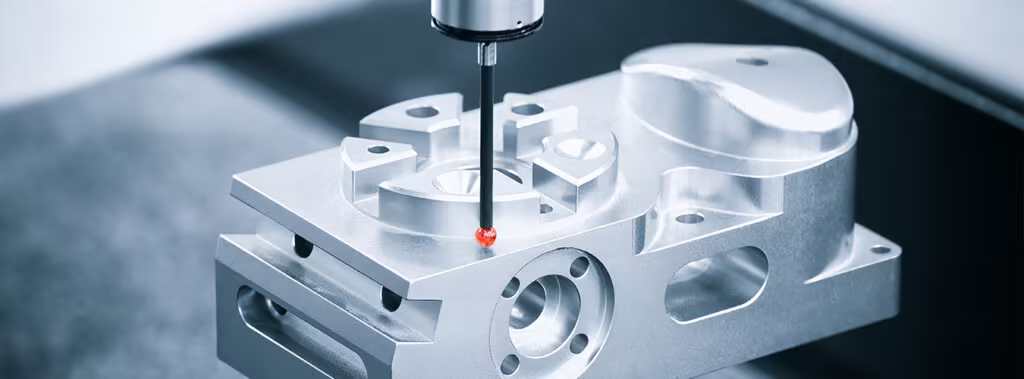
A CNC metal machine operates through computer numerical control, where sophisticated software translates digital designs into precise tool movements. The system reads G-code instructions that specify every aspect of the cutting process, including tool selection, cutting speed, feed rate, and tool path. This computerized control enables the machine to execute complex operations with consistency and accuracy that human operators simply cannot match over extended production runs.
Modern CNC systems incorporate advanced features such as automatic tool changers, real-time monitoring, and adaptive control that adjusts cutting parameters based on sensor feedback. The controller manages multiple axes simultaneously, allowing the creation of intricate three-dimensional shapes that would be extremely difficult or impossible to produce manually. When you invest in a CNC metal machine, you are not just buying equipment but acquiring a complete manufacturing system that integrates hardware, software, and control technology.
Traditional Machining: Manual Skills Meet Metal
Traditional machining relies on the skill, judgment, and physical control of human operators. The machinist manually adjusts controls, moves handwheels or levers, and constantly monitors the cutting process through visual and tactile feedback. This direct human control allows experienced operators to make instant adjustments based on changing conditions, material variations, or unexpected tool behavior.
The manual approach has evolved over decades, with skilled craftsmen developing intuitive understanding of cutting forces, material properties, and tool performance. When you watch a seasoned machinist at work, you see accumulated knowledge expressed through practiced movements and split-second decisions. Traditional equipment typically includes lathes, milling machines, drill presses, and grinders that require constant operator attention and adjustment.
Key Differences at a Glance: Quick Comparison Table
| Comparison Dimension | CNC Metal Machine | Traditional Machining |
|---|---|---|
| Operation Method | Computer program control | Manual operator control |
| Precision Level | Plus or minus 0.001mm | Plus or minus 0.05mm |
| Repeatability | Extremely high across thousands of parts | Dependent on operator skill and fatigue |
| Learning Curve | Programming plus operation training | Purely manual skill development |
| Per-Part Cost | Higher for small quantities, lower for large runs | Lower for small quantities, higher for volume |
| Setup Time | Longer initial programming and fixturing | Shorter setup, longer per-part time |
| Labor Requirements | One operator can monitor multiple machines | One operator per machine required |
Precision and Accuracy: The Quality Gap That Matters
CNC Metal Machine: Delivering Consistent, Repeatable Results
The precision advantage of computer-controlled equipment becomes most apparent in production environments where consistency matters more than individual perfection. According to manufacturing industry data published by the International Journal of Advanced Manufacturing Technology, CNC systems maintain dimensional tolerances within plus or minus 0.001mm across production runs of thousands of parts, with variation typically less than 10 percent of the specified tolerance band.
This consistency stems from several factors. First, the computer control eliminates human variability in control movements. Second, modern machines feature feedback systems that constantly monitor tool position and make microscopic corrections. Third, thermal compensation algorithms adjust for temperature-induced expansion that would otherwise affect accuracy. When you need parts that fit together interchangeably or assemblies that require precise alignment, this consistency translates directly into reduced assembly problems and fewer rejected components.
Traditional Machining: Skill-Dependent Precision with Variations
Manual machining achieves impressive results in the hands of skilled operators, but consistency across multiple parts presents challenges. According to research on human factors in manufacturing, even experienced machinists typically show dimensional variation of plus or minus 0.05mm between parts due to differences in tool wear compensation, manual control inputs, and environmental factors.
However, manual methods excel in situations requiring adaptive judgment. An experienced operator can sense tool vibration, recognize material inconsistencies, or detect gradual tool degradation and make real-time adjustments that computer programs might miss. This human element proves valuable when working with variable materials, prototypes, or one-off custom jobs where the optimal parameters might not be known in advance.
Real-World Impact: How Precision Affects Your Final Product
The precision difference becomes critical in applications with tight assembly requirements. Consider a shaft and bearing assembly where a 0.02mm difference between parts determines whether components fit properly or bind. According to assembly tolerance analysis studies, when parts approach their tolerance limits, assembly problems increase exponentially rather than linearly.
For your workshop, this means that CNC precision can reduce assembly scrap rates by 60 to 80 percent for complex assemblies with multiple mating surfaces. The consistency also means reduced inspection frequency, since once you validate the process, you can trust that subsequent parts will maintain the same quality level. This confidence allows you to streamline quality procedures and focus inspection resources on critical characteristics rather than measuring every dimension on every part.
Production Speed and Efficiency: Time Is Money in Manufacturing
CNC Metal Machine: Optimized for High-Volume Production
The speed advantage of computer-controlled equipment emerges clearly when you analyze total cycle time including setup and production. According to productivity studies conducted by the Association for Manufacturing Technology, CNC metal machines typically produce parts 300 to 500 percent faster than manual methods once programs and fixtures are developed.
Several factors contribute to this efficiency advantage. First, optimized tool paths calculated by CAM software eliminate unnecessary movements and reduce cutting time. Second, rapid traverse rates between cutting operations minimize non-productive time. Third, automatic tool changers can swap cutting tools in seconds rather than the minutes required for manual changes. Fourth, consistent cutting parameters maintain optimal conditions rather than the conservative settings manual operators often use to ensure safety.
For your production planning, this efficiency translates into higher capacity utilization, shorter lead times, and the ability to respond quickly to large orders without adding multiple shifts or equipment. When demand spikes, your CNC equipment can run around the clock with minimal supervision, while manual methods require proportional increases in skilled labor.
Traditional Machining: Flexible but Time-Consuming
Manual operations excel when flexibility outweighs speed considerations. The setup time for manual work typically ranges from 15 to 30 minutes, compared to one to four hours for CNC programming and fixturing. For very small production runs of one to five parts, manual methods often prove faster overall despite slower individual part production.
This flexibility proves valuable in prototype development, custom fabrication, and situations where design changes occur frequently. When you need to try three different variations of a part to test a design, manual machining lets you modify and retry almost immediately. CNC methods would require program modifications and potentially new fixtures for each change.
Speed vs. Setup Time: Analyzing the True Efficiency Equation
The crossover point where CNC becomes more economical than manual methods depends on several factors. According to cost analysis models used in manufacturing engineering, the break-even quantity typically ranges from 10 to 50 parts depending on complexity, tolerance requirements, and hourly labor costs.
For your decision making, consider both quantitative and qualitative factors. Quantitatively, calculate total cost including setup time, hourly rates, and expected scrap rates. Qualitatively, consider factors such as scheduling flexibility, workforce availability, and opportunity cost of tying up skilled operators on repetitive work versus utilizing their expertise on problem-solving and complex setups.
Labor Requirements and Skill Development: The Human Factor
CNC Metal Machine: Programming Skills Over Manual Dexterity
The workforce requirements for computer-controlled equipment emphasize cognitive skills over physical dexterity. According to industry training standards from the National Institute for Metalworking Skills, CNC programmers need understanding of geometry, trigonometry, materials science, and computer operations. Operators require training in machine setup, program loading, tool setting, and process monitoring.
The learning curve typically spans three to six months for basic operation, with one to two years required for full proficiency in programming and troubleshooting. However, once trained, a single operator can often monitor two to four machines simultaneously, depending on automation levels and part complexity. This labor multiplication effect means you can expand production capacity without proportional increases in workforce size.
Traditional Machining: Craftsmanship Built on Experience
Manual machining requires different skills that develop through hands-on practice and mentorship. According to apprenticeship data from manufacturing trade organizations, it typically takes three to five years to develop full journeyman capability. The learning involves developing physical skills, tool sharpening techniques, material sensing abilities, and judgment about cutting conditions.
The challenge many workshops face is that experienced manual machinists are becoming increasingly scarce. According to workforce surveys, the average age of skilled manual machinists exceeds 55 years in many industrial regions, with insufficient new workers entering the trade to replace retiring experts. This demographic trend means that relying exclusively on manual methods may create future workforce risks for your operation.
Workforce Planning: Finding the Right Balance for Your Workshop
Strategic workforce planning should consider both current capabilities and future needs. If your market demand favors high-volume precision parts, investing in CNC capabilities makes sense even if it requires retraining existing staff or hiring new personnel with different skill sets. Conversely, if your strength lies in custom low-volume work where flexibility and adaptive problem-solving matter most, maintaining strong manual capabilities remains essential.
Many successful workshops adopt hybrid approaches where versatile workers develop both manual and CNC skills. This cross-training creates flexible teams that can move between different types of work based on production demands. It also provides career development opportunities that help retain skilled workers in competitive labor markets.
Material Capabilities: What Can Each Process Handle?
CNC Metal Machine: Versatile Material Processing Power
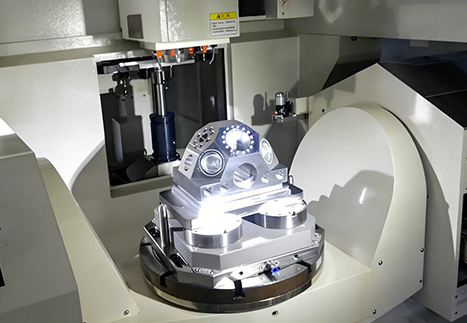
Modern CNC equipment handles virtually all machinable metals including steel alloys, aluminum, stainless steel, titanium alloys, copper, brass, and various exotic materials. The computer control allows precise management of cutting parameters for each material, optimizing tool life and surface finish while maintaining dimensional accuracy.
Advanced features such as high-pressure coolant delivery, through-spindle coolant, and vibration damping systems extend capabilities to challenging materials. According to materials processing research, modern CNC metal machines can work materials up to 65 HRC hardness using carbide or ceramic tooling, opening possibilities for hard milling applications that previously required grinding.
Traditional Machining: Material Limitations and Workarounds
Manual methods also process a wide range of materials but with some practical limitations. Very hard materials above 45 HRC challenge manual machines because the cutting forces exceed what operators can consistently control. Very soft or gummy materials such as pure aluminum or certain plastics create chip control problems that require skilled handling.
The advantage of manual work lies in the ability to adapt instantly to material variations. When you encounter inconsistent material hardness, internal voids, or unexpected inclusions, an experienced operator can feel the difference through the machine controls and adjust cutting conditions immediately. This adaptability proves valuable when working with castings, forgings, or materials with variable properties.
Advanced Applications: Complex Materials and Specialized Processes
Both approaches handle specialized materials but with different strengths. For aerospace titanium alloys that require precise control of cutting forces and temperatures to prevent work hardening, CNC methods excel. The consistent parameters and real-time monitoring prevent thermal damage that would compromise material properties.
For extremely large workpieces such as ship propeller shafts or heavy machinery components, manual methods sometimes prove practical because the workpiece size exceeds standard CNC envelope capacities. In these cases, specialized manual equipment with large travels accommodates the dimensions, though at the cost of precision consistency.
Scalability and Future-Proofing: Growing with Your Business
CNC Metal Machine: Built for Business Expansion
Computer-controlled equipment scales naturally with business growth. Once you develop programs and processes, increasing production simply involves running the equipment more hours or adding identical machines. According to manufacturing growth studies, businesses with CNC capabilities typically achieve 40 to 60 percent faster revenue growth when expanding compared to manual-only operations.
The scalability extends beyond simple volume increases. CNC systems integrate with automation, robotics, and material handling systems to create lights-out manufacturing capabilities. You can implement pallet changers that allow automatic loading and unloading, robotic arms that tend multiple machines, and conveyor systems that move parts between operations without human intervention.
Traditional Machining: Stability but Limited Growth Potential
Manual operations scale primarily by adding more machines and more operators. This linear scaling creates management complexity and quality control challenges as your workforce grows. Each new operator introduces variability in technique and quality that must be managed through training and supervision.
The growth limitation becomes apparent when you try to increase production beyond single-shift operation. Manual machines require skilled operators for every hour of operation, so expanding to two or three shifts means finding two to three times as many qualified workers. In regions with skilled labor shortages, this constraint may cap your growth regardless of market demand.
Industry Trends: How Modern Manufacturing Is Shaping the Future
Manufacturing industry trends clearly favor computer-controlled and automated methods. According to the International Federation of Robotics, global installation of industrial CNC equipment has grown at an average annual rate of 12 percent over the past decade, far outpacing overall manufacturing equipment growth. This trend reflects customer demands for tighter tolerances, shorter lead times, and lower costs.
For your business planning, this trend means that suppliers, competitors, and customers are all moving toward CNC-based processes. Maintaining only manual capabilities may position you as a niche provider for specialized work but could limit your participation in mainstream markets. Conversely, developing CNC expertise opens opportunities across multiple industries and application areas.
Maintenance and Reliability: Keeping Your Workshop Running
CNC Metal Machine: Sophisticated Systems Need Expert Care
Modern CNC equipment requires preventive maintenance schedules that address both mechanical and electronic systems. Daily maintenance typically includes cleaning chips and coolant, checking fluid levels, and inspecting tooling. Weekly maintenance covers lubrication, filter changes, and calibration checks. Monthly maintenance involves more thorough inspection of wear components, alignment verification, and backup of critical parameters and programs.
According to equipment reliability data, properly maintained CNC metal machines achieve mean time between failures of 2000 to 4000 operating hours. However, when failures occur, they often require specialized diagnostic skills and potentially expensive components such as servo motors, controllers, or spindle bearings. Maintenance costs typically run 3 to 5 percent of machine value annually for preventive maintenance plus repair costs as needed.
Traditional Machining: Simple but Not Maintenance-Free
Manual equipment has simpler mechanical systems that most workshop mechanics can service. Daily maintenance includes cleaning and lubrication. Monthly maintenance involves checking alignments, adjusting gibs and ways, and inspecting belts and gears. Annual maintenance may include scraping ways, replacing worn bearings, and rebuilding major components.
According to maintenance cost studies, manual equipment typically costs 1 to 2 percent of machine value annually in maintenance and repairs. However, the reliability varies more widely depending on operator care and usage patterns. Manual machines subjected to heavy use may require more frequent major overhauls than gently used equipment.
Downtime Analysis: How Equipment Failure Impacts Your Bottom Line
The cost of equipment downtime extends beyond the immediate repair costs to include lost production, delayed deliveries, and potential customer dissatisfaction. For your business planning, calculate downtime cost based on your profit margin per hour of operation and the length of typical outages.
According to manufacturing productivity studies, CNC metal machines typically have lower downtime percentages (2 to 4 percent of scheduled time) compared to manual equipment (5 to 8 percent) due to better preventive maintenance practices and more robust construction. However, when CNC downtime occurs, the cost per hour is often higher because the machine may represent a larger portion of your capacity and may be supporting multiple production lines.
Application Scenarios: Matching the Right Process to Your Needs
CNC Metal Machine: Ideal Use Cases Where Precision Rules
High-precision industries such as aerospace, medical devices, and automotive components rely almost exclusively on CNC methods. In these applications, tolerances often range from plus or minus 0.005mm to plus or minus 0.0005mm, consistency requirements are strict, and part volumes justify the initial investment. According to aerospace manufacturing data, over 95 percent of precision machined aircraft components are produced using CNC equipment.
Large production runs also favor CNC methods. When you produce thousands of identical parts, the programming setup cost amortizes over many units, and the production efficiency gains become substantial. Consumer electronics, automotive components, and appliance parts all typically use CNC processes because the volume justifies the automation.
Traditional Machining: Where Manual Methods Still Shine
Prototype development remains a stronghold for manual methods. When you need to produce a handful of parts to test a design, try different approaches, or verify fit before committing to final specifications, manual machining lets you iterate quickly without programming delays. Many product development teams keep manual equipment specifically for rapid prototyping purposes.
Field repair and maintenance work also often requires manual methods because the work comes to you rather than moving to a machine shop. When you need to repair damaged shafts, fabricate replacement parts on-site, or modify existing equipment in place, portable manual equipment provides flexibility that stationary CNC cannot match.
Hybrid Approach: Combining CNC and Traditional for Maximum Flexibility
Many successful workshops maintain both capabilities and strategically allocate work based on the best fit. Typical approaches include using manual equipment for prototyping and short runs while reserving CNC for production, using manual machines for roughing operations followed by CNC finishing, or using manual equipment for support functions such as tool making and maintenance while CNC handles primary production.
According to manufacturing flexibility studies, workshops with both capabilities typically achieve 30 to 50 percent higher overall equipment utilization than those with only one type. The flexibility allows them to accept a wider range of work and respond to varying market conditions without being locked into a single process approach.
Making the Decision: A Framework for Choosing the Right Solution
Decision Checklist: 10 Key Questions to Ask Yourself
Before making this significant investment, honestly assess your current situation and future plans. First, what is your current monthly production volume and what growth do you anticipate over the next 12 to 24 months? Second, what are your typical tolerance requirements, and how much variation can your customers accept?
Third, what skills does your current workforce possess, and how willing are they to learn new technologies? Fourth, what is your budget range, and what payback period do you consider acceptable? Fifth, what materials do you primarily work with, and do you anticipate material changes in the future?
Sixth, what are your customers’ expectations regarding delivery time, quality consistency, and documentation? Seventh, do your facility power, floor space, and environmental conditions support CNC installation? Eighth, what technical support availability exists in your area for installation, training, and ongoing service?
Ninth, do you plan to expand into automated production or lights-out manufacturing in the future? Tenth, what are your competitors using, and does process choice affect your competitive position in your market?
Scenario-Based Recommendations: What’s Best for Different Workshop Types
Startup workshops and small businesses often benefit from beginning with manual equipment to minimize initial investment while developing customer relationships and understanding market demands. As volume builds and requirements solidify, adding CNC capacity becomes a logical next step. This phased approach manages risk while building capability.
Mid-sized production shops typically transition to primarily CNC operations while maintaining some manual capacity for prototyping and maintenance. The mix might be 80 percent CNC for regular production work and 20 percent manual for flexible, low-volume tasks. This balance provides both efficiency and adaptability.
Large manufacturing enterprises usually operate almost entirely with CNC equipment, often integrated into automated production lines. Manual capacity may exist only in tool rooms or maintenance departments where flexibility and custom one-off work predominate. For these operations, the scale and consistency requirements justify full automation.
Transition Strategy: How to Successfully Move from Traditional to CNC
If you decide to transition from primarily manual to primarily CNC operations, plan the move carefully to maintain production continuity. Start with one machine that handles your highest-volume or most critical work. Develop expertise with this installation before expanding to additional machines. Train your most capable manual machinists first, as their existing machining knowledge helps them understand CNC programming more quickly.
Maintain your manual equipment during the transition rather than selling it immediately. This backup capacity proves valuable if CNC installation experiences problems or if unusual work comes in that CNC cannot handle efficiently. Only after CNC operations prove reliable and fully integrated should you consider reducing manual capacity.
Conclusion
Key Takeaways: Making an Informed Decision
Both CNC metal machines and traditional machining have legitimate roles in modern manufacturing. Your decision should not be about choosing one as universally superior but about selecting the right tools for your specific situation. The computer-controlled approach offers precision, consistency, and efficiency that transform production operations for suitable work. The manual approach provides flexibility, lower initial investment, and adaptive capabilities that excel in prototyping and custom work.
The investment decision should consider quantitative factors such as ROI calculations and production volume thresholds, but also qualitative factors including workforce capabilities, market positioning, and long-term strategic direction. According to manufacturing strategy research, the most successful workshops match their process capabilities to their market niche rather than trying to be all things to all customers.
Final Recommendation: Why Many Workshops Choose Both
The majority of thriving workshops ultimately adopt hybrid approaches that leverage both technologies where each excels. This flexibility allows them to handle a wide range of work, adapt to changing market conditions, and provide complete solutions to customers with diverse needs.
For your workshop, the ideal approach likely starts with understanding your current work mix, growth plans, and competitive position. From that foundation, you can build a process strategy that includes both proven manual techniques where they add value and CNC capabilities where they provide competitive advantage. The balance may shift over time as your business evolves, but maintaining the ability to choose the right tool for each job ensures long-term success regardless of how manufacturing technologies continue to develop.
FAQ
What is the typical return on investment (ROI) for a CNC metal machine?
Well-maintained CNC equipment typically achieves payback in 12 to 24 months when used for high-volume production. The timeline depends on factors like production volume, labor costs, and pricing strategy. For a $100,000 machine producing parts that save $5 each compared to manual methods, you would need to produce 20,000 parts to break even. Running the machine two shifts daily can reduce this payback period to just nine months.
How does CNC metal machining compare to traditional machining in terms of precision?
CNC systems maintain dimensional tolerances within ±0.001mm across production runs of thousands of parts, with variation typically less than 10% of the specified tolerance band. In contrast, manual machining typically shows dimensional variation of ±0.05mm between parts due to operator skill differences and fatigue. This precision difference becomes critical in applications with tight assembly requirements, where CNC can reduce scrap rates by 60 to 80% for complex assemblies.
What skills are required to operate a CNC metal machine compared to traditional equipment?
CNC operation emphasizes cognitive skills including programming, geometry understanding, and computer literacy. The learning curve spans 3-6 months for basic operation, with 1-2 years needed for full proficiency in programming and troubleshooting. In contrast, traditional machining requires physical dexterity and hands-on skill development that typically takes 3-5 years of apprenticeship to achieve journeyman capability. However, trained CNC operators can monitor 2-4 machines simultaneously, creating labor multiplication effects not possible with manual methods.
When does CNC metal machine become more cost-effective than traditional methods?
The break-even quantity typically ranges from 10 to 50 parts depending on complexity, tolerance requirements, and hourly labor costs. CNC becomes more economical for production runs beyond this threshold because the initial programming setup cost amortizes over many units. For production runs beyond 50 pieces, manual machining typically costs 2-3 times more per part due to higher labor costs (60-70% of total cost for manual vs. 20-30% for CNC operations).
How do maintenance requirements differ between CNC metal machines and traditional equipment?
CNC systems require preventive maintenance schedules addressing both mechanical and electronic components, with daily cleaning, weekly lubrication, and monthly calibration checks. Maintenance costs typically run 3-5% of machine value annually, plus repair costs as needed. Traditional equipment has simpler mechanical systems that most workshop mechanics can service, with maintenance costs running 1-2% of machine value annually. While CNC metal machines achieve mean time between failures of 2000-4000 operating hours, repairs often require specialized diagnostic skills and expensive electronic components.
Latest News
Contact Us
FAQ
What types of parts can be machined?
We can machine a wide range of high-precision CNC parts for automotive, aerospace, medical devices, industrial machinery, and automation equipment, including complex geometries and custom non-standard parts.
What is the machining accuracy?
We can achieve high-precision machining with ±0.005mm tolerance and ensure consistent quality through our strict quality control system.
Can you provide small-batch and prototype manufacturing services?
Yes, we support small-batch production and prototype machining, with flexible scheduling to meet urgent client requirements.
Do you offer customized processing solutions?
Yes, we provide customized solutions with one-on-one technical support, from design review and process optimization to final machining.
How long does delivery usually take?
Delivery time depends on part complexity and quantity, typically within 1-6 weeks. We provide a detailed schedule upon order confirmation.
What certifications are available for quality management systems?
We hold ISO 9001, ISO 14001, and ISO 45001 certifications, strictly following international quality, environmental, and safety standards.
How long does delivery usually take?
Delivery time depends on part complexity and quantity, typically within 1-6 weeks. We provide a detailed schedule upon order confirmation.