
How to Choose the Right Custom CNC Machining Services Provider
Home
/
Blog
/
How to Choose the Right Custom CNC Machining Services Provider
How to Choose the Right Custom CNC Machining Services Provider
April 8, 2026
Selecting a partner for custom CNC machining services is a decision that dictates the technical success and financial viability of your entire project. For procurement managers and engineers, the challenge is not simply finding a shop with a lathe; it is identifying a facility that possesses the specific machine capacity, operator expertise, and quality protocols to handle everything from delicate prototypes to heavy-duty industrial components.
Drawing from decades of industrial manufacturing data, it is evident that nearly 30% of project delays in custom manufacturing stem from a mismatch between part complexity and machine capability. To ensure your project remains on track, you must evaluate a provider based on their technical infrastructure and their ability to act as a strategic manufacturing partner.
Table of Contents
Evaluate Machine Capacity and Scale for Your Project
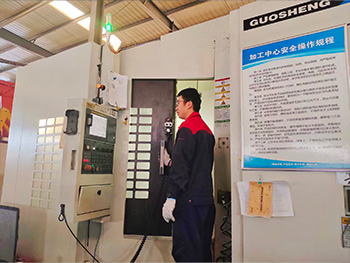
The foundation of any high-quality custom CNC machining services are its equipment list. A versatile facility should offer a tiered range of machinery to handle various scales of production. In our experience, utilizing specific machine models for targeted part sizes ensures the highest level of dimensional stability.
Small-scale precision parts require high-speed spindles and rapid indexing, while large-diameter industrial components demand high torque and heavy-duty beds. When you evaluate a provider, ask for their specific machine models. A facility equipped with a range from the CK6140 for small shafts to the CK61100 for massive industrial rollers demonstrates a readiness to scale with your project needs.
Assess Technical Expertise and Operator Experience
While advanced machinery is essential, the precision of custom CNC machining services is ultimately governed by the person behind the controls. Skilled operators bring a level of “tacit knowledge” that automated systems cannot yet fully replicate, particularly when dealing with heat-induced material expansion or tool deflection in long-axis turning.
A team of over 20 experienced operators ensures that institutional knowledge is preserved and applied to every setup. This human element is critical when custom CNC machining services complex geometries or working with difficult-to-cut alloys. Experience allows a team to anticipate how a material will react during high-speed cutting, significantly reducing the rate of scrap and rework.
Analyze the Full Range of Process Capabilities
A true one-stop provider does more than just basic turning. To maximize efficiency, you should look for integrated process capabilities. This includes external and internal turning, end facing, grooving, threading, and precision hole processing such as boring and reaming.
By completing these operations in a single setup, the provider maintains superior concentricity between the outer diameter and internal features. This integration is a hallmark of premium custom CNC machining services, as it eliminates the cumulative errors often introduced when a part is moved between different workstations or secondary vendors.
Verification of Quality Control and Inspection Standards
Quality is not an afterthought; it must be engineered into the process. Reliability in custom manufacturing is verified through rigorous inspection protocols, including First Article Inspection (FAI) and documented in-process checks. According to international quality management standards, a robust QC department should utilize calibrated precision measuring tools like CMMs, micrometers, and thread gauges to verify every critical tolerance.
Consistency across high-volume production batches is only possible when a provider maintains a strict “right-first-time” culture. This transparency in quality reporting provides the trust necessary for long-term industrial partnerships.
Look for Design for Manufacturability (DFM) Support
The most valuable custom CNC machining services are those that offer collaborative engineering. Design for Manufacturability (DFM) feedback is a process where the manufacturer reviews your technical drawings to identify potential cost-saving or quality-improving adjustments.
Perhaps a slight change in a fillet radius could allow for standard tooling, or a specific thread depth could be optimized for better tool life. This expert feedback reduces manufacturing lead times and helps bridge the gap between a theoretical CAD model and a tangible, high-performance part.
Consider Production Efficiency and Lead Time Management
In a globalized market, time is a critical cost factor. Efficiency in custom CNC machining services are often driven by automation. The implementation of automated bar feeders allows for continuous, high-speed batch manufacturing, which is essential for meeting tight project deadlines.
A facility’s ability to manage its workflow—from material sourcing to final logistics—determines your time-to-market. When you choose a provider with a large fleet of machines and a dedicated workforce, you gain the agility needed to handle sudden spikes in demand without compromising on the precision of the output.
Transparency in Quoting and Cost Structures
A professional quote for custom CNC machining services should be detailed and transparent. It should break down costs into material, labor, tooling, and surface treatments. This level of detail allows you to see exactly where your budget is going and prevents hidden fees from appearing mid-production.
Industrial procurement data suggests that the lowest quote is rarely the most cost-effective over the long term. Value is found in a provider who offers a fair price backed by reliability, technical support, and the durability of the finished components.
Importance of a Direct Source Factory Partnership
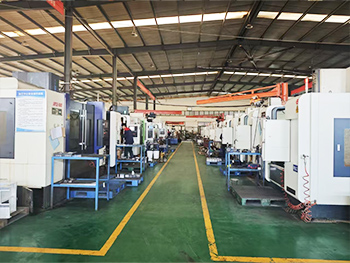
There is a significant logistical and financial advantage to working directly with a source factory. Eliminating intermediaries removes extra markups and creates a direct line of communication with the production team.
Direct partnership allows for rapid adjustments. If a design change is required mid-project, you can speak directly with the engineers and operators managing your order. This streamlined communication ensures that your project requirements are interpreted accurately and executed with the highest level of expertise.
Summary of Machine Matching for Project Optimization
To help you understand how machine capacity aligns with your specific part requirements, the following table outlines the technical allocation for various industrial components.
| Industrial Component Type | Recommended Machine Range | Technical Advantage |
| Precision Pins and Small Bushings | CK6140 / CK6150 | High RPM and rapid cycle times for small diameters |
| Medium Flanges and Drive Shafts | CK6160 / CK6180 | Balanced torque and stability for medium-scale parts |
| Large Rollers and Heavy-Duty Housings | CK61100 | Extreme load capacity and stability for large diameters |
Conclusion
The process of selecting a provider for custom CNC machining services is fundamentally about risk management. A provider who can offer a diverse fleet of machinery—from the precision-oriented CK6140 to the heavy-duty CK61100—demonstrates a commitment to technical versatility. When this infrastructure is paired with a team of over 20 expert operators, the result is a manufacturing partnership that can navigate the complexities of modern engineering.
By prioritizing facilities that provide transparent quoting, robust quality control, and proactive DFM feedback, procurement professionals can ensure their projects are delivered with dimensional accuracy and fiscal efficiency. Ultimately, the right partner is one who understands that every turned component is a critical link in your larger industrial supply chain, requiring both technical mastery and reliable communication to succeed.
FAQ
How does the machine model, such as the CK61100, impact the cost of my project?
Machine selection is a primary driver of operational efficiency. A heavy-duty lathe like the CK61100 is specifically designed with the torque and bed stability required for large-diameter parts, such as industrial rollers or massive flanges. If you were to attempt these parts on a smaller machine, the lack of stability would lead to poor surface finishes and high scrap rates. Conversely, using a heavy machine for tiny pins is an inefficient use of power. A provider with a tiered range ensures you only pay for the specific capacity your part dimensions require.
What is the role of DFM feedback in professional custom CNC machining services?
Design for Manufacturability (DFM) is a collaborative review where the manufacturer analyzes your 2D or 3D drawings to identify features that may be unnecessarily expensive or difficult to machine. For example, suggesting a change from a sharp internal corner to a standard radius can allow the operator to use standard boring bars instead of custom tooling. According to industrial manufacturing reports, early DFM involvement can reduce total production costs by up to 20% by streamlining tool paths and reducing machine cycle times.
Can custom CNC machining services handle both small-batch prototypes and mass production?
Yes, a well-equipped facility is designed to be agile. The prototyping phase relies on the manual expertise of senior operators to fine-tune programs and tool selections. Once the design is validated, the transition to mass production is achieved through the use of automated bar feeders and optimized process flows. This scalability is essential for clients who need to test a concept before committing to thousands of units, ensuring that the quality remains consistent throughout the entire product lifecycle.
Need Help Choosing the Right Custom CNC Machining Services?
If you are unsure which machining process or material is best suited for your specific industrial application, our experts are here to help. Contact us today for a personalized technical consultation to ensure your manufacturing project is reliable, efficient, and cost-effective. Don’t wait until production delays occur—get in touch now to protect your project and your bottom line!
Latest News
Contact Us
FAQ
What types of parts can be machined?
We can machine a wide range of high-precision CNC parts for automotive, aerospace, medical devices, industrial machinery, and automation equipment, including complex geometries and custom non-standard parts.
What is the machining accuracy?
We can achieve high-precision machining with ±0.005mm tolerance and ensure consistent quality through our strict quality control system.
Can you provide small-batch and prototype manufacturing services?
Yes, we support small-batch production and prototype machining, with flexible scheduling to meet urgent client requirements.
Do you offer customized processing solutions?
Yes, we provide customized solutions with one-on-one technical support, from design review and process optimization to final machining.
How long does delivery usually take?
Delivery time depends on part complexity and quantity, typically within 1-6 weeks. We provide a detailed schedule upon order confirmation.
What certifications are available for quality management systems?
We hold ISO 9001, ISO 14001, and ISO 45001 certifications, strictly following international quality, environmental, and safety standards.
How long does delivery usually take?
Delivery time depends on part complexity and quantity, typically within 1-6 weeks. We provide a detailed schedule upon order confirmation.