
5 Effective Ways to Reduce Costs for Custom CNC Turning Parts
Home
/
Blog
/
5 Effective Ways to Reduce Costs for Custom CNC Turning Parts
5 Effective Ways to Reduce Costs for Custom CNC Turning Parts
March 23, 2026
In the highly competitive landscape of precision manufacturing, the procurement of CNC turning parts involves more than just selecting a vendor. For procurement managers and project engineers, the ultimate goal is to achieve a balance between extreme precision and budgetary control. Based on industrial manufacturing reports, up to 70% of a component’s manufacturing cost is determined during the design and material selection phase.
By leveraging the operational expertise of a high-capacity facility—equipped with a versatile range of machinery from the CK6140 to the heavy-duty CK61100—we can identify specific, actionable strategies to streamline production costs. Here is a comprehensive analysis of how to optimize your manufacturing budget without compromising on quality or performance.
Table of Contents
Strategic Material Selection and Machinability Optimization
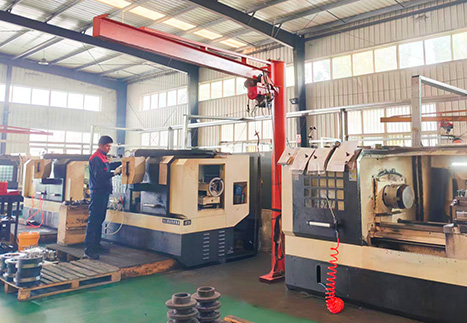
The selection of raw materials is the foundational driver of the final quote for CNC turning parts. Beyond the per-kilogram cost of the metal, the concept of “Machinability Rating” plays a critical role in labor and tooling expenses. Machinability is a measure of how easily a material can be cut while providing a satisfactory surface finish and reasonable tool life.
For example, comparing stainless steel grades reveals significant cost variances. While Stainless Steel 316 offers exceptional corrosion resistance, its work-hardening characteristics make it difficult to machine, leading to slower cycle times. In contrast, Stainless Steel 303 is sulfur-enhanced to improve machinability. According to industry machining data, switching from 316 to 303 can reduce machining time by nearly 25% if the application allows. Furthermore, using standard bar stock sizes that align with your finished part’s maximum diameter eliminates the need for “rough turning,” effectively reducing material waste and energy consumption.
Refining Design for Manufacturability (DFM) to Minimize Cycle Times
The most expensive features of CNC turning parts are often those that add no functional value but increase machining complexity. Design for Manufacturability (DFM) is the practice of designing components in a way that simplifies the production process.
One of the most impactful DFM strategies is the optimization of tolerances. While it is tempting to request high precision across all dimensions, industry research indicates that moving from a standard tolerance of $\pm0.1\text{ mm}$ to a high-precision tolerance of $\pm0.005\text{ mm}$ can increase costs by over 100%. This is due to the necessity of specialized measuring equipment, slower feed rates, and increased scrap rates. By applying tight tolerances only to critical mating surfaces and using standard radii for internal corners, you allow the CNC lathe to operate at its most efficient speeds.
Precision Machine Matching Across the CK Series Infrastructure
Efficiency in CNC turning services is largely determined by matching the workpiece to the appropriate machine capacity. Using a heavy-duty machine for a small pin is an expensive waste of overhead, while using a small machine for a large flange results in poor surface quality and potential tool breakage.
Our facility utilizes a tiered technical infrastructure to ensure that every project is routed to the most cost-effective workstation. This strategic allocation ensures that clients only pay for the specific power and precision required for their unique dimensions.
| CNC Machine Category | Specific Models | Target Component Diameter | Key Production Advantage |
| Precision Series | CK6140 / CK6150 | Small to Medium (up to 400mm) | High RPM for rapid processing of shafts and pins |
| Stability Series | CK6160 / CK6180 | Medium to Large (up to 800mm) | Enhanced torque for industrial rollers and large flanges |
| Heavy-Duty Series | CK61100 | Large Scale (up to 1000mm) | Extreme stability for heavy-turning and deep boring |
Consolidating Operations Through One-Stop Machining Solutions
A significant portion of the cost of custom CNC turning parts comes from “Setup and Handling.” When a part must be moved between different machines for turning, drilling, and boring, the risk of cumulative error and logistical delay increases. Integrated machining solutions solve this by completing multiple operations in a single setup.
Our comprehensive process flow includes end facing, external and internal turning, threading, and grooving within the initial cycle. Furthermore, by utilizing advanced hole processing techniques such as precision reaming and boring on the same lathe, we eliminate the need for secondary drilling stations. This holistic approach not only ensures better concentricity between the outer diameter and internal holes but also drastically reduces the total labor hours billed to the project.
Scaling from Prototyping to Automated Batch Production
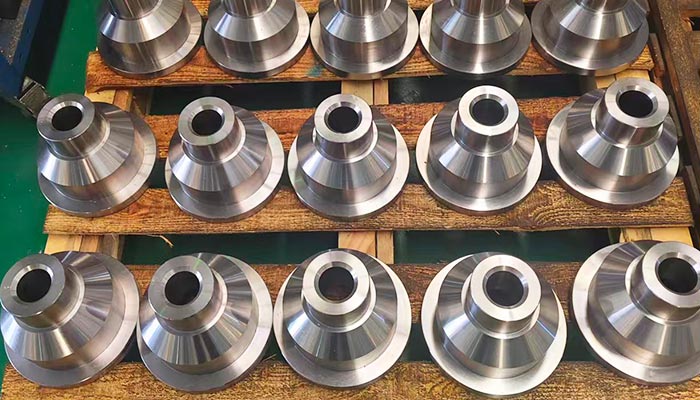
The per-unit cost of CNC turning parts follows a clear economy of scale. During the prototyping phase, costs are high due to manual programming and setup. However, as the project moves into volume production, automation becomes the primary tool for cost reduction.
The integration of automated bar feeders allows our CK series lathes to run continuously, maximizing the output per hour. With a team of 20+ expert operators managing these automated flows, we can maintain 24/7 production cycles for high-volume orders. Internal manufacturing reports suggest that for orders exceeding 1,000 units, the implementation of automated bar feeding and optimized tool paths can lower the individual part cost by as much as 30% to 50% compared to manual loading.
Reducing Costs Through Direct Source Factory Partnerships
The supply chain structure itself can be a hidden source of inflation. When sourcing through trading companies or intermediaries, a markup is added at every stage. Partnering directly with a source factory eliminates these unnecessary margins and provides a direct line of communication with the engineering team.
Direct partnership allows for “Early Supplier Involvement” (ESI). Our technical team can review your 2D and 3D drawings to identify potential cost-saving opportunities before the first chip is cut. Whether it is suggesting a slightly larger chamfer to ease tool entry or recommending a more stable material for long-axis turning, these insights provide substantial added value that extends beyond simple fabrication.
Optimizing Surface Finish Requirements for Turning Efficiency
Surface finish specifications (measured in Ra) are a critical but often overlooked cost driver. Achieving a mirror-like finish directly on the lathe requires specific diamond-tipped tooling and very slow feed rates. If a part is destined for a hidden industrial application where aesthetics are secondary to function, a standard “as-machined” finish is far more economical.
By understanding the final application of your CNC turning parts, we can adjust the machining parameters to meet the required roughness without over-processing. If high-quality finishes are required for functional reasons, such as bearing surfaces, we utilize optimized cutting speeds to achieve the desired Ra value in fewer passes, saving both time and tool life.
Technical Accuracy in Documentation to Prevent Costly Scraps
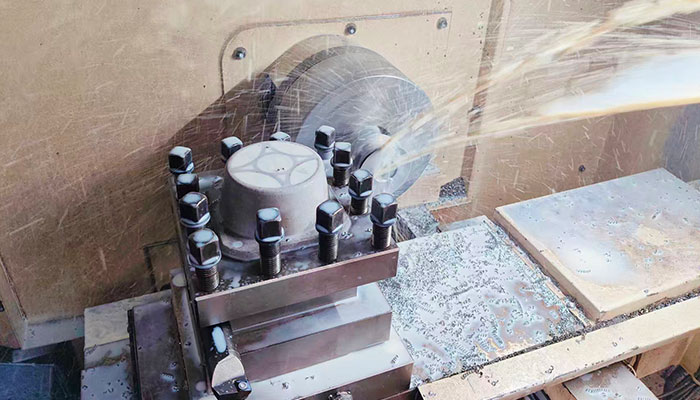
The final way to ensure cost-efficiency is through the accuracy of the technical data provided at the start of the project. Incomplete drawings lead to assumptions, and assumptions lead to costly revisions or scrapped material. A professional technical package should include clear dimensions, material grades, tolerance requirements, and any specific surface treatments needed.
In our experience, clear documentation allows our operators to program the CK6140-CK61100 machines with absolute precision from the very first unit. This “right-first-time” approach is the ultimate safeguard against the hidden costs of manufacturing errors. By combining expert design, strategic machine matching, and automated production, global procurement managers can secure high-precision CNC turning parts that fit both their technical and financial requirements.
Conclusion
Achieving cost-efficiency in the production of CNC turning parts is not about cutting corners; it is about the intelligent application of engineering principles and machine utilization. By focusing on material machinability, adhering to DFM (Design for Manufacturability) guidelines, and matching the specific geometry of a part to the right equipment—such as the CK6140 for small-scale precision or the CK61100 for heavy-duty industrial components—manufacturers can significantly drive down the per-unit cost.
The most successful procurement strategies are those that treat the manufacturer as a technical partner rather than a mere vendor. Utilizing the collective experience of over 20 expert operators and leveraging automated batch production ensures that from the initial prototype to the final shipping container, every resource is optimized. As the global market for precision components evolves, staying competitive requires a commitment to these technical optimizations, ensuring that high-quality CNC turning parts remain accessible for diverse industrial applications.
FAQ
How does the choice of CNC machine affect the final price of my parts?
The machine choice is a major overhead factor. Smaller, high-speed machines like the CK6140 are more economical for high-volume, small-diameter CNC turning parts because they have lower operational costs and faster cycle times. Using a large-scale machine like the CK61100 for a small part would result in paying for unnecessary power and capacity. Proper machine matching ensures you are billed for the exact level of capability your project requires.
Why is the surface finish specification so important for the budget?
Surface finish (Ra) directly impacts the feed rate of the CNC lathe. To achieve an extremely smooth or mirror-like finish, the machine must run at a slower pace with specialized tooling. If your CNC turning parts are for internal mechanical use where aesthetics do not matter, accepting a standard as-machined finish can reduce the machining time and the overall cost per part.
Can the design of a part really reduce the material cost?
Yes, significantly. One of the best ways to save is to design your part to be slightly smaller than standard bar stock sizes. For example, if your part has a maximum diameter of 39 mm, using a 40 mm standard bar is very efficient. If your design requires 41 mm, the manufacturer must jump to the next standard size (likely 45 mm or 50 mm), leading to more material waste and more time spent turning away excess metal.
What is the advantage of a source factory over a trading company for CNC turning parts?
A source factory provides direct technical feedback and eliminates the middleman markup. When you work directly with the team operating the CK series lathes, you get real-time DFM advice that can prevent manufacturing errors. According to supply chain analysis, direct sourcing can save between 15% and 30% in total procurement costs while ensuring better quality control and faster lead times.
Does the complexity of threads and grooves increase the cost?
Thread and groove features require specific cutting tools and often involve multiple passes. Deep internal grooves or non-standard thread pitches are more time-consuming to program and execute. By using standard thread sizes that match common tapping or threading tools, you minimize setup time and reduce the need for custom-ordered tooling, which helps keep the project within budget.
Need Help Optimizing Your CNC Turning Parts?
If you are unsure which material or machining process is best suited for your custom CNC turning parts, our engineering experts are here to assist. From rapid prototyping on our CK6140 lathes to heavy-duty industrial production on the CK61100, we provide personalized technical consultations to ensure your components are high-precision, cost-effective, and delivered on schedule. Don’t let design complexities or material waste inflate your budget—get in touch now to secure a professional DFM review and protect your project’s bottom line!
Latest News
Contact Us
FAQ
What types of parts can be machined?
We can machine a wide range of high-precision CNC parts for automotive, aerospace, medical devices, industrial machinery, and automation equipment, including complex geometries and custom non-standard parts.
What is the machining accuracy?
We can achieve high-precision machining with ±0.005mm tolerance and ensure consistent quality through our strict quality control system.
Can you provide small-batch and prototype manufacturing services?
Yes, we support small-batch production and prototype machining, with flexible scheduling to meet urgent client requirements.
Do you offer customized processing solutions?
Yes, we provide customized solutions with one-on-one technical support, from design review and process optimization to final machining.
How long does delivery usually take?
Delivery time depends on part complexity and quantity, typically within 1-6 weeks. We provide a detailed schedule upon order confirmation.
What certifications are available for quality management systems?
We hold ISO 9001, ISO 14001, and ISO 45001 certifications, strictly following international quality, environmental, and safety standards.
How long does delivery usually take?
Delivery time depends on part complexity and quantity, typically within 1-6 weeks. We provide a detailed schedule upon order confirmation.