
How CNC Machining Services Can Transform Your Manufacturing Process
Home
/
Blog
/
How CNC Machining Services Can Transform Your Manufacturing Process
How CNC Machining Services Can Transform Your Manufacturing Process
January 29, 2026
Table of Contents
In today’s fast-paced manufacturing landscape, precision is no longer optional—it’s a competitive necessity. You might already know about CNC machining services, but understanding how to leverage them effectively could be the key to taking your products and operations to the next level. Whether you’re an engineer, entrepreneur, or production manager, this comprehensive guide will walk you through actionable insights, real-world case studies, and practical strategies to maximize the benefits of CNC machining.
Understanding CNC Machining Services
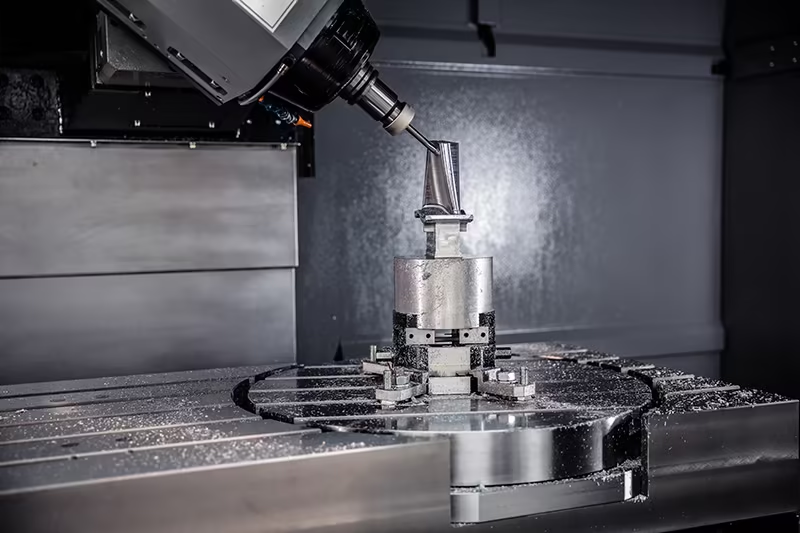
CNC (Computer Numerical Control) machining is a manufacturing process in which pre-programmed computer software dictates the movement of factory tools and machinery. Unlike traditional manual machining, CNC allows for exceptional precision and consistency.
When considering CNC machining services for your operations, you need to evaluate multiple factors: material compatibility, tolerances, production volumes, and post-processing requirements. Let’s break down the key components:
- Material Flexibility: CNC machines can handle metals, plastics, composites, and even exotic materials like titanium or Inconel.
- Dimensional Accuracy: High-end CNC machines can achieve tolerances as tight as ±0.005 mm, essential for aerospace, medical devices, and electronics.
- Production Efficiency: Automated tool changes and optimized machining paths reduce lead time compared to manual methods.
- Repeatability: Once a design is programmed, you can produce hundreds or thousands of identical parts with minimal deviation.
These attributes make CNC machining services suitable for both prototyping and large-scale production.
Why You Should Choose CNC Machining Over Traditional Methods
You might wonder, “Why invest in CNC machining if manual machining has worked for decades?” The answer lies in scalability, precision, and cost-efficiency over time.
| Feature | Manual Machining | CNC Machining |
|---|---|---|
| Precision | Moderate | High (±0.005 mm) |
| Repeatability | Low | Very High |
| Production Speed | Slower | Faster with automation |
| Material Complexity | Limited | Wide variety possible |
| Labor Dependency | High | Low (after programming) |
For instance, in a recent case, a medical device manufacturer switched from manual milling to CNC machining. The result? Production of 10,000 identical surgical components in under three weeks—previously it would have taken two months with manual machining. Not only did they reduce production time, but quality control failures dropped by 80%.
Selecting the Right CNC Machining Services for Your Needs
When you’re considering CNC machining services, it’s crucial to understand the types of machining and their applications. Here are the most common types:
- CNC Milling: Ideal for creating complex shapes and features on a variety of materials.
- CNC Turning (Lathe): Best for cylindrical parts such as shafts and bushings.
- CNC Grinding: Provides ultra-fine surface finishes and high precision for hard materials.
- CNC EDM (Electrical Discharge Machining): Perfect for intricate designs and hard-to-machine metals.
Each type has its strengths and cost considerations. For example, CNC milling may be more cost-effective for prototype parts, while CNC EDM excels for high-tolerance production runs of hardened materials.
Key Questions to Ask a CNC Provider:
- Can they handle the specific material you require?
- What is the achievable tolerance?
- Do they offer post-processing, like anodizing or surface finishing?
- What is their lead time for small and large batches?
Case Study: Aerospace Components Production
To illustrate the impact of CNC machining, let’s examine an aerospace component manufacturer who faced frequent defects in turbine blade prototypes. Using traditional machining, they encountered dimensional inconsistencies that delayed testing.
By transitioning to CNC machining services:
- Tolerances were maintained within ±0.002 inches.
- Prototype turnaround reduced from 6 weeks to 2 weeks.
- Material waste dropped by 30%.
- Assembly failures decreased dramatically, saving thousands of dollars in rework.
This demonstrates that CNC machining is not just about precision—it’s a productivity booster with measurable cost savings.
How CNC Machining Enhances Product Development
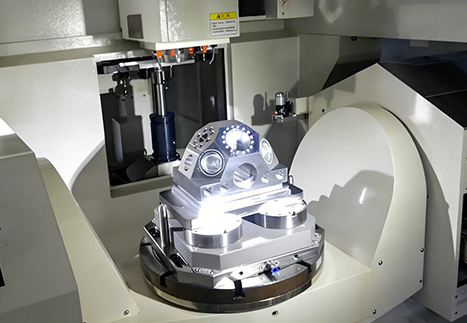
You’re likely focused on reducing time-to-market while ensuring high quality. CNC machining services support product development in several ways:
- Rapid Prototyping: You can iterate designs quickly without compromising tolerances.
- Functional Testing: High-precision parts mean prototypes closely mimic final products.
- Customization at Scale: CNC machining allows batch customization without expensive tooling changes.
For example, a robotics startup needed custom gear assemblies for its prototypes. CNC machining enabled them to produce 50 variants in under a month, testing each iteration efficiently. The result? Faster innovation cycles and reduced R&D costs.
Cost Considerations and ROI
Investing in CNC machining services involves understanding both upfront costs and long-term returns. Costs are influenced by factors like material, complexity, machine type, and batch size.
| Cost Factor | Impact on CNC Machining Cost |
|---|---|
| Material Type | High-strength metals cost more |
| Part Complexity | Intricate designs require longer machining time |
| Quantity | Higher volume reduces cost per unit |
| Post-Processing | Surface treatments add to overall cost |
Return on investment often comes from reduced waste, fewer defects, faster production, and consistent quality. Companies that adopt CNC machining services strategically frequently recoup costs within the first few production runs.
Practical Tips for Maximizing CNC Machining Efficiency
To get the most value from CNC machining services, consider these practical steps:
- Design for Manufacturability (DFM): Optimize your CAD files to minimize unnecessary machining steps.
- Batch Optimization: Group similar parts to reduce setup times and tool changes.
- Material Planning: Choose materials compatible with the machine’s capabilities to avoid delays.
- Regular Communication: Collaborate closely with your CNC provider to ensure tolerances and finishing meet your specifications.
- Leverage Post-Processing: Surface treatments can enhance durability and aesthetics without redesigning the part.
Future Trends in CNC Machining Services
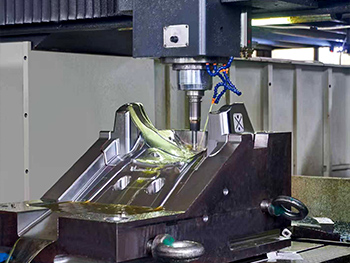
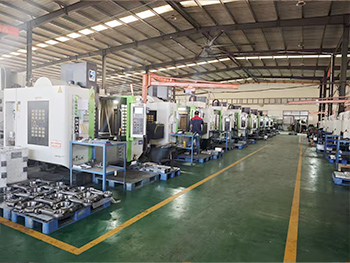
CNC machining continues to evolve, integrating advanced technologies like AI, automation, and IoT:
- AI-driven Tool Path Optimization: Reduces machining time by predicting the most efficient cutting strategies.
- Smart CNC Machines: Real-time monitoring of vibrations, temperatures, and tool wear ensures consistent quality.
- Hybrid Manufacturing: Combines additive manufacturing with CNC machining to create complex geometries impossible with traditional methods.
Staying ahead of these trends ensures your operations remain competitive and capable of meeting increasingly complex customer demands.
Conclusion
You now have a detailed understanding of CNC machining services and their strategic value for your manufacturing operations. From accelerating prototyping to achieving unparalleled precision and reducing costs, CNC machining is a cornerstone of modern manufacturing. By selecting the right service provider and leveraging best practices, you can transform your production process, delivering high-quality products faster and more efficiently.
FAQ
What materials can CNC machining handle?
CNC machines can process metals (aluminum, steel, titanium), plastics (ABS, PEEK, nylon), composites, and specialty materials like ceramics or Inconel.
How precise is CNC machining?
High-end CNC machines can achieve tolerances of ±0.005 mm, suitable for industries like aerospace and medical devices.
Is CNC machining cost-effective for small batches?
While setup costs exist, CNC machining can still be economical for small batches due to reduced labor, high repeatability, and low error rates.
Can CNC machining produce complex geometries?
Yes. Advanced CNC techniques like 5-axis milling and EDM allow for intricate shapes and fine details.
How do I choose the right CNC service provider?
Evaluate their material capabilities, tolerance levels, lead times, post-processing services, and past project experience.
What is the difference between CNC milling and CNC turning?
CNC milling moves the tool to create shapes on stationary materials, while CNC turning rotates the material against a cutting tool to shape cylindrical parts.
Can CNC machining integrate with other manufacturing methods?
Absolutely. CNC can complement additive manufacturing, laser cutting, or injection molding for hybrid production solutions.
Ready to take your manufacturing to the next level? Contact our CNC experts today for a free consultation!
Latest News
Contact Us
FAQ
What types of parts can be machined?
We can machine a wide range of high-precision CNC parts for automotive, aerospace, medical devices, industrial machinery, and automation equipment, including complex geometries and custom non-standard parts.
What is the machining accuracy?
We can achieve high-precision machining with ±0.005mm tolerance and ensure consistent quality through our strict quality control system.
Can you provide small-batch and prototype manufacturing services?
Yes, we support small-batch production and prototype machining, with flexible scheduling to meet urgent client requirements.
Do you offer customized processing solutions?
Yes, we provide customized solutions with one-on-one technical support, from design review and process optimization to final machining.
How long does delivery usually take?
Delivery time depends on part complexity and quantity, typically within 1-6 weeks. We provide a detailed schedule upon order confirmation.
What certifications are available for quality management systems?
We hold ISO 9001, ISO 14001, and ISO 45001 certifications, strictly following international quality, environmental, and safety standards.
How long does delivery usually take?
Delivery time depends on part complexity and quantity, typically within 1-6 weeks. We provide a detailed schedule upon order confirmation.