
Precision Metal Machining: How You Can Unlock Superior Quality and Efficiency
Home
/
Blog
/
Precision Metal Machining: How You Can Unlock Superior Quality and Efficiency
Precision Metal Machining: How You Can Unlock Superior Quality and Efficiency
January 31, 2026
Table of Contents
In today’s competitive manufacturing landscape, the demand for precision metal machining has skyrocketed. If you are looking to produce high-quality metal components with exact specifications, understanding the nuances of precision machining is critical. This guide is designed to help you make informed decisions, reduce errors, and optimize production using the latest techniques in metal machining.
Whether you’re producing aerospace parts, medical devices, automotive components, or custom machinery, the principles of precision metal machining can significantly impact your production efficiency and product quality.
What is Precision Metal Machining?
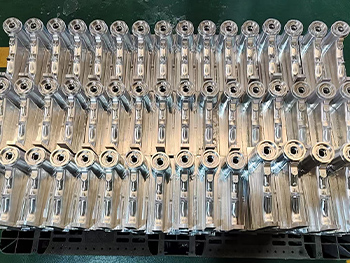
Precision metal machining is a manufacturing process where high-accuracy tools, typically controlled by computer software or skilled operators, remove material from a metal workpiece to achieve a specific shape and dimensional tolerance. Unlike traditional machining, precision metal machining emphasizes extremely tight tolerances, fine surface finishes, and repeatable quality.
You might wonder: why is precision so critical? The answer lies in reliability. When tolerances are even slightly off in critical applications—like medical implants or aerospace components—the cost of errors is enormous, both financially and operationally.
Key attributes of precision metal machining include:
- Tight Tolerances: Often within ±0.005 mm, ensuring parts fit perfectly in assemblies.
- Surface Finish Control: Critical for reducing friction, improving durability, and meeting regulatory standards.
- Material Flexibility: From aluminum and steel to titanium and specialty alloys, precision machining can accommodate nearly any metal.
- Repeatability: Once a process is validated, thousands of identical parts can be produced consistently.
Why You Should Invest in Precision Metal Machining
If you are still relying on manual or conventional machining methods, the benefits of upgrading to precision metal machining may not be immediately obvious. Consider these advantages:
| Benefit | Conventional Machining | Precision Metal Machining |
|---|---|---|
| Tolerance Accuracy | ±0.05 mm | ±0.005 mm |
| Surface Finish | Moderate | High-quality (Ra ≤ 0.4 µm) |
| Repeatability | Low | High |
| Material Options | Limited | Wide range |
| Scrap and Waste | Higher | Reduced |
| Production Speed | Moderate | Faster with CNC or automated methods |
For instance, a medical component manufacturer transitioned to precision metal machining to produce titanium surgical implants. Previously, manual methods resulted in up to 12% defective parts per batch. After adopting precision metal machining:
- Defect rates dropped to 1.2%
- Production speed increased by 50%
- Material waste reduced by 25%
This shows how precision metal machining not only improves quality but also provides measurable operational efficiency.
Key Processes in Precision Metal Machining
Understanding the different processes involved can help you select the right approach for your parts. Here are the most commonly used techniques:
1. CNC Milling
CNC milling uses computer-controlled rotating cutting tools to remove material and create complex shapes. You can produce precise slots, pockets, and three-dimensional features with high repeatability.
Example: A robotics company needed custom aluminum brackets with intricate cutouts. CNC milling allowed them to produce 200 pieces within one week, achieving tolerances of ±0.01 mm.
2. CNC Turning
Turning involves rotating the workpiece while a cutting tool shapes it. This method is ideal for cylindrical parts such as shafts, bushings, and fasteners.
Example: An aerospace supplier required precision titanium shafts. CNC turning ensured a perfect surface finish (Ra ≤ 0.2 µm) and consistent dimensions across 500 units.
3. Grinding
Grinding provides ultra-fine finishes and precise dimensional control. It is essential for hardened metals and critical surfaces.
Example: Automotive engineers needed hardened steel gears. Grinding achieved both exact gear dimensions and smooth surface finishes, reducing noise and increasing durability.
4. Electrical Discharge Machining (EDM)
EDM uses electrical sparks to remove material, allowing the creation of highly intricate geometries impossible with traditional tools.
Example: A mold maker used EDM to produce fine cavities in stainless steel dies for injection molding. The precision reduced post-processing labor by 40%.
Choosing the Right Material for Your Parts
Material selection directly impacts machining strategy, cost, and part performance. Here’s a comparison of commonly machined metals:
| Material | Machinability | Cost | Typical Applications | Notes |
|---|---|---|---|---|
| Aluminum | Excellent | Low | Aerospace, automotive | Lightweight, easy to machine |
| Stainless Steel | Moderate | Medium | Medical, food, chemical | Corrosion resistant, harder |
| Titanium | Difficult | High | Aerospace, medical | Lightweight, strong, hard |
| Carbon Steel | Moderate | Low | Industrial machinery, automotive | Strong, versatile |
| Inconel | Difficult | Very High | Aerospace, energy | High-temp resistance |
You need to balance machinability, cost, and application requirements. For instance, titanium may be more expensive to machine, but its strength-to-weight ratio makes it ideal for aerospace parts.
Real-World Case Study: Aerospace Bracket Production
A leading aerospace component manufacturer needed a batch of 1,000 precision brackets made from 7075 aluminum. Traditional machining was time-consuming and had frequent dimensional inconsistencies.
By implementing precision metal machining:
- CNC milling reduced production time by 40%
- Tolerances were maintained within ±0.01 mm
- Post-machining finishing (anodizing) was integrated seamlessly
- Overall cost per part decreased by 18%
This demonstrates that precision machining not only ensures accuracy but also delivers cost efficiency for high-volume, critical parts.
Enhancing Product Development with Precision Metal Machining
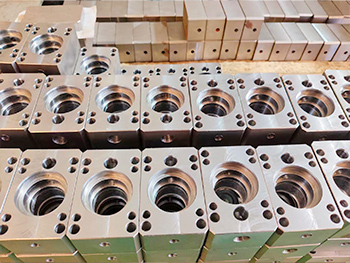
Precision machining is more than a production tool—it’s a strategic enabler for product development. Here’s how it benefits you:
- Rapid Prototyping: Test multiple iterations quickly with accurate parts.
- Functional Testing: Ensure prototypes mimic the final product in form and function.
- Custom Solutions: Tailor parts for specialized applications without expensive tooling.
For example, a startup developing a high-performance drone used precision machining to create several prototype frames in two weeks. The accuracy allowed for direct testing of aerodynamic performance, accelerating design validation.
Cost Considerations and ROI
Investing in precision metal machining requires understanding upfront costs versus long-term benefits. Cost factors include:
| Factor | Impact on Cost |
|---|---|
| Material Type | High-strength alloys are more expensive |
| Part Complexity | Complex geometries increase machining time |
| Volume | High volume reduces unit cost |
| Post-Processing | Treatments like anodizing or plating add cost |
Return on investment is often realized through reduced scrap, faster production, fewer errors, and improved quality. Many manufacturers recover their initial investment within the first few production runs.
Practical Tips for Maximizing Precision Metal Machining
To ensure you get the most value:
- Design for Manufacturability (DFM): Simplify features and reduce unnecessary tool changes.
- Batch Optimization: Group similar parts to minimize machine setups.
- Material Planning: Choose metals that balance performance and machinability.
- Clear Communication: Work closely with your machining partner to ensure tolerances and finishes are met.
- Leverage Post-Processing: Integrate finishing operations for surface treatment and corrosion resistance.
Emerging Trends in Precision Metal Machining
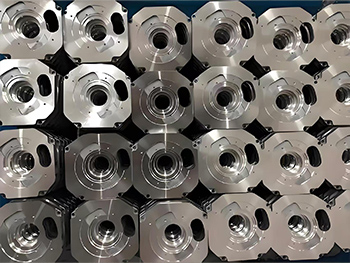
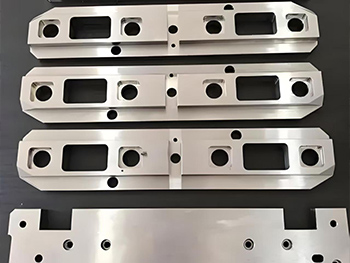
Precision machining is evolving with technology:
- AI and Automation: Machine learning predicts optimal cutting paths and tool wear, reducing downtime.
- Hybrid Manufacturing: Combining additive and subtractive methods allows complex geometries.
- Smart Factories: IoT-enabled machines monitor performance and maintenance needs in real-time.
Staying updated ensures you can meet increasingly complex requirements efficiently and reliably.
Conclusion
If you are serious about delivering high-quality, reliable metal components, precision metal machining is the cornerstone of modern manufacturing. By understanding processes, materials, and best practices, you can accelerate product development, reduce costs, and achieve unmatched quality.
Embrace precision today, and your production will not only meet expectations but exceed them.
FAQ
What is the typical tolerance achievable?
High-end precision machining can achieve ±0.005 mm, suitable for aerospace, medical, and high-precision industrial parts.
Which materials can be machined?
Almost any metal, including aluminum, stainless steel, titanium, carbon steel, and Inconel.
Is precision machining cost-effective for small batches?
Yes, especially when considering reduced labor, scrap, and post-processing costs.
How do I select the right machining method?
Consider part geometry, tolerance requirements, surface finish, and production volume.
Can precision machining produce complex geometries?
Yes, CNC milling, EDM, and multi-axis machining enable highly intricate designs.
How can I reduce costs while maintaining precision?
Optimize design for manufacturability, select machinable materials, and consolidate batch production.
What industries benefit most from precision metal machining?
Aerospace, medical devices, automotive, robotics, industrial machinery, and energy sectors.
Ready to elevate your manufacturing precision? Contact our metal machining experts today for a free consultation!
Latest News
Contact Us
FAQ
What types of parts can be machined?
We can machine a wide range of high-precision CNC parts for automotive, aerospace, medical devices, industrial machinery, and automation equipment, including complex geometries and custom non-standard parts.
What is the machining accuracy?
We can achieve high-precision machining with ±0.005mm tolerance and ensure consistent quality through our strict quality control system.
Can you provide small-batch and prototype manufacturing services?
Yes, we support small-batch production and prototype machining, with flexible scheduling to meet urgent client requirements.
Do you offer customized processing solutions?
Yes, we provide customized solutions with one-on-one technical support, from design review and process optimization to final machining.
How long does delivery usually take?
Delivery time depends on part complexity and quantity, typically within 1-6 weeks. We provide a detailed schedule upon order confirmation.
What certifications are available for quality management systems?
We hold ISO 9001, ISO 14001, and ISO 45001 certifications, strictly following international quality, environmental, and safety standards.
How long does delivery usually take?
Delivery time depends on part complexity and quantity, typically within 1-6 weeks. We provide a detailed schedule upon order confirmation.