
What Is CNC Machining?
Home
/
Blog
/
What Is CNC Machining?
What Is CNC Machining?
February 3, 2026
Table of Contents
If you are involved in product design, engineering, or manufacturing, you have almost certainly encountered the term CNC machining. But understanding what CNC manufacturing truly is—and how you can use it strategically—goes far beyond a basic definition.
CNC machining is not just a production method. It is a decision framework that affects cost control, product quality, scalability, lead times, and even how competitive your business can be in global markets. When used correctly, CNC manufacturing allows you to turn digital designs into highly accurate, repeatable metal or plastic parts with minimal waste and maximum reliability.
This guide is written for you—the decision-maker, engineer, or product owner—who wants a clear, practical, and realistic understanding of CNC manufacturing. By the end, you will know how CNC machining works, when to use it, how to design for it, what pitfalls to avoid, and how real manufacturers apply it successfully in production.
Understanding CNC Machining at Its Core
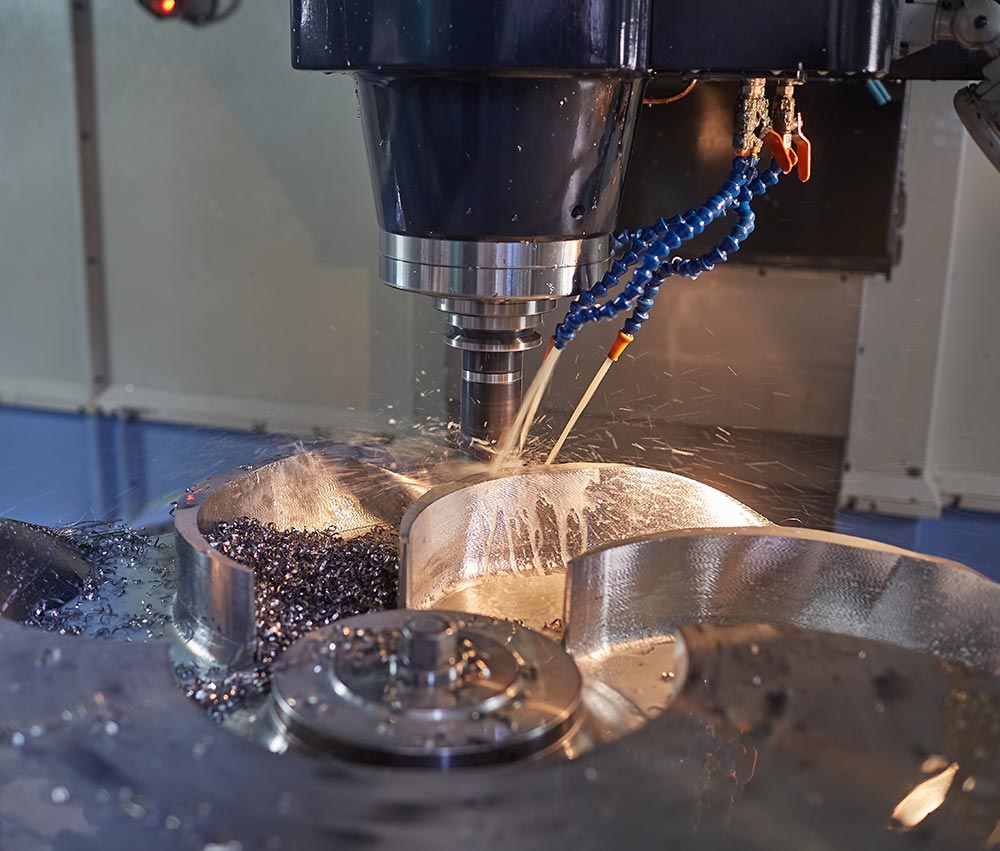
CNC machining stands for Computer Numerical Control machining. In simple terms, it is a subtractive manufacturing process where material is removed from a solid block using cutting tools controlled by a computer program.
What separates CNC manufacturing from manual machining is not just automation—it is predictability. Every movement of the cutting tool is defined by code, meaning the same part can be produced repeatedly with the same dimensions, surface finish, and tolerance.
When you use CNC machining, you are converting a digital design (usually a CAD model) into a physical component through the following steps:
- You design the part using CAD software
- The design is converted into machine-readable instructions (CAM programming)
- The CNC machine executes those instructions precisely
- The part is inspected to verify accuracy
This workflow eliminates much of the variability associated with manual machining and enables you to scale production with confidence.
Why CNC Machining Became the Backbone of Modern Manufacturing
You might ask why CNC machining has become so dominant across industries. The answer lies in control.
Traditional manufacturing methods rely heavily on operator skill. CNC manufacturing, on the other hand, relies on process control. This shift allows you to:
- Achieve tighter tolerances
- Reduce scrap and rework
- Maintain consistency across large production runs
- Shorten lead times
- Produce complex geometries that are difficult or impossible manually
For industries where precision directly impacts safety, performance, or compliance, CNC manufacturing is not optional—it is essential.
How CNC Machining Actually Works
To use CNC machining effectively, you need to understand the full process, not just the machine itself.
Step 1: Digital Design (CAD)
Everything starts with your design. If your CAD model has unclear dimensions, unnecessary complexity, or unrealistic tolerances,CNC manufacturing will not fix those problems—it will simply reproduce them accurately.
Good CNC machining outcomes start with manufacturable design.
Step 2: CAM Programming
CAM software converts your design into toolpaths. This step determines:
- Cutting strategy
- Tool selection
- Feed rates and speeds
- Order of operations
A well-programmed part machines faster, with better surface finish and less tool wear.
Step 3: Machine Setup
Before cutting begins, the machine is prepared:
- Material is fixtured securely
- Tools are installed and measured
- Zero points are established
Setup quality directly impacts dimensional accuracy.
Step 4: Machining Execution
The CNC machine follows the programmed toolpaths, removing material in stages. Depending on complexity, this may involve:
- Roughing passes
- Semi-finishing
- Finishing operations
Step 5: Inspection and Quality Control
Finished parts are measured using calipers, micrometers, or coordinate measuring machines (CMMs). This step ensures your part meets all specifications.
Common Types of CNC Manufacturing You Should Know
CNC machining is not a single process. Understanding the different methods helps you choose the right approach for your parts.
CNC Milling
CNC milling uses rotating cutting tools to remove material. It is ideal when your part has:
- Flat surfaces
- Pockets or slots
- Complex 3D contours
Milling is commonly used for housings, brackets, enclosures, and structural components.
CNC Turning
CNC turning rotates the material while a cutting tool shapes it. This method is best for:
- Cylindrical parts
- Shafts and pins
- Bushings and spacers
Turning typically produces excellent surface finishes on round components.
Multi-Axis CNC Manufacturing
Multi-axis machining allows tools to approach the part from multiple directions without repositioning. This reduces setups and improves accuracy for complex geometries.
Materials Commonly Used in CNC Machining
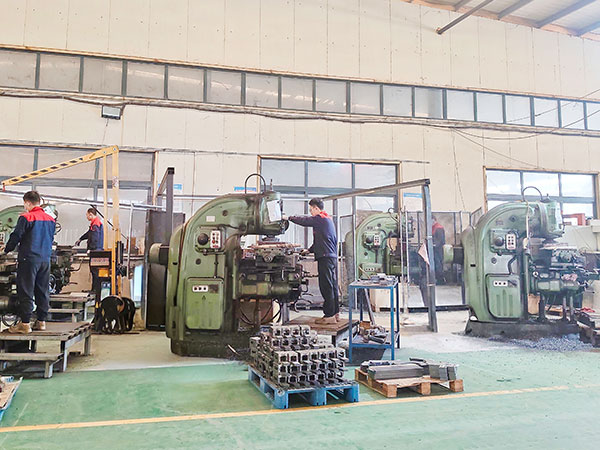
Your material choice affects cost, machining time, surface finish, and performance. Below is a practical overview.
| Material Type | Machinability | Strength | Typical Applications |
|---|---|---|---|
| Aluminum | Excellent | Medium | Aerospace, enclosures, fixtures |
| Stainless Steel | Moderate | High | Medical, industrial, food equipment |
| Carbon Steel | Good | High | Machinery, automotive |
| Titanium | Difficult | Very High | Aerospace, medical implants |
| Engineering Plastics | Excellent | Varies | Prototypes, insulation, housings |
Choosing the right material is a balance between performance requirements and manufacturability.
Real-World Case Study: Reducing Assembly Failure with CNC Machining
A manufacturer producing precision mechanical assemblies faced recurring issues: parts fit individually, but assemblies failed during final integration.
The root cause was dimensional variation across batches produced using inconsistent machining methods.
By switching to CNC manufacturing with tighter process control:
- Dimensional variance dropped by over 70%
- Assembly time was reduced by 30%
- Warranty-related failures declined significantly
This example shows how CNC manufacturing affects not only part quality but also downstream operations.
Designing for CNC Manufacturing: Practical Rules You Can Apply
If you want better results, your design must work with CNC manufacturing, not against it.
Avoid Over-Tight Tolerances
Only specify tight tolerances where they are functionally required. Unnecessary tight tolerances increase cost without adding value.
Use Standard Hole Sizes
Standard drills and taps reduce machining time and tool changes.
Minimize Deep Pockets
Deep pockets require long tools, which can cause vibration and reduce accuracy.
Add Fillets to Internal Corners
Sharp internal corners are difficult to machine. Small radii improve tool life and surface finish.
Cost Factors in CNC Machining You Should Understand
CNC machining costs are not arbitrary. They are driven by identifiable factors.
| Cost Factor | Impact |
|---|---|
| Material type | Harder materials cost more to machine |
| Part complexity | More toolpaths increase time |
| Tolerance requirements | Tighter tolerances increase inspection time |
| Quantity | Higher volume lowers unit cost |
| Surface finish | Fine finishes require additional operations |
Understanding these drivers allows you to optimize cost early in the design stage.
CNC Machining vs Other Manufacturing Methods
CNC machining is powerful, but it is not always the best choice. Knowing when to use it is just as important.
| Method | Best For | Limitations |
|---|---|---|
| CNC Machining | Precision, low to medium volume | Material waste |
| Casting | High volume, complex shapes | Tooling cost |
| Sheet Metal Fabrication | Thin parts | Limited thickness |
| Additive Manufacturing | Complex internal geometry | Surface finish |
CNC machining often excels in precision-critical, low to mid-volume applications.
Quality Control in CNC Machining
Quality in CNC manufacturing is achieved through process stability, not just inspection.
Key elements include:
- Tool condition monitoring
- Consistent fixturing
- Controlled cutting parameters
- In-process inspection
When quality is built into the process, inspection becomes confirmation—not damage control.
Scaling Production with CNC Machining
One of the strongest advantages of CNC manufacturing is scalability.
Once a process is validated, scaling from 10 parts to 10,000 parts does not require redesign. You gain:
- Predictable lead times
- Stable unit costs
- Consistent quality
This makes CNC machining ideal for companies transitioning from prototype to production.
Common CNC Machining Mistakes You Should Avoid
Many problems attributed to CNC manufacturing are actually decision errors.
- Designing without considering machining constraints
- Over-specifying tolerances
- Ignoring fixturing requirements
- Treating CNC machining as “set and forget”
Avoiding these mistakes saves both time and money.
Conclusion
Understanding what CNC machining is means understanding how modern manufacturing achieves precision, reliability, and scalability. When you approach CNC manufacturing as a strategic tool—not just a production method—you gain control over quality, cost, and performance.
If your goal is to produce parts that fit right the first time, scale efficiently, and meet demanding technical requirements, CNC machining remains one of the most powerful solutions available today.
FAQ
What is CNC machining used for?
CNC machining is used to produce precise, repeatable parts for industries such as aerospace, medical, automotive, industrial equipment, and electronics.
How accurate is CNC manufacturing?
Depending on the process and equipment, CNC manufacturing can routinely achieve tolerances of ±0.01 mm or better.
Is CNC manufacturing suitable for small batches?
Yes. CNC manufacturing is often cost-effective for prototypes and low-volume production because it requires no dedicated tooling.
How long does CNC manufacturing take?
Lead time depends on part complexity, material, and quantity. Simple parts can be completed in days, while complex projects may take weeks.
Can CNC manufacturing handle complex designs?
Lead time depends on part complexity, material, and quantity. Simple parts can be completed in days, while complex projects may take weeks.
How do I reduce CNC manufacturing costs?
Design for manufacturability, avoid unnecessary tight tolerances, select machinable materials, and consolidate production batches.

Latest News
Contact Us
FAQ
What types of parts can be machined?
We can machine a wide range of high-precision CNC parts for automotive, aerospace, medical devices, industrial machinery, and automation equipment, including complex geometries and custom non-standard parts.
What is the machining accuracy?
We can achieve high-precision machining with ±0.005mm tolerance and ensure consistent quality through our strict quality control system.
Can you provide small-batch and prototype manufacturing services?
Yes, we support small-batch production and prototype machining, with flexible scheduling to meet urgent client requirements.
Do you offer customized processing solutions?
Yes, we provide customized solutions with one-on-one technical support, from design review and process optimization to final machining.
How long does delivery usually take?
Delivery time depends on part complexity and quantity, typically within 1-6 weeks. We provide a detailed schedule upon order confirmation.
What certifications are available for quality management systems?
We hold ISO 9001, ISO 14001, and ISO 45001 certifications, strictly following international quality, environmental, and safety standards.
How long does delivery usually take?
Delivery time depends on part complexity and quantity, typically within 1-6 weeks. We provide a detailed schedule upon order confirmation.