
What Is CNC Milling? Processes, Benefits, and Applications
Home
/
Blog
/
What Is CNC Milling? Processes, Benefits, and Applications
What Is CNC Milling? Processes, Benefits, and Applications
February 5, 2026
Table of Contents
If you are exploring options for precision manufacturing, you have likely encountered CNC milling as one of the most versatile and widely used processes in modern production environments. But what exactly is CNC milling, how does it work, and why should you consider it for your next component or product design?
This comprehensive guide will walk you through digitally controlled milling from your perspective as a decision-maker, engineer, or buyer. You’ll gain a clear understanding of the process, tooling, applications, benefits, limitations, case studies, cost factors, and design strategies that you can apply immediately.
By reading this article, you will be equipped to compare CNC milling with other manufacturing processes, make better decisions early in your project, and unlock higher precision and efficiency.
Understanding CNC Milling at Its Core
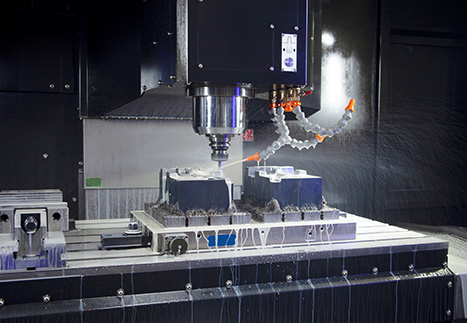
At its simplest, digitally controlled milling is a form of subtractive manufacturing where computer-controlled tools remove material from a solid workpiece to achieve a desired geometric shape.
The term “CNC” stands for “Computer Numerical Control,” meaning the motion of the cutting tool is controlled by a precise digital program rather than by hand.
Key Concepts You Need to Know
To fully grasp digitally controlled milling, here are the fundamental building blocks:
- Workpiece—The raw material (metal, plastic, or composite) from which the part will be machined.
- Cutting Tools—Rotating tools that remove material; each tool has a specific shape and purpose.
- Toolpaths—The programmed movements that guide the cutting tool.
- Spindle—The part of the machine that spins the cutting tool.
- Axes—Directions in which the cutting tool or the workpiece can move (e.g., X, Y, Z, plus optional rotary axes).
What distinguishes CNC milling from traditional milling is that the machine follows a predefined set of instructions (G-code) that dictate position, feed rate, tool changes, and depth of cut.
Unlike manual machining, where skill varies by operator, digitally controlled milling ensures repeatability and precision across hundreds or thousands of parts.
How CNC Milling Works: From Design to Finished Part
CNC milling is not just about “turning on a machine.” It involves a multi-stage process where precision and planning determine the outcome.
Step 1: CAD Design
Your process begins with a CAD (Computer-Aided Design) file that represents exactly what you want the finished part to be. A good CAD model:
- Defines critical dimensions
- Specifies tolerance zones
- Notes surface finish requirements
- Avoids unnecessary complexity
If the CAD design is poorly thought out, machining inefficiencies will multiply downstream.
Step 2: CAM Programming
After the design phase, your digitally controlled milling engineer will use CAM (Computer-Aided Manufacturing) software to generate toolpaths.
At this stage, the program decides:
- Which tools to use
- What order of operations is efficient
- Optimal speeds and feeds
- Safe tool changes
Better CAM programming leads to shorter machining time and improved surface quality.
Step 3: Machine Setup
Before machining can begin:
- The workpiece is fixtured securely.
- Tools are checked and calibrated.
- Zero points (reference positions) are established.
A good setup is half the battle—misalignment can cost hours of rework.
Step 4: Roughing, Finishing, and Inspection
The digitally controlled milling process typically includes:
- Roughing Passes—quickly remove bulk material.
- Semi-finishing—refine the shape closer to final dimensions.
- Finishing Passes—achieve final tolerance and surface finish.
After machining, parts are inspected using calipers, micrometers, or coordinate measuring machines (CMM) for accuracy.
Types of CNC Milling Operations
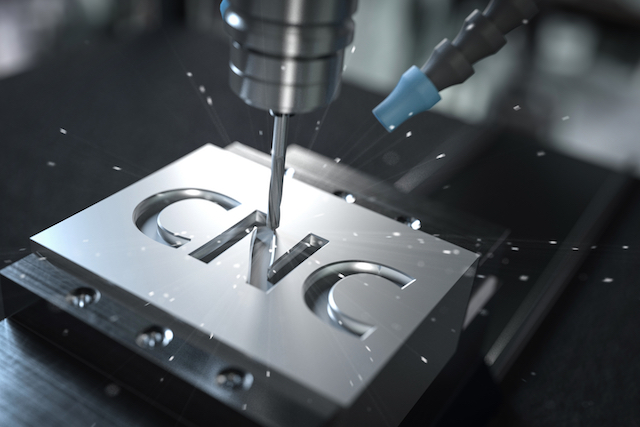
CNC milling comes in many variations, each suited to specific geometries and precision requirements:
Face Milling
Removes a wide, flat surface. It’s often used to prepare a workpiece before further operations.
End Milling
Uses a rotating tool with cutting edges at the end and sides. Suitable for:
- Slots
- Pockets
- Complex contours
Profile Milling
Follows a contour path around a part, often used for external shapes.
Slot Milling
Creates narrow features such as grooves.
Multi-Axis Milling
Involves machines with additional axes (4, 5, or more), allowing the tool to approach from different directions without repositioning the workpiece.
Multi-axis milling significantly reduces setup time for complex components.
Materials You Can Machine with CNC Milling
CNC milling is highly versatile. Below is a comparison of common materials you may consider for your parts:
| Material | Machinability | Typical Applications | Notes |
|---|---|---|---|
| Aluminum | Excellent | Components, housings, fixtures | Lightweight, easy to machine |
| Stainless Steel | Moderate | Medical, food, industrial | Corrosion resistant, harder |
| Carbon Steel | Good | Structural parts, machine components | Affordable, strong |
| Titanium | Difficult | Aerospace, medical implants | High strength, low weight |
| Engineering Plastics (PEEK, Delrin) | Excellent | Insulators, low-load components | Minimal burr formation |
Choosing the right material impacts cost, machining time, surface finish, and durability.
Real-World CNC Milling Case Study
Let’s make this concrete with an example.
Case Study: Precision Aerospace Bracket Machining
A manufacturer needed 500 identical brackets for a next-generation aircraft program. The design included:
- Multiple holes and slots with close spacing
- Tight tolerances (±0.01 mm)
- A high-strength aluminum alloy
Before CNC milling, the team attempted conventional machining but faced:
- Dimensional inconsistencies
- Excessive rework
- Long lead times
After switching to a digitally controlled milling workflow:
- All parts met tolerance consistently
- Lead time decreased by 40%
- Material waste reduced by 25%
This illustrates how CNC milling improves quality and efficiency for high-precision parts.
CNC Milling vs Other Manufacturing Processes
To choose the right manufacturing path, you should understand how digitally controlled milling compares with other methods:
| Method | Best For | Limitations |
|---|---|---|
| CNC Milling | Precision parts, low to medium volume | Material waste due to subtractive process |
| Casting | High volume, complex shapes | Higher initial tooling costs |
| Sheet Metal Fabrication | Thin parts | Limited thickness and detail |
| Additive Manufacturing | Complex internal geometry | Surface finish may require post-processing |
CNC milling shines when precision and repeatability are priorities.
Cost Factors in CNC Milling You Should Know
Understanding cost drivers helps you budget accurately.
| Cost Component | Impact |
|---|---|
| Material | Harder metals cost more and take longer |
| Part Complexity | More complex features slow machining |
| Tolerance | Tighter tolerances increase inspection time |
| Machining Volume | Larger batches reduce unit cost |
| Surface Finish | Fine finishes require slower feeds and more passes |
Early design decisions on material and tolerance often have a greater impact on cost than the machining itself.
Tips for Designing Parts Optimized for CNC Milling
Good design saves money and improves manufacturability. Here are actionable tips:
Don’t Over-Specify Tolerances
Only tighten tolerances where function requires it.
Use Standard Hole Sizes
Standard sizes reduce tooling and machining time.
Avoid Deep Excavations Without Support
Deep cavities require long tools that may vibrate and reduce accuracy.
Add Fillets in Internal Corners
Sharp internal corners are hard to machine; fillets improve tool life.
Group Similar Features
This reduces tool changes and speeds up production.
CNC Milling Quality Control Practices
Quality control is integral to digitally controlled milling success. Common practices include:
- Tool calibration before each job
- In-process inspection
- Statistical process control (SPC)
- Final inspection with calibrated gauges or CMM
Good quality control reduces defects and improves throughput.
Advanced Topics in CNC Milling
As you scale operations or design more complex parts, you may encounter:
High-Speed Machining
Uses high spindle speeds and light cuts for faster material removal.
Multi-Task Machining Centers
Combine milling, turning, and drilling in one setup.
Automated Tool Changing
Reduces downtime between operations.
CNC Milling Applications Across Industries
Here are practical applications where digitally controlled milling delivers real value:
Aerospace
High-precision brackets, housings, structural components.
Automotive
Transmission components, engine mounts, prototypes.
Medical Devices
Orthopedic implants, surgical instruments.
Electronics
Heat sinks, enclosures, precision housings.
Industrial Machinery
Gears, fixtures, tooling components.
Future Trends in CNC Milling
Innovation continues in digitally controlled milling. You should watch for:
- AI-driven toolpath optimization
- Real-time monitoring of tool wear
- IoT integration for predictive maintenance
- Hybrid machining with additive processes
These trends improve productivity and reduce downtime.
Conclusion
If your project demands precision, consistency, and efficiency, CNC milling is one of the most powerful manufacturing processes available. When applied correctly, it can reduce waste, cut lead times, and ensure parts meet specifications every time.
The key to success is not just the machine itself, but your decisions in design, material selection, tolerance specification, and quality control.
FAQ
How accurate can CNC milling be?
CNC milling can routinely achieve tolerances within ±0.01 mm or better, depending on equipment and setup.
What materials are ideal for digitally controlled milling?
Metals like aluminum, stainless steel, carbon steel, and titanium are common. Plastics like Delrin and PEEK are also widely machined.
Is digitally controlled milling cost-effective for low volumes?
Yes. Because no tooling molds are required, CNC milling is often ideal for prototypes and low to medium production runs.
What affects digitally controlled milling lead times?
Part complexity, material, batch size, and finish requirements are the primary drivers.
Can digitally controlled milling make internal features?
Yes, but internal cavities may require specialized tooling or multi-axis machines.
How do I reduce machining costs?
Simplify designs, relax unnecessary tolerances, and choose machinable materials.
What types of tools are used in digitally controlled milling?
End mills, face mills, ball nose cutters, slot drills, and special profile tools.
Latest News
Contact Us
FAQ
What types of parts can be machined?
We can machine a wide range of high-precision CNC parts for automotive, aerospace, medical devices, industrial machinery, and automation equipment, including complex geometries and custom non-standard parts.
What is the machining accuracy?
We can achieve high-precision machining with ±0.005mm tolerance and ensure consistent quality through our strict quality control system.
Can you provide small-batch and prototype manufacturing services?
Yes, we support small-batch production and prototype machining, with flexible scheduling to meet urgent client requirements.
Do you offer customized processing solutions?
Yes, we provide customized solutions with one-on-one technical support, from design review and process optimization to final machining.
How long does delivery usually take?
Delivery time depends on part complexity and quantity, typically within 1-6 weeks. We provide a detailed schedule upon order confirmation.
What certifications are available for quality management systems?
We hold ISO 9001, ISO 14001, and ISO 45001 certifications, strictly following international quality, environmental, and safety standards.
How long does delivery usually take?
Delivery time depends on part complexity and quantity, typically within 1-6 weeks. We provide a detailed schedule upon order confirmation.