
Multi-Axis CNC Machining Explained: 3-Axis vs 5-Axis
Home
/
Blog
/
Multi-Axis CNC Machining Explained: 3-Axis vs 5-Axis
Multi-Axis CNC Machining Explained: 3-Axis vs 5-Axis
February 11, 2026
Table of Contents
If you are sourcing precision parts today, you are no longer just choosing between machining suppliers — you are choosing between manufacturing technologies. One of the most important decisions you will face is whether your parts should be produced using 3-axis CNC machining or 5-axis multi-axis CNC machining. This choice directly impacts cost, lead time, achievable geometry, and final product performance.
As custom manufacturing moves toward higher complexity, shorter product cycles, and tighter tolerances, multi-axis machining has become one of the most discussed topics in precision manufacturing. Understanding how it works — and when you actually need it — helps you avoid unnecessary cost while still achieving optimal part quality.
In this guide, you will learn how multi-axis CNC machining works, how 3-axis and 5-axis systems compare, when each should be used, and how to evaluate your own project requirements with practical, real-world insight.
The Shift Toward Multi-Axis Manufacturing
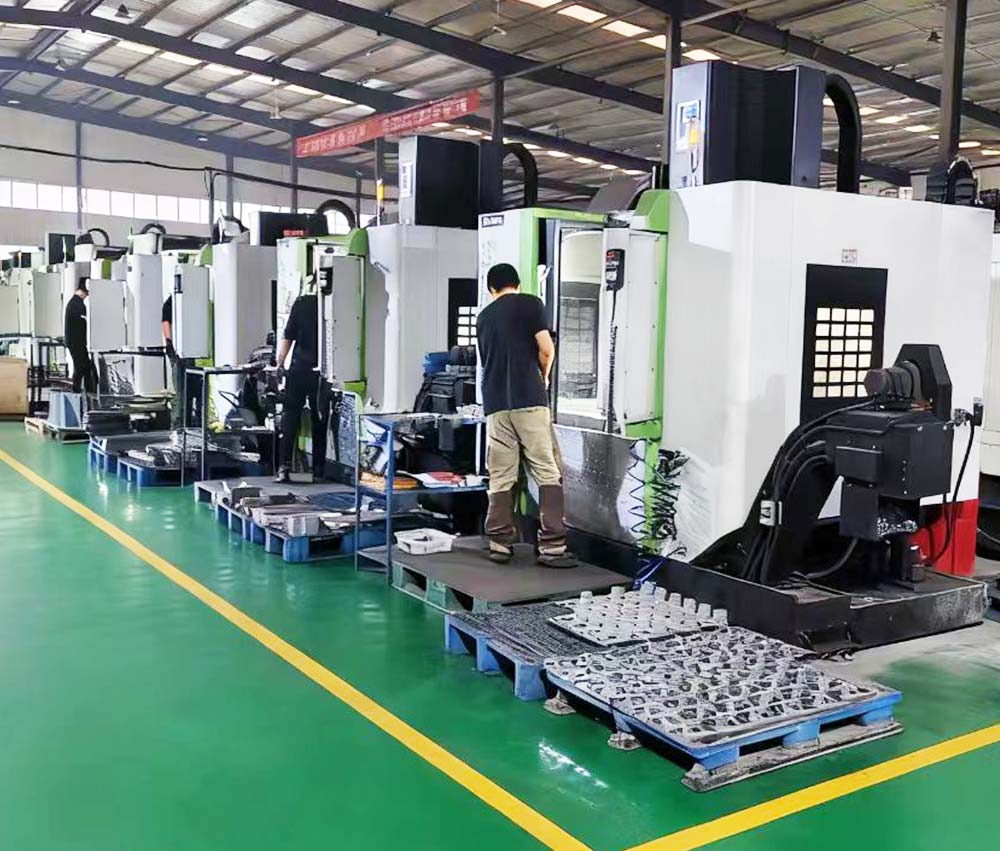
You are likely seeing multi-axis machining mentioned more often because product design is changing rapidly. Lightweight components, integrated features, and complex organic geometries are becoming standard across industries like robotics, medical devices, automation equipment, and advanced transportation systems.
Traditional machining setups often require multiple fixtures, re-clamping, and manual repositioning. Each reposition introduces small alignment risks and increases production time. Multi-axis machining reduces or eliminates these limitations by allowing cutting tools to approach parts from multiple angles in a single setup.
If your parts contain curved surfaces, deep cavities, compound angles, or tight positional tolerances, multi-axis machining is often no longer optional — it becomes necessary.
What Multi-Axis CNC Machining Really Means
Multi-axis machining refers to machining systems where cutting tools or parts can move along more than three linear directions. In traditional machining, you have three primary movement directions:
- X axis — left to right
- Y axis — front to back
- Z axis — up and down
Multi-axis systems add rotational movement, typically called A-axis and B-axis rotation. This allows tools to reach complex surfaces without stopping or manually repositioning parts.
For you as a customer, this means:
- Fewer setups
- Better surface finishes
- Higher dimensional consistency
- Faster production cycles
Understanding 3-Axis CNC Machining
3-axis machining is still the backbone of modern manufacturing. If your part geometry is relatively straightforward, 3-axis machining is often the most cost-efficient solution.
In a 3-axis setup, the cutting tool moves in three linear directions while the part remains stationary. Complex features can still be produced, but may require multiple setups or secondary operations.
Where 3-Axis Works Best
You should strongly consider 3-axis machining if your parts involve:
- Flat surfaces
- Standard pockets and slots
- Simple contours
- Vertical walls
- Basic drilling patterns
For many industrial components, 3-axis machining remains the most economical and fastest production method.
Understanding 5-Axis CNC Machining
5-axis machining adds two rotational axes. This allows the cutting tool to approach the part from virtually any direction without repositioning the part manually.
From your perspective, 5-axis machining becomes valuable when part complexity increases beyond what standard machining can efficiently handle.
Key Capabilities of 5-Axis CNC Machining
- Simultaneous multi-angle cutting
- Machining complex curved surfaces
- Reduced fixture requirements
- Improved tolerance stacking control
- Better surface finishes on complex geometries
Real-World Case Example: High-Precision Sensor Housing
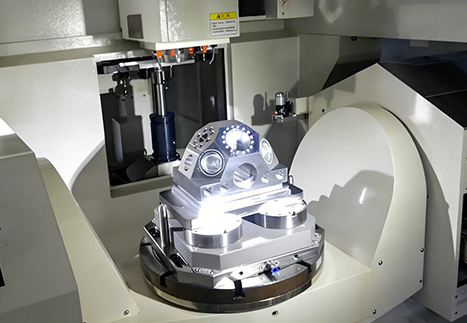
Imagine you are developing a sensor housing for a harsh industrial environment. The design includes:
- Internal curved channels
- Angled mounting faces
- Thin wall sections
- Multiple sealing surfaces
Scenario 1: Using 3-Axis CNC Machining
If produced using 3-axis machining, the part might require:
- 4–6 different setups
- Custom fixtures
- Increased inspection steps
- Higher alignment risk
Scenario 2: Using 5-Axis CNC Machining
With 5-axis machining, the same part could be produced in:
- 1–2 setups
- Standard fixturing
- Continuous surface machining
- Reduced dimensional variation
Even though 5-axis hourly machine cost is higher, total project cost may be lower due to reduced setup time and scrap risk.
Cost Comparison: 3-Axis vs 5-Axis CNC Machining
Below is a realistic comparison based on typical production conditions.
| Factor | 3-Axis Machining | 5-Axis Machining |
|---|---|---|
| Machine Cost Per Hour | Lower | Higher |
| Setup Time | Higher | Lower |
| Part Complexity Capability | Medium | Very High |
| Fixture Cost | Higher | Lower |
| Surface Finish on Complex Geometry | Moderate | Excellent |
| Tolerance Stability | Moderate | High |
| Ideal Production Volume | Medium to High | Low to Medium + Complex |
The key takeaway: you should evaluate total project cost, not just machine hourly rate.
How Multi-Axis Machining Improves Part Quality
If your parts require tight tolerance stacking across multiple features, multi-axis machining provides measurable advantages.
Because parts stay in one setup longer:
- Datum relationships stay more stable
- Less handling reduces damage risk
- Thermal consistency improves dimensional control
This becomes especially important if your components are part of precision assemblies.
When You Should Choose 3-Axis Machining
You should consider 3-axis machining when:
- Your geometry is mostly prismatic
- Tolerances are moderate
- Production volume is high
- Budget sensitivity is critical
- Secondary setups do not impact function
Many industrial brackets, housings, mounting plates, and structural components are ideal candidates.
When You Should Choose 5-Axis Machining
You should strongly consider 5-axis machining when:
- Your part has compound angles
- Surface finish is critical
- Wall thickness is thin
- Tool access is restricted
- Multiple datum relationships must be maintained
If your design requires high precision across multiple orientations, multi-axis machining often reduces total risk.
Lead Time Impact: What You Should Expect
Multi-axis machining often reduces total production time even though programming is more complex.
Why?
Because fewer setups mean:
- Less fixture design time
- Less operator handling
- Less inspection interruption
- Higher first-pass success rate
For complex parts, lead time reduction can reach 20–40%.
Programming Complexity vs Production Efficiency
Multi-axis machining requires more advanced CAM programming. However, once programmed, production often becomes more predictable and repeatable.
If you are planning long-term production runs, multi-axis programming cost is usually spread across many parts.
Material Considerations in Multi-Axis Machining
Multi-axis machining is especially beneficial for difficult-to-machine materials such as:
- High-strength alloys
- Hardened tool steels
- Heat-resistant metals
- Lightweight aerospace alloys
Better tool approach angles reduce tool wear and improve surface finish consistency.
Design Tips to Make Multi-Axis Machining More Cost-Effective
If you want to optimize cost while using multi-axis machining, you should:
- Avoid extremely deep narrow cavities
- Maintain consistent wall thickness
- Use standard tool radius when possible
- Reduce unnecessary cosmetic surfaces
- Combine features when functional
Designing with manufacturability in mind always reduces cost.
Production Volume Strategy
Multi-axis machining is not only for prototypes. It is increasingly used for medium production runs where part complexity offsets higher machine hourly cost.
If your product has high value per unit, multi-axis machining often becomes economically justified faster.
Quality Control Advantages
Because multi-axis machining reduces setups, inspection often becomes more straightforward. Fewer setups usually mean fewer dimensional drift opportunities.
If your parts require high reliability, this consistency matters more than raw machining speed.
Risk Reduction in Precision Manufacturing
From a project management perspective, multi-axis machining can reduce risk by:
- Reducing human handling steps
- Reducing fixture complexity
- Reducing cumulative tolerance errors
- Improving repeatability
If your project timeline is tight, these advantages can be critical.
The Future of Multi-Axis Machining
Manufacturing is moving toward higher automation, digital simulation, and integrated quality monitoring. Multi-axis machining fits perfectly into this trend because it supports full digital toolpath simulation and real-time machining optimization.
If you are planning future product platforms, designing for multi-axis compatibility can give you long-term flexibility.
Conclusion
If you are evaluating manufacturing methods today, the question is not whether multi-axis machining is better — it is whether your part design actually benefits from it. The smartest approach is matching manufacturing technology to part function, not chasing advanced technology unnecessarily.
When used correctly, multi-axis machining can improve quality, reduce lead time, and simplify production workflows. When used unnecessarily, it can increase cost without adding value.
Understanding this balance allows you to make better engineering and sourcing decisions.
FAQ
What is multi-axis CNC machining used for?
Multi-axis machining is used for complex parts requiring machining from multiple angles, high precision surfaces, and reduced setup variation.
Is 5-axis machining always better than 3-axis?
No. If your part geometry is simple, 3-axis machining is usually more cost-effective. 5-axis becomes valuable as complexity increases.
Does 5-axis machining reduce total cost?
It can. Even though machine time costs more, reduced setups, lower scrap rates, and faster completion often offset cost differences.
How do I know if my part needs multi-axis machining?
If your part contains compound angles, deep cavities, or tight positional tolerances across multiple surfaces, multi-axis machining is likely beneficial.
Does multi-axis machining improve surface finish?
Yes, especially on curved or organic surfaces, because tools maintain optimal cutting angles.
Is multi-axis CNC machining only for aerospace or medical parts?
No. It is now widely used in industrial automation, robotics, energy systems, and high-performance consumer products.
Latest News
Contact Us
FAQ
What types of parts can be machined?
We can machine a wide range of high-precision CNC parts for automotive, aerospace, medical devices, industrial machinery, and automation equipment, including complex geometries and custom non-standard parts.
What is the machining accuracy?
We can achieve high-precision machining with ±0.005mm tolerance and ensure consistent quality through our strict quality control system.
Can you provide small-batch and prototype manufacturing services?
Yes, we support small-batch production and prototype machining, with flexible scheduling to meet urgent client requirements.
Do you offer customized processing solutions?
Yes, we provide customized solutions with one-on-one technical support, from design review and process optimization to final machining.
How long does delivery usually take?
Delivery time depends on part complexity and quantity, typically within 1-6 weeks. We provide a detailed schedule upon order confirmation.
What certifications are available for quality management systems?
We hold ISO 9001, ISO 14001, and ISO 45001 certifications, strictly following international quality, environmental, and safety standards.
How long does delivery usually take?
Delivery time depends on part complexity and quantity, typically within 1-6 weeks. We provide a detailed schedule upon order confirmation.