
5 Axis CNC Machining Services: Precision, Speed, and Custom Solutions
Home
/
Blog
/
5 Axis CNC Machining Services: Precision, Speed, and Custom Solutions
5 Axis CNC Machining Services: Precision, Speed, and Custom Solutions
March 5, 2026
Table of Contents
In today’s high-performance manufacturing environment, delivering precise, complex components quickly is crucial. 5 axis CNC machining services provide a solution that allows you to create highly intricate parts with unparalleled accuracy and efficiency. Whether you are an engineer designing aerospace brackets, a product developer prototyping medical devices, or a procurement professional sourcing components, understanding the advantages and applications of 5 axis CNC machining can help you make informed decisions.
This guide covers everything you need to know about 5 axis CNC machining services, including processes, materials, tolerances, costs, design considerations, and how to select the right supplier.
What Are 5 Axis CNC Machining Services?
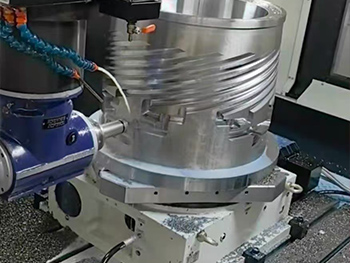
5 axis CNC machining involves moving a workpiece or cutting tool along five different axes simultaneously. Unlike traditional 3 axis or 4 axis machining, which restricts movement to fewer directions, 5 axis machining enables complex geometries, undercuts, and angled surfaces to be machined in a single setup.
This capability reduces the need for multiple setups, improves precision, and allows for more intricate designs. Industries such as aerospace, medical, automotive, and industrial machinery heavily rely on 5 axis CNC machining due to these advantages.
Typical applications include:
- Turbine blades and impellers
- Aerospace brackets and housings
- Medical device components
- Complex industrial machinery parts
- Automotive prototypes and high-performance parts
How 5 Axis CNC Machining Works
The process begins with a digital 3D model, which is converted into a CNC program. The cutting tool and workpiece then move simultaneously along the X, Y, Z, A, and B axes, allowing highly complex shapes to be machined with minimal repositioning.
Key benefits of 5 axis CNC machining:
- Reduced setups, which lowers the chance of errors
- Ability to machine undercuts and complex contours in one operation
- Enhanced surface finishes and accuracy
- Shorter lead times for complex components
By integrating advanced software for simulation and toolpath optimization, manufacturers can achieve precision levels that are difficult with 3 axis machining.
Materials for 5 Axis CNC Machining
The choice of material significantly affects machinability, cost, and the performance of the finished component. Common metals and alloys used in 5 axis CNC machining include:
| Material | Characteristics | Common Applications |
|---|---|---|
| Aluminum | Lightweight, corrosion-resistant, easy to machine | Aerospace brackets, housings |
| Stainless Steel | Strong, corrosion-resistant, harder to machine | Medical instruments, valves |
| Titanium | High strength-to-weight ratio, corrosion-resistant | Aerospace and high-performance components |
| Brass | Excellent machinability, conductive | Electrical fittings, precision valves |
| Carbon Steel | Versatile, cost-effective | Industrial machinery parts |
Choosing the right material can optimize machining time, reduce tool wear, and ensure the part performs reliably under operational stress.
Precision and Tolerances
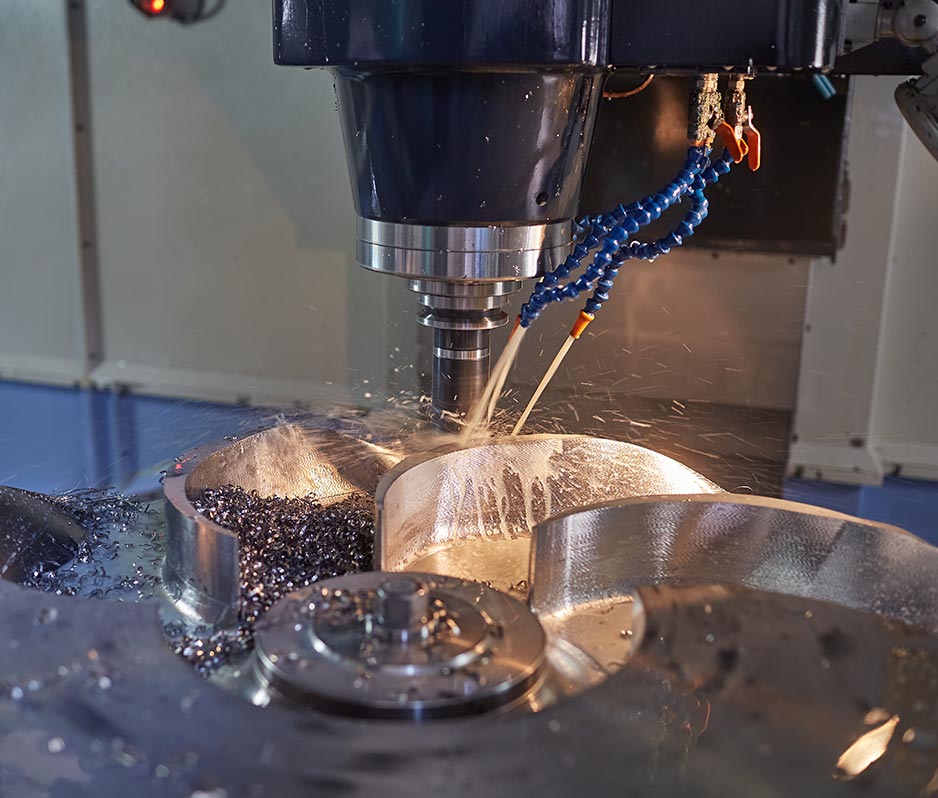
Precision is one of the defining advantages of 5 axis CNC machining. By moving along five axes simultaneously, manufacturers can achieve tight tolerances and reduce cumulative errors.
| Feature | Typical 5 Axis Tolerance | Notes |
|---|---|---|
| General Features | ±0.005 in (0.13 mm) | Standard precision for most components |
| High-Precision Features | ±0.001 in (0.025 mm) | Critical aerospace or medical components |
| Micro Features (EDM-assisted) | ±0.0002 in (0.005 mm) | Intricate geometries, micron-level accuracy |
Case Example: An aerospace impeller required ±0.002 in tolerances on all critical surfaces. Using 5 axis machining in a single setup reduced cumulative error, improved surface finish, and cut production time by 20% compared to multi-step 3 axis machining.
Surface Finishes and Secondary Processes
Surface finish is critical for both functionality and aesthetics. 5 axis CNC machining allows for superior finishes on complex surfaces without extensive secondary operations.
Common finishes include:
- Standard machined finish (Ra 32–125 µin)
- Polished surfaces for friction reduction
- Anodized or coated surfaces for corrosion resistance
Secondary processes such as deburring, heat treatment, and plating can further enhance durability and performance. Selecting the right combination of finish and material ensures optimal performance without unnecessary cost.
Cost Factors in 5 Axis CNC Machining
Understanding what drives cost helps you make informed decisions:
- Material Selection: Harder or exotic metals increase tool wear and cycle time.
- Tolerance Requirements: Tighter tolerances require slower machining and more inspection.
- Complexity: Deep pockets, undercuts, or intricate contours increase machine time.
- Volume: Small batches have higher per-part cost, while high-volume runs can leverage efficiency.
By relaxing tolerances where function permits or optimizing design features, you can reduce costs significantly while maintaining part performance.
Design Tips for 5 Axis CNC Machining
You can design parts for efficiency without compromising performance:
- Avoid overly complex features unless functionally required
- Maintain consistent wall thickness to prevent deformation
- Standardize hole sizes and threads to reduce tool changes
- Group features logically to minimize machine repositioning
Example: A titanium bracket was redesigned with simplified angled faces and standardized holes. Machining time decreased by 25%, scrap was reduced, and tolerance consistency improved.
Choosing the Right 5 Axis CNC Machining Supplier
The supplier you choose can impact lead time, quality, and overall cost. Consider the following:
- Experience with similar materials and part complexity
- Certification and quality standards adherence
- Ability to meet tolerance and surface finish requirements
- Communication and engineering support for design optimization
Working with a capable supplier ensures reliable parts, reduces risk, and helps optimize both design and cost.
Conclusion
5 axis CNC machining services provide a unique combination of precision, speed, and flexibility for producing complex components. By understanding the processes, materials, tolerances, and cost factors, you can design components that are both manufacturable and optimized for performance. Selecting the right supplier ensures quality and reliability, helping you achieve your project goals efficiently.
Whether you are developing aerospace brackets, medical prototypes, or industrial machinery components, investing in 5 axis CNC machining services can deliver high-precision parts faster, more efficiently, and with reduced risk.
Take the next step: Contact our engineering team today to discuss your 5 axis CNC machining needs and get a quote for custom components.
FAQ
What are 5 axis CNC machining services?
They are manufacturing services that move the cutting tool and/or workpiece along five axes simultaneously, allowing complex and precise components to be machined in one setup.
Which industries use 5 axis CNC machining?
Aerospace, medical, automotive, and industrial machinery industries frequently use 5 axis CNC machining for high-precision parts.
What materials can be used?
Common materials include aluminum, stainless steel, titanium, brass, and carbon steel, chosen based on strength, weight, and machinability.
How precise are 5 axis CNC machined parts?
Tolerances can range from ±0.005 in for standard features to ±0.0002 in for ultra-precision, micron-level features.
How do I choose a supplier?
Evaluate experience, certifications, tolerance capability, communication, and ability to handle complex geometries.
Can prototypes be produced quickly?
Yes, 5 axis machining enables rapid prototyping for complex parts, often reducing lead time by 20–30% compared to multi-step 3 axis machining.
Latest News
Contact Us
FAQ
What types of parts can be machined?
We can machine a wide range of high-precision CNC parts for automotive, aerospace, medical devices, industrial machinery, and automation equipment, including complex geometries and custom non-standard parts.
What is the machining accuracy?
We can achieve high-precision machining with ±0.005mm tolerance and ensure consistent quality through our strict quality control system.
Can you provide small-batch and prototype manufacturing services?
Yes, we support small-batch production and prototype machining, with flexible scheduling to meet urgent client requirements.
Do you offer customized processing solutions?
Yes, we provide customized solutions with one-on-one technical support, from design review and process optimization to final machining.
How long does delivery usually take?
Delivery time depends on part complexity and quantity, typically within 1-6 weeks. We provide a detailed schedule upon order confirmation.
What certifications are available for quality management systems?
We hold ISO 9001, ISO 14001, and ISO 45001 certifications, strictly following international quality, environmental, and safety standards.
How long does delivery usually take?
Delivery time depends on part complexity and quantity, typically within 1-6 weeks. We provide a detailed schedule upon order confirmation.