
6 Powerful Metal Casting Service Trends
Home
/
Blog
/
6 Powerful Metal Casting Service Trends
6 Powerful Metal Casting Service Trends
March 16, 2026
Metal casting has been a cornerstone of industrial manufacturing for centuries, yet its evolution continues to accelerate at an unprecedented pace. Today, the industry is not only relying on traditional methods but also integrating advanced technologies, sustainable practices, and innovative materials to meet the rising demands of precision, efficiency, and cost-effectiveness.
Whether you are an engineer, procurement manager, or product designer, understanding the latest trends in metal casting service can help you select the most efficient processes, optimize material usage, and achieve high-quality outcomes.
Here’s what you will gain by reading this article:
- Case studies demonstrating successful applications in aerospace, medical, automotive, and industrial sectors
- Deep insights into technological, material, and process innovations in metal casting services
- Expert comparisons between casting, machining, forging, and additive manufacturing
- Practical guidelines to select materials, suppliers, and casting methods for your projects
- Quantitative data on tolerances, defect rates, and production efficiency
Key Highlights in This Article
- Digital transformation and its impact on casting precision
- Advanced simulation and defect prediction
- Sustainability and eco-friendly practices
- New alloy developments and high-performance materials
- Automation, robotics, and smart foundries
- Hybrid manufacturing methods combining casting with machining or additive manufacturing
- Material selection guidelines and cost-benefit comparisons
- Real-world case studies and data-driven insights
- FAQs addressing common concerns and decision-making
Table of Contents
The Current State of Metal Casting Service
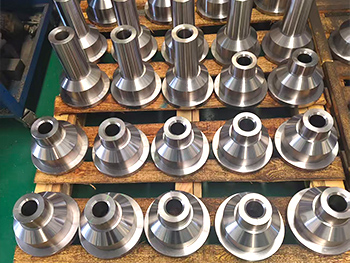
Historical Context
Metal casting dates back thousands of years and has evolved from simple bronze and iron molds to sophisticated, computer-aided processes. The global metal casting market was valued at over $100 billion in 2022, with projections estimating growth at 5–6% CAGR through 2030.
Modern casting services are expected to deliver high precision, rapid prototyping, and cost-effective mass production, bridging the gap between traditional craftsmanship and modern engineering requirements.
Why Casting Remains Essential
Casting allows manufacturers to produce geometrically complex and structurally strong components in a single step. Unlike subtractive manufacturing processes such as CNC machining, casting minimizes material waste and can efficiently produce parts with internal cavities or intricate geometries.
Industry studies show that for parts exceeding 10 kg, casting can reduce material costs by up to 40% compared with fully machined components
Trend 1: Digital Transformation in Metal Casting Service
Integration of CAD and CAM
Computer-aided design (CAD) and computer-aided manufacturing (CAM) have revolutionized metal casting. Engineers can now simulate mold designs, predict shrinkage, and optimize toolpaths before producing a single part.
- Impact: Reduces trial-and-error iterations, shortens lead times, and improves first-pass yield by 15–20% (Source: Modern Casting Journal, 2022).
- Example: A medical device component was digitally modeled and simulated, allowing the manufacturer to identify potential porosity and correct mold geometry before production.
Digital Workflow Management
Foundries are adopting digital tracking systems to monitor each stage of the casting process:
- Material input and melt quality
- Mold creation and curing
- Pouring, cooling, and finishing
- Inspection and quality verification
Such systems provide real-time alerts for temperature deviations or mold defects, improving overall yield and reducing scrap.
Trend 2: Advanced Simulation and Casting Analysis
Casting Flow Simulation
Advanced software predicts how molten metal will fill molds. Parameters such as temperature gradients, metal flow velocity, and solidification time are calculated, helping prevent common defects like shrinkage, cold shuts, or porosity.
Comparison Table: Simulation vs. Traditional Trial-and-Error
| Parameter | Simulation-Based Casting | Traditional Casting |
|---|---|---|
| Defect Rate | 2–5% | 12–15% |
| Lead Time | Reduced by 20–30% | Longer, iterative |
| Material Waste | Lower | Higher |
| Precision | ±0.001 in achievable | ±0.005 in typical |
Real-World Benefits
- Predictive modeling enables manufacturers to experiment with high-performance alloys that were previously considered difficult to cast.
- Simulation allows designers to optimize wall thickness and support structures, reducing the likelihood of costly defects.
Trend 3: Sustainability in Metal Casting Services
Energy Efficiency Improvements
Modern foundries are implementing high-efficiency induction furnaces and advanced insulation systems. Energy consumption can be reduced by 15–25% without affecting melt quality (Source: Foundry Management & Technology, 2021).
Recycling and Material Recovery
- Up to 90% of metal scrap from casting can be recycled and reused.
- Closed-loop systems reduce environmental impact and lower raw material costs.
Case Example: An aluminum casting facility reduced carbon emissions by 18% annually through optimized melting cycles and scrap recovery programs.
Trend 4: High-Performance Materials
Advanced Alloys for Critical Applications
New alloys, such as nickel-based superalloys and titanium aluminides, allow casting of components capable of withstanding high temperatures and corrosion.
- Aerospace and automotive industries increasingly rely on these alloys for turbine blades, impellers, and engine components.
- Alloy selection directly impacts performance metrics like tensile strength, fatigue resistance, and thermal stability.
Lightweight Metals
Aluminum and magnesium alloys offer significant weight reduction while maintaining structural integrity. For every 1 kg reduction in component weight, fuel efficiency in vehicles or energy efficiency in machinery can improve by 1–2%.
Trend 5: Automation and Smart Foundries
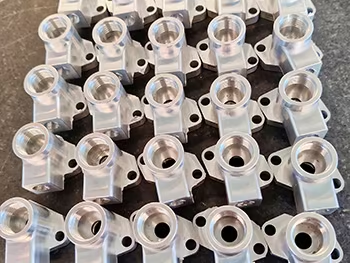
Robotic Handling
Automation reduces human exposure to molten metal and repetitive tasks, improving safety while enhancing precision. Robots can handle:
- Mold handling and positioning
- Pouring of molten metals
- Surface finishing operations
Automated Quality Control
Non-destructive testing (NDT), X-ray inspection, and 3D scanning detect defects quickly and consistently. This ensures that parts meet stringent aerospace or medical standards without extensive manual inspection.
Trend 6: Hybrid Manufacturing Approaches
Combining Casting and CNC Machining
Near-net-shape casting reduces material usage, and CNC machining finishes the component to tight tolerances.
- Example: A titanium aerospace bracket cast to 90% of final shape, then machined to ±0.001 in tolerance.
- Time savings: ~25% compared with full machining from solid stock.
Integrating Additive Manufacturing
3D printing patterns or molds allows for rapid prototyping and production of complex geometries. Combining additive and casting processes reduces lead time and enables more innovative designs.
Trend 7: Industry-Specific Applications
Aerospace Components
- Turbine blades, impellers, and housings
- High-temperature alloys for jet engines
- Castings must meet tight tolerances and fatigue resistance standards
Medical Devices
- Surgical instruments, orthopedic implants, and prosthetic components
- Biocompatible materials such as stainless steel and titanium
- Surface finish and precision are critical
Automotive Parts
- Engine blocks, transmission housings, and structural components
- Lightweight alloys improve fuel efficiency
- High-volume casting with tight tolerances
Trend 8: Cost Analysis and Efficiency Metrics
Factors Influencing Cost
- Material selection: Titanium vs. aluminum
- Tolerance requirements: ±0.001 in vs. ±0.005 in
- Production volume: Low-volume vs. mass production
- Process complexity: Single-step vs. multi-step casting
Cost Comparison Table
| Material | Casting Method | Approx. Cost per Kg | Typical Tolerance |
|---|---|---|---|
| Aluminum | Sand Casting | $4–6 | ±0.005 in |
| Steel | Investment Casting | $8–12 | ±0.002 in |
| Titanium | Investment Casting | $35–50 | ±0.001 in |
| Copper | Die Casting | $12–18 | ±0.003 in |
This table helps manufacturers and procurement teams make data-driven decisions.
Key Considerations When Selecting a Metal Casting Service
- Material compatibility
- Production volume and scalability
- Mold and tooling capabilities
- Tolerance and surface finish requirements
- Lead time and supply chain reliability
Tip: Always request case studies or sample parts to verify supplier capabilities before committing to high-value orders.
Conclusion
The manufacturing landscape continues to evolve, and metal casting remains a critical process for producing durable and complex components. Advances in digital design, simulation technology, automation, and sustainable manufacturing are reshaping how modern metal casting service providers operate.
By understanding these trends, you can better evaluate production methods, select appropriate materials, and collaborate more effectively with manufacturing partners. As casting technology continues to improve, it will remain an essential part of precision manufacturing and industrial production.
FAQ
What is the best metal casting method for prototypes?
Sand casting is often the fastest and most cost-effective for prototypes, while investment casting provides higher precision.
Can metal casting achieve tight tolerances?
Yes, with modern simulation, hybrid machining, and precision molds, tolerances as tight as ±0.001 in are achievable.
How do I reduce defects in metal casting service?
Use simulation tools, maintain proper mold design, and optimize cooling and pouring rates.
What are the sustainability benefits of modern metal casting service?
Energy-efficient furnaces, material recycling, and optimized workflows reduce environmental impact and cost.
How do I choose between casting, machining, and forging?
Casting is ideal for complex shapes; machining is best for precision parts; forging is optimal for high-strength load-bearing components.
Latest News
Contact Us
FAQ
What types of parts can be machined?
We can machine a wide range of high-precision CNC parts for automotive, aerospace, medical devices, industrial machinery, and automation equipment, including complex geometries and custom non-standard parts.
What is the machining accuracy?
We can achieve high-precision machining with ±0.005mm tolerance and ensure consistent quality through our strict quality control system.
Can you provide small-batch and prototype manufacturing services?
Yes, we support small-batch production and prototype machining, with flexible scheduling to meet urgent client requirements.
Do you offer customized processing solutions?
Yes, we provide customized solutions with one-on-one technical support, from design review and process optimization to final machining.
How long does delivery usually take?
Delivery time depends on part complexity and quantity, typically within 1-6 weeks. We provide a detailed schedule upon order confirmation.
What certifications are available for quality management systems?
We hold ISO 9001, ISO 14001, and ISO 45001 certifications, strictly following international quality, environmental, and safety standards.
How long does delivery usually take?
Delivery time depends on part complexity and quantity, typically within 1-6 weeks. We provide a detailed schedule upon order confirmation.