
CNC Machining Materials: How to Choose the Right Metal or Plastic
Home
/
Blog
/
CNC Machining Materials: How to Choose the Right Metal or Plastic
CNC Machining Materials: How to Choose the Right Metal or Plastic
February 11, 2026
Table of Contents
When you start a CNC machining project, material selection is often the decision that quietly determines everything else — cost, lead time, achievable tolerances, surface finish, and even long-term part performance. Yet for many buyers, choosing CNC machining materials still feels like guesswork. Aluminum sounds safe, stainless steel sounds strong, and plastics sound cheap — but reality is far more nuanced.
If you choose the wrong material, you may face warped parts, excessive tool wear, unstable tolerances, or costs that spiral well beyond expectations. If you choose the right one, machining becomes predictable, parts perform as intended, and production scales smoothly.
This guide is written to help you make that decision with confidence. From a practical, second-person perspective, you will learn how different metals and plastics behave during CNC machining, what trade-offs really matter, and how to match material properties to real-world applications.
Why CNC Machining Material Choice Matters More Than You Think
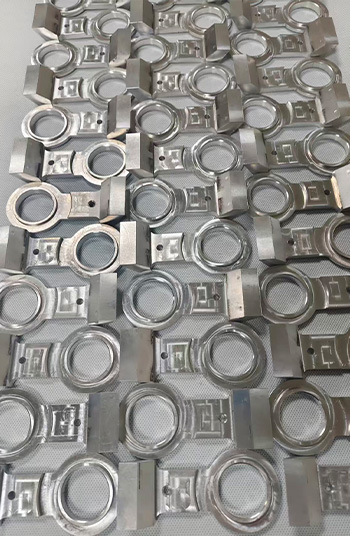
Every material responds differently to cutting forces, heat, and tool engagement. Two parts with identical geometry but different materials can behave completely differently on the machine.
Material choice directly affects:
- Machinability and cycle time
- Tool wear and process stability
- Surface finish quality
- Achievable tolerances
- Long-term durability and performance
When tolerances tighten or geometries become complex, material behavior becomes even more critical. Understanding these relationships helps you avoid costly redesigns later.
How to Think About CNC Machining Materials Strategically
Before looking at specific materials, it helps to step back and clarify what actually matters for your part.
Ask yourself:
- Does this part carry load or pressure?
- Will it face heat, corrosion, or wear?
- Is weight reduction important?
- Are tolerances tight or moderate?
- Is appearance functional or cosmetic?
Material selection is not about choosing the “best” material — it is about choosing the most appropriate one for your application.
The Two Main Material Categories in CNC Machining
CNC machining materials generally fall into two broad categories:
- Metals – used for strength, durability, and thermal resistance
- Plastics – used for weight reduction, insulation, and cost control
Each category has subgroups with very different machining characteristics.
Common Metals Used in CNC Machining
Aluminum Alloys: The Most Versatile Choice
Aluminum is one of the most commonly used CNC machining materials — and for good reason.
Why you might choose aluminum:
- Excellent machinability
- Lightweight with good strength-to-weight ratio
- Good thermal conductivity
- Cost-effective for most applications
Aluminum is often the first choice for prototypes, housings, brackets, and structural components.
Machining considerations:
- Sensitive to thermal expansion
- Thin walls require careful fixturing
- Surface finish is generally excellent
Common Metals Used in CNC Machining
Aluminum Alloys: The Most Versatile Choice
Aluminum is one of the most commonly used CNC machining materials — and for good reason.
Why you might choose aluminum:
- Excellent machinability
- Lightweight with good strength-to-weight ratio
- Good thermal conductivity
- Cost-effective for most applications
Aluminum is often the first choice for prototypes, housings, brackets, and structural components.
Machining considerations:
- Sensitive to thermal expansion
- Thin walls require careful fixturing
- Surface finish is generally excellent
Stainless Steel: Strength and Corrosion Resistance
Stainless steel is chosen when durability and corrosion resistance matter more than machining speed.
Why you might choose stainless steel:
- High mechanical strength
- Good corrosion resistance
- Long service life
- Suitable for harsh environments
Machining considerations:
- Higher cutting forces
- Tool wear increases quickly
- Work hardening risk
Stainless steel requires careful parameter control but delivers reliable performance when done correctly.
Carbon and Alloy Steels: Structural Reliability
Carbon and alloy steels are widely used for load-bearing components.
Why you might choose steel:
- High strength and rigidity
- Cost-effective for structural parts
- Wide range of grades available
Machining considerations:
- Surface finish varies by grade
- Heat treatment may be required
- Tool selection is critical
Titanium Alloys: High Performance, High Complexity
Titanium is often selected for demanding applications where weight and strength matter.
Why you might choose titanium:
- Excellent strength-to-weight ratio
- Corrosion resistance
- High temperature stability
Machining considerations:
- Poor heat dissipation
- Slow cutting speeds
- High tooling cost
Titanium machining requires experience and planning to avoid excessive cost.
Brass and Copper Alloys: Precision and Conductivity
These materials are often chosen for electrical or fluid-handling components.
Why you might choose brass or copper:
- Excellent electrical or thermal conductivity
- Very good machinability
- Smooth surface finishes
Machining considerations:
- Softer materials can deform if poorly clamped
- Material cost may be higher
Common Plastics Used in CNC Machining
Plastics are not simply “cheaper alternatives” to metal. In many applications, they outperform metals entirely.
Engineering Plastics: Performance-Focused Options
Examples include:
- High-strength polymers
- Wear-resistant plastics
- Heat-stable plastics
Why you might choose engineering plastics:
- Lightweight
- Chemical resistance
- Low friction
- Electrical insulation
Machining considerations:
- Thermal sensitivity
- Risk of melting or burrs
- Requires sharp tooling
Commodity Plastics: Cost and Simplicity
These plastics are used when performance requirements are moderate.
Why you might choose them:
- Lower material cost
- Easy machining
- Suitable for enclosures and fixtures
Machining considerations:
- Lower strength
- Dimensional stability varies
CNC Machining Materials Comparison Table
| Material Category | Machinability | Strength | Cost Level | Typical Applications |
|---|---|---|---|---|
| Aluminum Alloys | Excellent | Medium | Low | Housings, brackets |
| Stainless Steel | Moderate | High | Medium | Industrial components |
| Carbon Steel | Good | High | Low–Medium | Structural parts |
| Titanium | Difficult | Very High | High | High-performance parts |
| Engineering Plastics | Good | Medium | Medium | Wear parts, insulators |
| Commodity Plastics | Excellent | Low | Low | Covers, fixtures |
Real-World Case Example: Choosing Between Aluminum and Plastic
Imagine you are designing a protective enclosure for an electronic device.
Initial Requirements:
- Lightweight
- Moderate structural strength
- No exposure to high temperatures
- Tight internal tolerances
Option 1: Aluminum
- Strong and rigid
- Easy to machine
- Slightly heavier
- Higher material cost
Option 2: Engineering Plastic
- Much lighter
- Electrically insulating
- Requires tighter thermal control during machining
Final Decision:
Plastic was chosen, reducing weight by over 40% while maintaining functional tolerances.
This example shows how material choice directly affects product performance.
How Material Choice Affects Tolerances
Not all materials hold tight tolerances equally.
- Metals generally offer better dimensional stability
- Plastics expand more with temperature
- Softer materials deform more under clamping pressure
If your part requires ultra-tight tolerances, material selection becomes just as important as machine capability.
Surface Finish Expectations by Material
| Material | Typical Surface Finish Quality |
|---|---|
| Aluminum | Excellent |
| Stainless Steel | Good |
| Carbon Steel | Moderate |
| Titanium | Good |
| Plastics | Variable |
Surface finish expectations should be aligned with material behavior.
Cost Implications of CNC Machining Materials
Material cost is only part of the equation.
Total cost is influenced by:
- Machining time
- Tool wear
- Scrap risk
- Inspection requirements
A cheaper material may cost more overall if it machines poorly.
Design Tips to Optimize Material Selection
If you want better results, consider:
- Avoid over-specifying material strength
- Match material properties to function
- Allow reasonable tolerances where possible
- Design wall thickness appropriate to material
Designing with material behavior in mind saves time and cost.
Sustainability and Material Choice
Material waste and machining efficiency increasingly matter. Choosing materials that machine efficiently reduces scrap and energy use.
Common Mistakes When Choosing CNC Machining Materials
- Choosing based only on strength
- Ignoring machinability
- Overlooking thermal behavior
- Specifying unnecessary material grades
Avoiding these mistakes simplifies production.
How to Validate Material Choice Before Production
Before full production, consider:
- Prototype machining
- Functional testing
- Dimensional stability evaluation
Early validation prevents late-stage surprises.
Conclusion
Choosing the right CNC machining material is not about picking what sounds strongest or most familiar. It is about understanding how materials behave during machining and how those behaviors affect your part’s function, cost, and reliability.
When you approach material selection strategically, CNC machining becomes predictable and efficient rather than risky and expensive. The best results come from aligning material properties with real functional requirements — nothing more, nothing less.
FAQ
What is the most common CNC machining material?
Aluminum alloys are the most commonly used due to their versatility and machinability.
Are plastics suitable for precision CNC machining?
Yes. Many engineering plastics can achieve tight tolerances when machined correctly.
Is titanium always difficult to machine?
Titanium is challenging but manageable with proper tooling and parameters.
How do I reduce cost through material choice?
Choose materials that meet requirements without unnecessary performance margins.
Can one material replace another?
Sometimes. Plastics can replace metals in non-load-bearing applications, and aluminum can replace steel in weight-sensitive designs.
Should material selection be finalized early?
Yes. Late material changes often require redesign and revalidation.
Latest News
Contact Us
FAQ
What types of parts can be machined?
We can machine a wide range of high-precision CNC parts for automotive, aerospace, medical devices, industrial machinery, and automation equipment, including complex geometries and custom non-standard parts.
What is the machining accuracy?
We can achieve high-precision machining with ±0.005mm tolerance and ensure consistent quality through our strict quality control system.
Can you provide small-batch and prototype manufacturing services?
Yes, we support small-batch production and prototype machining, with flexible scheduling to meet urgent client requirements.
Do you offer customized processing solutions?
Yes, we provide customized solutions with one-on-one technical support, from design review and process optimization to final machining.
How long does delivery usually take?
Delivery time depends on part complexity and quantity, typically within 1-6 weeks. We provide a detailed schedule upon order confirmation.
What certifications are available for quality management systems?
We hold ISO 9001, ISO 14001, and ISO 45001 certifications, strictly following international quality, environmental, and safety standards.
How long does delivery usually take?
Delivery time depends on part complexity and quantity, typically within 1-6 weeks. We provide a detailed schedule upon order confirmation.