
Why CNC Turning Services Are the Backbone of Precision Manufacturing in 2026
Home
/
Blog
/
Why CNC Turning Services Are the Backbone of Precision Manufacturing in 2026
Why CNC Turning Services Are the Backbone of Precision Manufacturing in 2026
May 13, 2026
CNC turning services have become one of the most essential manufacturing processes for producing high-precision cylindrical parts across industries. If you are responsible for selecting a manufacturing method, reducing production cost, or improving part accuracy, understanding how CNC turning works—and why it is still so widely used—can directly impact your project outcomes.
Unlike general machining explanations, this guide focuses on real engineering decision-making: when CNC turning is the right choice, how it compares with other methods, and what technical factors actually affect part quality in production environments.
Table of Contents
What Makes CNC Turning Services So Widely Used Today
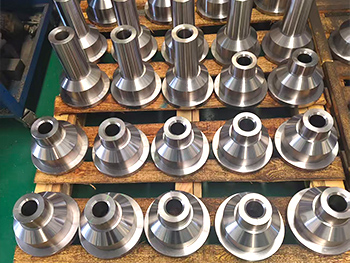
CNC turning is a subtractive manufacturing process where a cutting tool removes material from a rotating workpiece. The process is especially efficient for producing symmetrical parts such as shafts, bushings, connectors, and threaded components.
According to manufacturing research published by industry engineering groups, CNC turning remains one of the fastest and most repeatable machining methods for cylindrical parts due to its continuous rotation and optimized material removal rate.
What makes it particularly valuable is not just speed, but consistency. Once the machining program is validated, identical parts can be produced across thousands of cycles with minimal deviation.
You can explore how this process fits into precision manufacturing workflows here:
👉 https://apexprecisiontech.com/cnc-machining-services/
👉 https://apexprecisiontech.com/precision-cnc-machining/
How CNC Turning Works in Real Production Environments
In practical manufacturing terms, CNC turning follows a structured workflow that combines digital programming with mechanical precision.
The workpiece is clamped into a spindle and rotated at high speed while a stationary cutting tool removes material layer by layer. This motion allows precise control over diameter, surface finish, and concentricity.
A simplified production flow includes:
- CAD model creation
- CAM toolpath generation
- Machine setup and calibration
- Rough cutting operations
- Finishing passes
- Inspection and validation
Modern CNC turning centers often integrate live tooling, allowing drilling and milling operations in the same setup, which significantly reduces handling errors.
A technical overview of machining operations is also explained by engineering resources such as SME (Society of Manufacturing Engineers) and manufacturing journals focused on subtractive processes.
Why CNC Turning Outperforms Traditional Methods for Cylindrical Parts
When compared with conventional machining methods, CNC turning provides several measurable advantages that directly affect production efficiency and part quality.
Key performance advantages include:
- Higher material removal efficiency for round parts
- Better concentricity control
- Reduced setup operations
- Improved surface finish consistency
- Lower cumulative machining error
A comparative study published in manufacturing efficiency reports shows that multi-operation reduction (fewer setups) can decrease dimensional variation by up to 20–30% in precision components.
Typical Materials Used in CNC Turning Services
CNC turning is compatible with a wide range of engineering materials. The selection depends on mechanical performance, thermal resistance, and application requirements.
Common materials include:
- Aluminum alloys for lightweight structural parts
- Stainless steel for corrosion resistance
- Carbon steel for mechanical strength
- Titanium for high-performance applications
- Engineering plastics for non-metal components
Each material behaves differently under cutting forces, which means spindle speed, feed rate, and tool geometry must be adjusted accordingly.
CNC Turning vs CNC Milling: When Should You Choose Each?
One of the most common engineering decisions is choosing between CNC turning and CNC milling.
| Factor | CNC Turning | CNC Milling |
|---|---|---|
| Best for | Cylindrical parts | Complex 3D shapes |
| Efficiency | Very high for round parts | Moderate |
| Setup complexity | Low | Higher |
| Surface finish | Excellent on round surfaces | Depends on tool path |
| Cost efficiency | High for volume production | Better for complex geometries |
In short, CNC turning services are ideal when your part is rotational in nature, while CNC milling is better for prismatic or irregular shapes.
Industrial Applications of CNC Turning Services
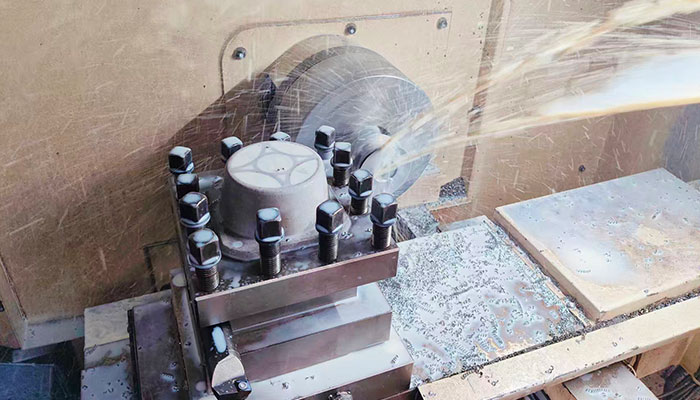
CNC turning is used in nearly every major engineering industry due to its precision and scalability.
Aerospace components
Used for shafts, connectors, and structural fittings requiring high reliability.
Automotive systems
Used in drivetrain components, housings, and precision rotating parts.
Medical engineering
Used for surgical instruments and implant components where accuracy is critical.
Industrial machinery
Used for rollers, couplings, and hydraulic system components.
These applications demand tight tolerances, often within microns, making CNC turning a core process in precision manufacturing ecosystems.
Surface Finish and Precision Capabilities
One of the strongest advantages of CNC turning is its ability to produce high-quality surface finishes without secondary processing.
In optimized conditions, CNC turning can achieve surface roughness values as low as Ra 0.8–3.2 μm depending on material and tooling strategy, according to machining process benchmarks referenced in manufacturing engineering literature.
This reduces the need for additional polishing or grinding, improving production efficiency.
Tooling Strategy and Process Optimization
Tool selection plays a critical role in CNC turning performance. Different tools are used for:
- Facing operations
- External turning
- Internal boring
- Thread cutting
- Grooving
Optimizing toolpaths not only improves surface finish but also reduces tool wear, which directly impacts production consistency.
Advanced CNC systems use simulation software to prevent collisions and optimize cutting strategies before actual machining begins.
Quality Control in CNC Turning Services
Quality assurance is a critical part of CNC turning workflows.
Common inspection methods include:
- Coordinate Measuring Machines (CMM)
- Surface roughness testing
- Dimensional verification tools
- Non-destructive inspection methods
Quality control ensures that each part meets design tolerances before delivery, reducing downstream assembly issues.
Challenges in CNC Turning You Should Understand
Even though CNC turning is highly efficient, it still has limitations:
- Less suitable for non-rotational geometries
- Requires precise programming for complex profiles
- Tool wear can affect long production runs
- Setup calibration is critical for accuracy
Understanding these constraints helps you choose the right manufacturing strategy early in the design phase.
How to Choose the Right CNC Turning Partner
When evaluating CNC turning services, you should focus on:
- Machine capability (multi-axis or standard lathe systems)
- Engineering support for design optimization
- Quality control systems and inspection standards
- Material processing experience
- Consistency in repeat production
You can learn more about our capabilities here:
👉 https://apexprecisiontech.com/cnc-turning-services/
Final Insight
CNC turning services remain one of the most reliable and efficient manufacturing methods for precision cylindrical components. Its ability to combine speed, accuracy, and repeatability makes it a core process in modern engineering supply chains.
When properly applied, CNC turning not only improves manufacturing efficiency but also reduces long-term production risk and ensures consistent part quality across large-scale production runs.
FAQ
What are CNC turning services used for?
It is used to manufacture cylindrical and rotational parts with high precision and repeatability.
Is CNC turning suitable for complex parts?
Yes, especially when combined with live tooling or multi-axis turning centers.
What materials can be used in CNC turning?
Metals such as aluminum, stainless steel, titanium, and engineering plastics.
How accurate is CNC turning?
It can achieve micron-level tolerances depending on machine setup and material.
What is the main advantage of CNC turning?
High efficiency and excellent precision for round or symmetrical components.
Latest News
Contact Us
FAQ
What types of parts can be machined?
We can machine a wide range of high-precision CNC parts for automotive, aerospace, medical devices, industrial machinery, and automation equipment, including complex geometries and custom non-standard parts.
What is the machining accuracy?
We can achieve high-precision machining with ±0.005mm tolerance and ensure consistent quality through our strict quality control system.
Can you provide small-batch and prototype manufacturing services?
Yes, we support small-batch production and prototype machining, with flexible scheduling to meet urgent client requirements.
Do you offer customized processing solutions?
Yes, we provide customized solutions with one-on-one technical support, from design review and process optimization to final machining.
How long does delivery usually take?
Delivery time depends on part complexity and quantity, typically within 1-6 weeks. We provide a detailed schedule upon order confirmation.
What certifications are available for quality management systems?
We hold ISO 9001, ISO 14001, and ISO 45001 certifications, strictly following international quality, environmental, and safety standards.
How long does delivery usually take?
Delivery time depends on part complexity and quantity, typically within 1-6 weeks. We provide a detailed schedule upon order confirmation.