
Why Professional Machinist Services Are Critical for Precision Manufacturing Success
Home
/
Blog
/
Why Professional Machinist Services Are Critical for Precision Manufacturing Success
Why Professional Machinist Services Are Critical for Precision Manufacturing Success
May 13, 2026
In modern manufacturing, precision is no longer optional—it is expected. Whether you are developing aerospace components, automotive systems, or industrial equipment, the quality of your final product depends heavily on one factor: the skill and expertise behind machinist services.
While CNC machines are often seen as the core of production, the truth is that machinists remain the critical decision-makers who determine whether a part meets tolerance, performance, and durability requirements. Without skilled machinist services, even the most advanced machines cannot guarantee consistent results.
In this article, you will understand what machinist services actually include, why they are essential in precision manufacturing, and how they influence cost, quality, and production reliability.
You can also explore related capabilities here:
👉 https://apexprecisiontech.com/cnc-machining-services/
👉 https://apexprecisiontech.com/cnc-milling-services/
👉 https://apexprecisiontech.com/precision-cnc-machining/
What Machinist Services Really Mean in Modern Manufacturing
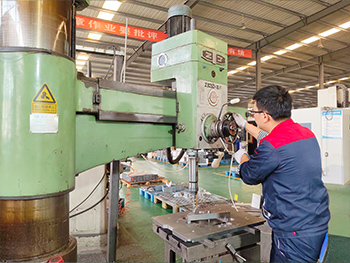
Machinist services refer to the full range of technical operations performed by skilled professionals who operate, program, and optimize machining equipment such as CNC lathes, mills, and multi-axis systems.
According to industry definitions from manufacturing engineering sources such as SME (Society of Manufacturing Engineers), machinists are responsible for interpreting technical drawings, selecting tools, setting machining parameters, and ensuring dimensional accuracy throughout production.
In practical terms, machinist services include:
- Machine setup and calibration
- Tool selection and optimization
- CNC programming and adjustment
- Material behavior analysis
- Quality inspection and tolerance verification
A trained machinist is not just an operator—they are a problem solver who ensures that design intent becomes a functional physical part.
Why Machinist Expertise Still Matters in the CNC Era
Even with automation and advanced CNC systems, machinists remain essential because machining is not a fully automated decision-making process.
CNC machines follow instructions, but machinists interpret real-world variables such as:
- Material hardness variation
- Tool wear over time
- Thermal expansion during cutting
- Vibration and machine stability
- Surface finish requirements
Research from manufacturing engineering publications shows that operator expertise can significantly reduce machining defects and improve consistency in high-precision environments.
In fact, experienced machinists often make microadjustments during production that prevent tolerance drift and scrap rate increases.
The Core Workflow of Professional Machinist Services
Step 1: Engineering drawing analysis
Machinists review CAD drawings and identify critical tolerances, geometric constraints, and machining risks.
Step 2: Process planning
They determine whether the part requires turning, milling, multi-axis machining, or hybrid processes.
Step 3: Tool selection and setup
Correct tool geometry and material are chosen to match the workpiece material.
Step 4: Machine programming and calibration
CNC programs are optimized for accuracy, speed, and surface finish quality.
Step 5: Production monitoring
During machining, adjustments are made to ensure dimensional stability.
Step 6: Final inspection
Parts are verified using precision measuring instruments such as CMM systems.
This workflow ensures repeatability and reduces manufacturing risk.
Key Machinist Services You Should Understand
CNC machining operation support
Machinists oversee CNC milling, turning, and multi-axis machining operations to ensure precision output.
Prototype machining services
Used for early-stage product development where design validation is required.
Production machining support
Focused on maintaining consistency across medium and high-volume production runs.
Precision finishing services
Includes surface refinement, deburring, and dimensional correction.
You can learn more about related machining processes here:
👉 https://apexprecisiontech.com/cnc-turning-services/
👉 https://apexprecisiontech.com/5-axis-machining-services/
Materials Handled in Machinist Services
Machinists work with a wide range of materials, each requiring different machining strategies:
- Aluminum alloys for lightweight structural parts
- Stainless steel for corrosion resistance
- Titanium for aerospace-grade strength
- Engineering plastics for low-weight applications
Each material behaves differently under heat, pressure, and cutting force, making machinist expertise essential for controlling machining conditions.
Industry Applications of Machinist Services
Aerospace engineering
Machinists ensure tight tolerances for critical flight components.
Automotive manufacturing
Used for engine components, drivetrain systems, and structural assemblies.
Medical device production
Requires extremely high precision for surgical tools and implants.
Industrial machinery
Supports the production of pumps, housings, and mechanical systems.
These industries rely heavily on machinist expertise to maintain safety and performance standards.
Quality Control in Machinist Services
Machinist services are closely tied to quality assurance processes. Common inspection methods include:
- Coordinate Measuring Machines (CMM)
- Surface roughness testing
- Digital caliper and micrometer verification
- Non-destructive testing (NDT)
According to manufacturing quality frameworks referenced by ISO 9001 principles, structured inspection processes significantly reduce defect rates and improve production reliability.
Common Challenges Machinists Solve Daily
Tool wear management
Machinists monitor tool degradation to prevent dimensional errors.
Thermal deformation control
Heat generated during machining can affect accuracy if not managed properly.
Complex geometry machining
Some parts require multi-axis coordination and advanced toolpath planning.
Material inconsistency
Variations in raw material properties require real-time adjustments.
How Machinist Services Impact Manufacturing Cost and Quality
While machinist services may seem like a labor component, they directly influence total production cost by:
- Reducing scrap rates
- Improving machining efficiency
- Preventing machine downtime
- Optimizing tool usage
Industry manufacturing studies consistently show that skilled machinists contribute to lower total cost of ownership by minimizing rework and production delays.
How to Choose the Right Machinist Services Provider
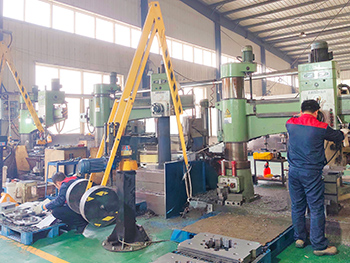
When evaluating machinist services, you should focus on:
- Technical expertise and experience level
- CNC machine capability and variety
- Quality control systems and certifications
- Engineering support and communication
- Consistency in production output
A strong machinist team does more than execute instructions—they actively improve manufacturability.
Final Insight
Machinist services are the foundation of precision manufacturing. While CNC machines provide automation, machinists provide intelligence, judgment, and adaptability. Without skilled machinists, even the most advanced production systems cannot achieve consistent high-quality output.
For companies focused on precision, reliability, and scalable manufacturing, investing in professional machinist services is not just beneficial—it is essential.
FAQ
What are machinist services?
They include the operation, programming, and optimization of machining processes to produce precision parts.
Are machinists still important with CNC machines?
Yes, because machinists make critical decisions that machines cannot automate.
What industries rely on machinist services?
Aerospace, automotive, medical, and industrial manufacturing industries.
What skills do machinists need?
They require mechanical knowledge, CNC programming skills, and precision measurement expertise.
What is the difference between a machinist and a machine operator?
A machinist has broader responsibilities, including programming, setup, and process optimization, not just machine operation.
Latest News
Contact Us
FAQ
What types of parts can be machined?
We can machine a wide range of high-precision CNC parts for automotive, aerospace, medical devices, industrial machinery, and automation equipment, including complex geometries and custom non-standard parts.
What is the machining accuracy?
We can achieve high-precision machining with ±0.005mm tolerance and ensure consistent quality through our strict quality control system.
Can you provide small-batch and prototype manufacturing services?
Yes, we support small-batch production and prototype machining, with flexible scheduling to meet urgent client requirements.
Do you offer customized processing solutions?
Yes, we provide customized solutions with one-on-one technical support, from design review and process optimization to final machining.
How long does delivery usually take?
Delivery time depends on part complexity and quantity, typically within 1-6 weeks. We provide a detailed schedule upon order confirmation.
What certifications are available for quality management systems?
We hold ISO 9001, ISO 14001, and ISO 45001 certifications, strictly following international quality, environmental, and safety standards.
How long does delivery usually take?
Delivery time depends on part complexity and quantity, typically within 1-6 weeks. We provide a detailed schedule upon order confirmation.