
How Milling Machine Processing Services Drive Precision Manufacturing in Modern Industry
Home
/
Blog
/
How Milling Machine Processing Services Drive Precision Manufacturing in Modern Industry
How Milling Machine Processing Services Drive Precision Manufacturing in Modern Industry
May 26, 2026
In today’s manufacturing landscape, precision is not just about cutting metal—it is about controlling geometry, improving efficiency, and ensuring repeatable performance at scale. Among all subtractive manufacturing methods, milling machine processing services remain one of the most versatile and widely used solutions for producing complex mechanical components.
Whether you are developing structural parts, precision housings, or functional mechanical assemblies, milling processes directly influence product accuracy, surface quality, and long-term reliability.
This article explores milling machine processing from a practical engineering perspective: how it works, why it matters, and how it compares with other machining strategies in real production environments.
You can also explore related capabilities here:
👉 CNC Turning Services
👉 CNC Machining
👉 Milling Machine Processing Services
Table of Contents
What Milling Machine Processing Services Really Mean in Manufacturing
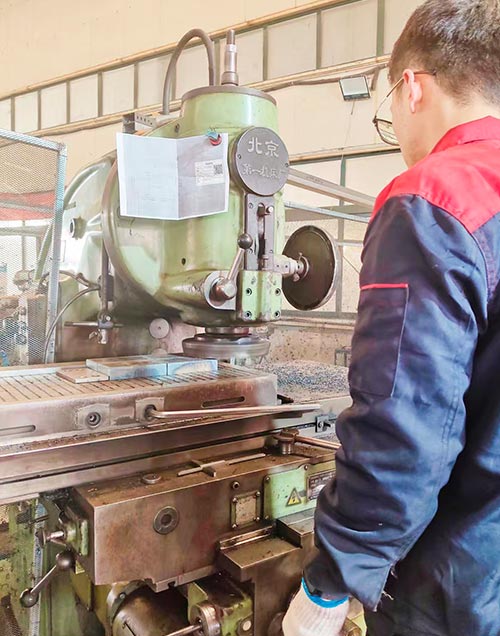
Milling machine processing services refer to CNC-controlled machining operations where a rotating cutting tool removes material from a stationary or multi-axis moving workpiece.
Unlike turning processes, milling is not limited to cylindrical parts. Instead, it is capable of producing complex 3D geometries, flat surfaces, grooves, pockets, and precision contours.
According to engineering references from SME (Society of Manufacturing Engineers), milling remains one of the most adaptable machining methods due to its ability to handle both simple and highly complex part geometries within the same system.
This flexibility is why milling is widely used in industries requiring both prototyping and mass production.
Why Milling Is Still Essential in Modern CNC Manufacturing
Even with advancements in multi-axis machining and additive manufacturing, milling continues to play a central role because of its balance between flexibility and precision.
Key reasons milling remains dominant:
- High geometric flexibility
- Excellent surface finish capability
- Suitable for multiple materials
- Scalable from prototype to production
- Compatible with multi-axis CNC systems
Manufacturing studies referenced in industrial engineering reports show that milling operations account for a significant portion of precision part production due to their adaptability across industries.
How Milling Machine Processing Works Step by Step
Step 1: CAD design and engineering optimization
The process begins with a digital model designed for manufacturability.
Step 2: CAM toolpath generation
CAM software converts geometry into precise machining instructions.
Step 3: Machine setup and calibration
Workpieces are securely fixed, and machine coordinates are aligned.
Step 4: Milling operation execution
Rotating cutting tools remove material along programmed toolpaths.
Step 5: Finishing and inspection
Parts undergo dimensional verification and surface quality testing.
Types of Milling Operations Used in Processing Services
Face milling
Used to create flat surfaces with high precision.
Slot milling
Used for grooves, channels, and keyways.
Contour milling
Used for complex curved surfaces.
Pocket milling
Used for internal cavities and enclosed features.
Each operation is selected based on part geometry and functional requirements.
Materials Used in Milling Machine Processing Services
Milling supports a wide range of engineering materials:
- Aluminum alloys for lightweight structures
- Stainless steel for corrosion resistance
- Titanium for high-strength applications
- Engineering plastics for lightweight and insulation properties
- Carbon steel for structural components
Each material requires optimized cutting speed, feed rate, and tooling strategy to ensure performance and tool life balance.
Milling vs Other Machining Methods
| Feature | Milling | Turning | Grinding |
|---|---|---|---|
| Geometry capability | High complexity | Cylindrical only | Surface finishing |
| Flexibility | Very high | Medium | Low |
| Precision | High | High | Very high |
| Material removal rate | Medium | High | Low |
This comparison shows milling is the most versatile method for complex parts requiring multi-surface machining.
Industrial Applications of Milling Machine Processing Services
Aerospace engineering
Used for structural brackets, housings, and precision assemblies.
Automotive manufacturing
Used for engine components, gear housings, and structural parts.
Medical devices
Used for surgical tools and precision housings.
Industrial machinery
Used for machine frames, connectors, and functional components.
These applications require consistent accuracy and repeatability across production cycles.
Surface Finish and Precision Capability
Milling processes can achieve high-quality surface finishes depending on tool selection and machining strategy.
Typical surface roughness ranges:
- Rough milling: Ra 3.2–6.3 μm
- Precision milling: Ra 0.8–3.2 μm
- Finishing passes: Ra below 0.8 μm in optimized conditions
These values are widely referenced in machining handbooks and CNC manufacturing standards.
YouTube Insight: Milling Process in Action
To better understand real-world machining behavior, here is a practical demonstration of CNC milling:
This helps visualize tool movement, chip formation, and machining strategies used in industrial production environments.
Quality Control in Milling Machine Processing
Quality assurance is essential for maintaining consistency.
Common inspection methods:
- Coordinate Measuring Machines (CMM)
- Optical inspection systems
- Surface roughness measurement tools
- Dimensional verification gauges
According to ISO manufacturing quality frameworks, structured inspection significantly reduces production defects and improves repeatability.
Common Challenges in Milling Operations
Tool wear management
Continuous cutting leads to gradual tool degradation affecting accuracy.
Heat generation control
Excess heat can affect material properties and dimensional stability.
Vibration and chatter
Poor setup can cause surface defects and reduced tool life.
Complex geometry programming
Advanced CAM programming is required for multi-axis milling operations.
How Milling Machine Processing Impacts Manufacturing Cost
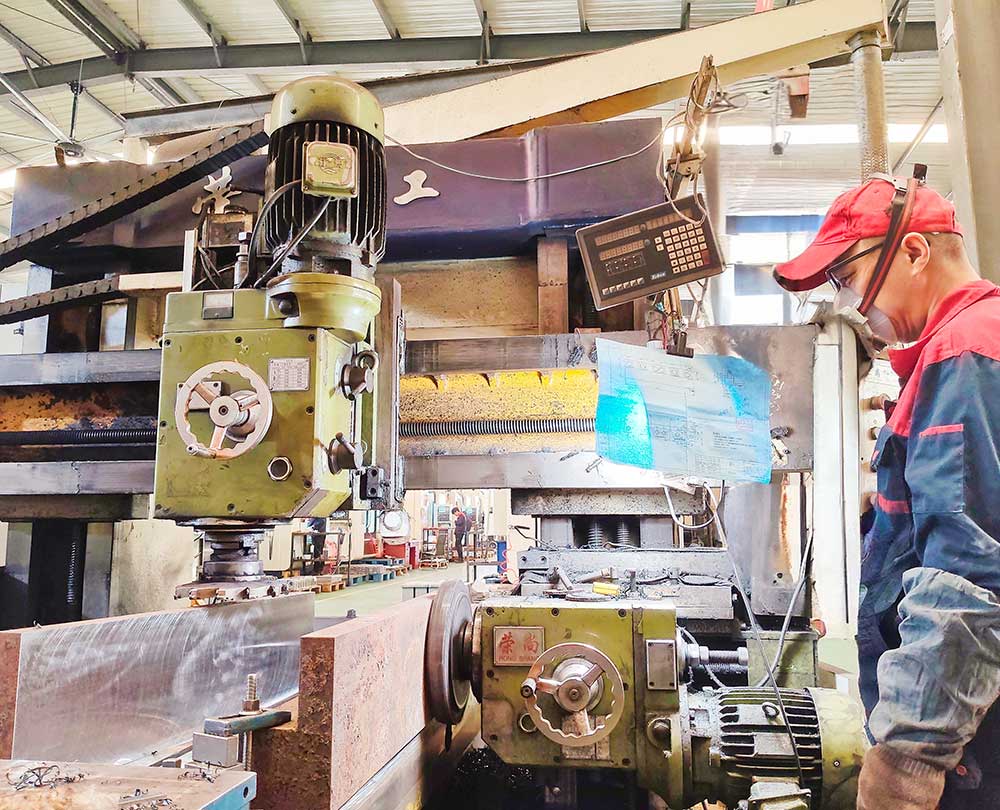
Several factors influence total machining efficiency:
- Material type and hardness
- Part geometry complexity
- Tooling selection
- Production volume
- Required tolerance levels
Efficient milling strategies reduce waste, improve cycle time, and increase overall production stability.
How to Choose the Right Milling Service Provider
When evaluating milling machine processing services, you should consider:
- Machine capability and axis configuration
- Engineering support and CAM expertise
- Quality control systems
- Material processing experience
- Production consistency and scalability
You can explore more capabilities here:
👉 Milling machine processing services
Final Insight
Milling machine processing services remain one of the most important pillars of modern manufacturing. Their ability to handle complex geometries, multiple materials, and scalable production makes them essential in industries where precision and flexibility are required simultaneously.
When properly optimized, milling not only improves part quality but also enhances overall manufacturing efficiency and production reliability.
FAQ
What are milling machine processing services used for?
It is used to manufacture complex mechanical parts with high precision and surface quality.
Is milling suitable for all materials?
Yes, it supports metals, plastics, and composite materials depending on tooling.
What is the difference between milling and turning?
Milling uses rotating tools for complex shapes, while turning is used for cylindrical parts.
How accurate is milling machining?
It can achieve high precision depending on machine setup and tooling strategy.
Is milling suitable for mass production?
Yes, especially when combined with CNC automation and optimized toolpaths.
Latest News
Contact Us
FAQ
What types of parts can be machined?
We can machine a wide range of high-precision CNC parts for automotive, aerospace, medical devices, industrial machinery, and automation equipment, including complex geometries and custom non-standard parts.
What is the machining accuracy?
We can achieve high-precision machining with ±0.005mm tolerance and ensure consistent quality through our strict quality control system.
Can you provide small-batch and prototype manufacturing services?
Yes, we support small-batch production and prototype machining, with flexible scheduling to meet urgent client requirements.
Do you offer customized processing solutions?
Yes, we provide customized solutions with one-on-one technical support, from design review and process optimization to final machining.
How long does delivery usually take?
Delivery time depends on part complexity and quantity, typically within 1-6 weeks. We provide a detailed schedule upon order confirmation.
What certifications are available for quality management systems?
We hold ISO 9001, ISO 14001, and ISO 45001 certifications, strictly following international quality, environmental, and safety standards.
How long does delivery usually take?
Delivery time depends on part complexity and quantity, typically within 1-6 weeks. We provide a detailed schedule upon order confirmation.