
Precision Welding Guide 2026: Processes, Materials and Applications
Home
/
Blog
/
Precision Welding Guide 2026: Processes, Materials and Applications
Precision Welding Guide 2026: Processes, Materials and Applications
August 19, 2026
Table of Contents
Introduction
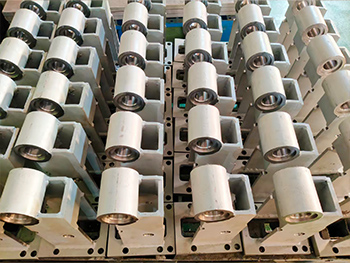
Precision welding is not simply conventional welding performed more carefully. In manufacturing environments where joint location, heat input, dimensional stability, surface condition and final assembly accuracy all matter, welding becomes part of a larger precision-control process.
This distinction is especially important for machined components, thin metal parts, close-fitting assemblies and complex fabricated structures. A weld can appear visually acceptable while still creating distortion, misalignment or local dimensional changes that affect how the finished component performs. For this reason, successful precision welding begins long before the arc is started. Material behavior, joint geometry, part preparation, fixture design, process parameters and inspection all influence the final result.
For engineers and manufacturers, the practical question is therefore not simply, “Can these two parts be welded?” A better question is, “Can they be joined while maintaining the dimensional, mechanical and functional requirements of the complete assembly?”
This guide explains how precision welding processes work, how materials affect process selection, why heat management is critical, how welding interacts with CNC-machined components, and what should be considered when evaluating weld quality.
What Is Precision Welding?
Precision welding is a controlled joining approach used when the position, geometry and consistency of a welded joint are important to the performance of the finished component. Rather than defining one specific welding method, the term describes a manufacturing objective: creating a reliable joint while tightly managing variables that can alter the component.
These variables include heat input, penetration, joint fit-up, weld location, distortion, shielding conditions, filler selection and fixture stability. In demanding assemblies, even a strong weld may be unsuitable if the welding process moves a mounting surface, changes a bore relationship or creates excessive finishing work afterward.
This leads to an important distinction between weld strength and weld precision. Strength primarily concerns whether the joint can withstand its intended loading. Precision also considers whether the welded assembly remains dimensionally suitable for the next manufacturing stage and its final application.
A useful way to think about precision welding is as a five-part control system: part geometry, material condition, thermal input, mechanical restraint and final verification. Improving only one of these areas rarely guarantees a precise assembly. Consistency comes from controlling them together.
Core Processes Used in Precision Welding
There is no universal welding process that is ideal for every precision component. The correct method depends on material type, thickness, joint accessibility, production requirements, component geometry and the acceptable heat-affected area.
TIG Welding for Controlled, High-Quality Joints
TIG, formally known as gas tungsten arc welding, uses a non-consumable tungsten electrode and shielding gas to create the welding arc. One of its important advantages in precision-oriented work is the level of control available over the weld pool and filler addition.
This makes TIG particularly relevant when weld appearance, localized control and careful joining of relatively thin or detailed components are important. However, precision does not come automatically from selecting TIG. Torch position, arc length, current control, travel technique, shielding effectiveness, filler compatibility and joint cleanliness still determine the quality of the result.
For repeatable manufacturing, the welding procedure should therefore define more than the process name. It should also establish how the joint is prepared, restrained, welded and inspected.
Laser and Other Focused Welding Methods
Focused-energy processes such as laser welding can be useful when a project requires a narrow heat-affected region, concentrated energy input or highly localized joining. Automated and robotic welding can also improve repeatability when part geometry and production conditions support a stable, repeatable setup.
These technologies should not be treated as automatically superior alternatives. A highly advanced welding system cannot compensate for unstable fixtures, inconsistent gaps or unsuitable joint design. Process selection should begin with the part requirements rather than with the equipment available.
In many practical manufacturing projects, the best process is the one that produces a repeatable joint while maintaining the dimensions and functional surfaces that matter most.
How Material Choice Changes the Precision Welding Strategy
Material selection has a direct effect on welding behavior. Different metals conduct and retain heat differently, form different oxide layers, respond differently to rapid heating and cooling, and may require different preparation or filler strategies.
Stainless steel is frequently used in precision assemblies because of its mechanical and corrosion-related properties, but heat management remains important. Excessive localized heating can increase distortion and alter the condition of surrounding surfaces. Clean joint preparation and controlled welding sequences become particularly important when the component includes thin walls or finished features.
Aluminum introduces a different set of considerations. It conducts heat efficiently and has a surface oxide that behaves differently from the underlying metal. Joint preparation, cleanliness and control of the welding condition therefore have a major influence on consistency.
Carbon steels and alloy steels may offer greater tolerance in some fabrication situations, but this does not eliminate the need to consider thermal effects. Section thickness, joint restraint, component geometry and material condition can all affect the response around the weld.
The practical lesson is that a precision welding procedure should be material-specific. Reusing the same parameter strategy simply because two parts have similar dimensions can create inconsistent results if their materials behave differently during welding.
Key Precision Welding Parameters That Control Results
Precision welding depends on a group of interacting variables rather than one “perfect” machine setting. Current, voltage where applicable, travel speed, arc length, filler addition, shielding conditions, torch angle and welding sequence can all influence the final joint.
Heat input is particularly important because it affects penetration, weld-pool size and the amount of surrounding material exposed to elevated temperatures. Too little effective energy can create incomplete fusion or an unstable joint. Excessive heat can enlarge the affected area and increase the possibility of distortion.
Travel consistency matters for the same reason. Significant changes in travel speed can alter the thermal profile along a weld, even if the machine settings remain unchanged. This is one reason repeatable operator technique, suitable automation and clear process documentation matter in precision production.
Fit-up also belongs in this parameter discussion. When joint gaps vary significantly from one component to another, the welder may need to compensate by changing travel behavior or filler addition. That makes repeatability more difficult.
A useful process-development principle is to separate controllable variation from unavoidable variation. Material grade, joint geometry, fixture position and welding sequence should be standardized wherever possible so that the welding process is not repeatedly forced to compensate for inconsistent upstream manufacturing.
Managing Heat Input, Distortion and Dimensional Stability
Heat management is one of the central challenges in precision welding. Welding creates a localized thermal cycle: material near the joint heats, expands, cools and contracts. If this thermal movement is uneven or insufficiently controlled, the component may move away from its intended geometry.
Thin sections can be particularly sensitive because they have less material available to resist thermal movement. Long continuous welds, asymmetric joint layouts and highly constrained assemblies may also require additional planning.
The first method of distortion control is not simply “use less heat.” Insufficient energy can create other weld-quality problems. The goal is controlled heat input appropriate to the material and joint.
Welding sequence can be equally important. Dividing a long joint into planned sections, balancing weld placement around an assembly or allowing controlled cooling between operations may help reduce uneven thermal accumulation. The specific sequence must be selected according to geometry rather than applied as a universal rule.
Fixture design also deserves more attention than it often receives. A fixture must hold the component accurately without creating restraint conditions that introduce new problems. Excessive clamping is not automatically better. The correct fixture maintains critical relationships, provides access to the weld and allows thermal behavior to be managed predictably.
For precision manufacturing, distortion should therefore be addressed during process planning rather than discovered during final inspection.
Joint Design and Fit-Up for Precision Welding
A large percentage of welding difficulties originate before welding begins. Joint geometry determines how easily the welding process can access the intended area, how consistently the components can be positioned, how filler material is introduced and how the heat is distributed.
Precision assemblies benefit from repeatable fit-up. If one batch arrives with nearly closed joints and another with inconsistent gaps, the welding process must compensate for upstream variation. That reduces process stability.
Machined locating features can help establish repeatable relationships between components. Tabs, shoulders, recesses, locating faces or other engineered features may also reduce dependence on manual positioning, provided they are designed with welding access and thermal movement in mind.
Joint accessibility matters as well. A design may look straightforward in CAD while forcing an awkward torch angle in production. Restricted access can affect arc position, shielding and operator consistency.
This is why design for manufacturability should include welding considerations early in development. A small change in joint position, edge preparation or locating geometry can sometimes improve repeatability more effectively than attempting to solve the problem later through welding parameters alone.
Quality Control and Inspection for Precision Welds
Visual appearance is useful, but precision welding cannot be evaluated by appearance alone. Inspection should be based on what the joint is expected to accomplish.
Visual inspection can identify surface irregularities, discontinuities, excessive spatter, undercut and other observable conditions. Dimensional inspection should then confirm whether critical surfaces and relationships remained within the drawing requirements after welding.
When the component contains machined features, inspection should consider the complete assembly rather than measuring only the weld. Hole positions, mounting faces, parallel surfaces, alignment features and other functional geometry may be more important to final performance than the cosmetic appearance of the bead.
Additional inspection methods may be appropriate when internal weld integrity must be evaluated. The correct method depends on joint geometry, material, application requirements and the type of discontinuity being investigated.
A strong inspection plan therefore starts with risk. Instead of checking everything with the same level of effort, manufacturers should identify which weld and dimensional characteristics can directly affect function, assembly or reliability.
The following framework illustrates how precision welding decisions can be connected to practical manufacturing concerns:
| Control Area | What Should Be Evaluated | Why It Matters |
|---|---|---|
| Material | Grade, thickness, cleanliness and condition | Influences heat response and weld behavior |
| Joint design | Gap, access, edge geometry and location | Affects repeatability and fusion |
| Heat management | Energy input, sequence and cooling behavior | Influences distortion and dimensional stability |
| Fixturing | Location, clamping and accessibility | Maintains critical part relationships |
| Welding process | Process type and parameter consistency | Determines control of the weld zone |
| Inspection | Weld condition and dimensional verification | Confirms functional requirements |
| Post-weld processing | Machining, finishing or stress management | Restores or completes final component requirements |
This table is not intended as a substitute for a qualified welding procedure. Instead, it highlights why precision welding should be managed as a manufacturing system rather than as an isolated operation.
Precision Welding for CNC Machined and Complex Components
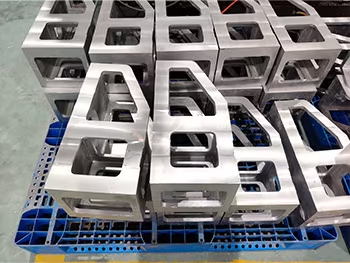
The relationship between machining and welding deserves particular attention because these processes often impose different priorities on the same component.
Machining creates controlled geometric features. Welding adds concentrated heat and can alter the relationship between those features. When a precision-machined part must also be welded, the manufacturing sequence should therefore be planned as one integrated process.
For example, it may be more practical to weld a rough-machined structure first and finish critical surfaces afterward. In another assembly, certain reference features may need to be completed before welding so they can support accurate fixturing. There is no universal sequence.
Projects that combine CNC machining services with welding benefit from early coordination between machining, welding and inspection requirements. Critical datums, surfaces that will be finish-machined, weld access and expected thermal movement should all be considered before production begins.
This integrated approach is especially valuable for housings, brackets, frames, equipment components and multi-part assemblies containing both welded joints and precision-machined interfaces.
One of the most useful design questions is: Which dimensions must be protected before welding, and which can be established afterward? Answering this early can simplify fixtures, reduce unnecessary rework and make inspection more meaningful.
Common Precision Welding Problems and How to Prevent Them
Distortion is one of the most visible problems, but it is not the only challenge. Inconsistent penetration, porosity, poor fusion, contamination, irregular bead geometry and dimensional movement can all reduce the quality of a precision assembly.
Many of these problems are connected. Contaminated joint surfaces may destabilize the weld. Inconsistent gaps can require more filler or different operator movement. Excessive compensation can increase local heat input, which can then contribute to distortion.
This interconnected behavior is why root-cause analysis should look beyond the welding machine.
If defects repeatedly occur in the same location, the correct response is not always to adjust welding current. The manufacturer should also investigate part preparation, fixture location, component tolerance, joint geometry, shielding conditions and operator access.
Another common mistake is treating post-weld machining as a universal correction strategy. Machining can restore selected dimensions, but it cannot repair every consequence of an unsuitable welding procedure. Excessive distortion may change stress distribution or move areas that cannot be economically re-machined.
Prevention is generally achieved through better process control: stable incoming parts, documented preparation, repeatable positioning, appropriate welding parameters and inspection feedback that is connected back to production.
When Does a Project Actually Need Precision Welding?
Not every welded component requires the same level of precision control. Applying unnecessary controls can complicate manufacturing without improving function.
Precision welding becomes particularly relevant when the welded assembly contains close positional relationships, machined interfaces, thin sections, sensitive surfaces, limited allowable distortion or complex mating components.
It is also valuable when repeatability matters across multiple assemblies. A single prototype can sometimes be manually adjusted after welding, but repeated production requires a process capable of delivering similar results from part to part.
A practical decision should therefore consider four questions. Will weld distortion affect assembly? Are important dimensions located close to the weld? Will the component require machining or accurate mating after welding? Does the application require repeatable joint quality?
If several answers are yes, welding should be treated as a precision manufacturing operation rather than a general fabrication step.
How to Evaluate a Precision Welding Manufacturing Partner
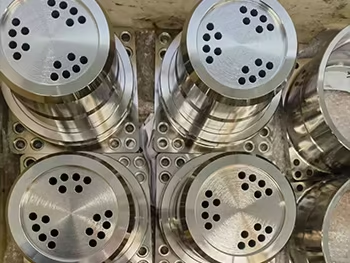
Evaluating a welding supplier should go beyond asking which welding machines are available. Equipment matters, but manufacturing control matters more.
The supplier should first understand the drawing and identify the dimensions that are functionally important. Welding should then be planned around those requirements. This includes selecting suitable joint preparation, fixture strategy, welding sequence and inspection points.
A capable supplier should also understand how welding interacts with upstream and downstream manufacturing. Projects involving welded structural component processing services may require machining, fitting, welding, grinding and dimensional verification to work as one coordinated production route rather than as separate operations.
Documentation is another useful indicator of process maturity. Repeatable manufacturing becomes easier when material requirements, part preparation, settings, sequence and inspection criteria are defined instead of being recreated for every batch.
Finally, technical communication matters. If a drawing contains a weld that creates unnecessary manufacturing risk, an experienced production team should be able to identify the issue and discuss practical alternatives while preserving the intended function of the component.
Conclusion
Precision welding is best understood as controlled manufacturing rather than simply accurate torch movement. The final result depends on how well material behavior, joint design, thermal input, fixturing, process parameters and inspection are coordinated.
For machined and complex metal components, this broader view becomes particularly important. Welding must create the required joint without unnecessarily compromising the geometry established by earlier manufacturing operations.
The most effective projects therefore begin with the finished assembly in mind. Engineers should identify critical dimensions, understand where thermal movement can occur, design joints for repeatable access and fit-up, and determine how the component will be inspected after welding.
When these decisions are made before production begins, precision welding becomes more predictable, more repeatable and better integrated with the overall manufacturing process.
FAQ
What is precision welding?
Precision welding is a controlled joining approach used when weld position, heat input, dimensional stability and repeatability are important. It combines suitable welding processes with accurate fit-up, fixturing, parameter control and inspection to maintain the functional requirements of the finished assembly.
Which materials can be used for precision welding?
Precision welding can be applied to many commonly welded metals, including stainless steel, aluminum, carbon steel and various alloys. The correct process depends on material composition, thickness, joint geometry and thermal behavior, so welding parameters and preparation should be selected for the actual material.
Is TIG suitable for precision welding?
TIG is often suitable for precision-oriented welding because it provides strong control over the arc, weld pool and filler addition. However, final accuracy also depends on joint preparation, operator technique, shielding, heat management and fixtures. Selecting TIG alone does not guarantee a dimensionally precise assembly.
How can distortion be reduced during precision welding?
Distortion can be managed through appropriate heat input, balanced welding sequences, stable fit-up, suitable fixture design and consideration of the component geometry. The objective is not simply to minimize heat, but to control how thermal expansion and contraction occur throughout the welded assembly.
Is precision welding suitable for CNC machined parts?
Yes. Precision welding is particularly relevant when welded components contain machined holes, reference surfaces, mounting features or other critical geometry. The machining and welding sequence should be planned together so that heat-related movement does not compromise important dimensions or final assembly requirements.
Latest News
Contact Us
FAQ
What types of parts can be machined?
We can machine a wide range of high-precision CNC parts for automotive, aerospace, medical devices, industrial machinery, and automation equipment, including complex geometries and custom non-standard parts.
What is the machining accuracy?
We can achieve high-precision machining with ±0.005mm tolerance and ensure consistent quality through our strict quality control system.
Can you provide small-batch and prototype manufacturing services?
Yes, we support small-batch production and prototype machining, with flexible scheduling to meet urgent client requirements.
Do you offer customized processing solutions?
Yes, we provide customized solutions with one-on-one technical support, from design review and process optimization to final machining.
How long does delivery usually take?
Delivery time depends on part complexity and quantity, typically within 1-6 weeks. We provide a detailed schedule upon order confirmation.
What certifications are available for quality management systems?
We hold ISO 9001, ISO 14001, and ISO 45001 certifications, strictly following international quality, environmental, and safety standards.
How long does delivery usually take?
Delivery time depends on part complexity and quantity, typically within 1-6 weeks. We provide a detailed schedule upon order confirmation.